

Help yourself to a homemade version of this old-school favorite.
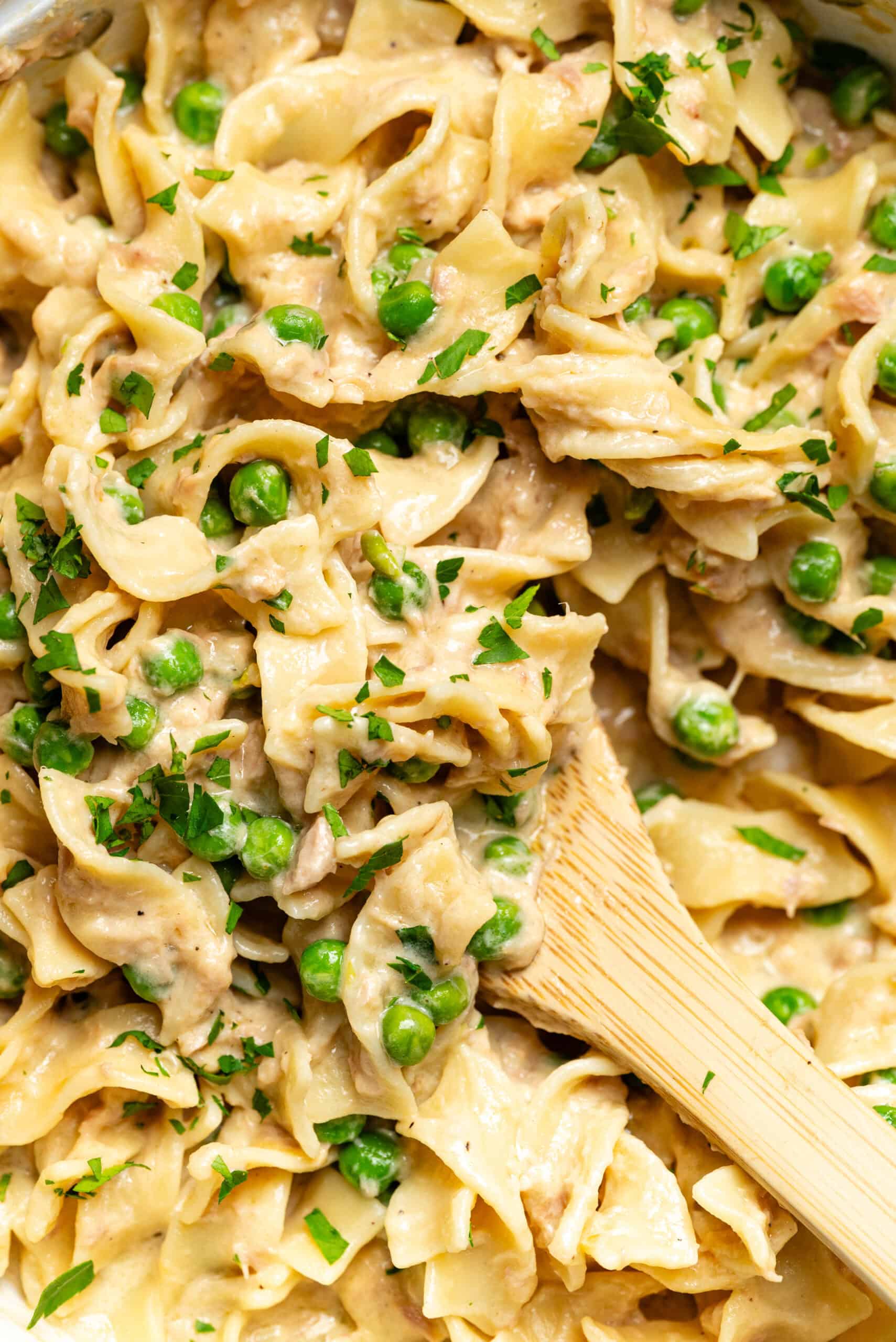
They say necessity is the mother of invention, and that was definitely the case in 1970s America. With unemployment high and beef prices soaring, home cooks struggled to feed their families. To address this, General Mills introduced boxed dinner mixes designed to stretch a single pound of beef into a complete meal. Named “Hamburger Helper”, the product quickly became a household staple. Unsurprisingly, a “Tuna Helper” version soon followed, offering an equally popular solution for turning just two cans of tuna into a complete, hearty family dinner.
These boxed mixes included starch and seasonings, making it easy to create a full stovetop meal by just adding protein. Hamburger Helper came in various flavors (like stroganoff or cheeseburger macaroni), while Tuna Helper offered a shortcut to the classic tuna noodle casserole and was enriched with cheese and milk. Tuna Helper is still available today, but it’s easy to whip up a homemade version that’s free of additives and even more delicious.
Making Tuna Helper from scratch lets you enjoy the nostalgic flavor without the processed ingredients. The velvety sauce is made with real milk, broth, and cheese, and you can adjust the seasonings and salt to your taste. This rich and creamy dish is the perfect solution for a busy weeknight, as it relies on pantry staples and comes together in one pan.
Making sauce like a boss
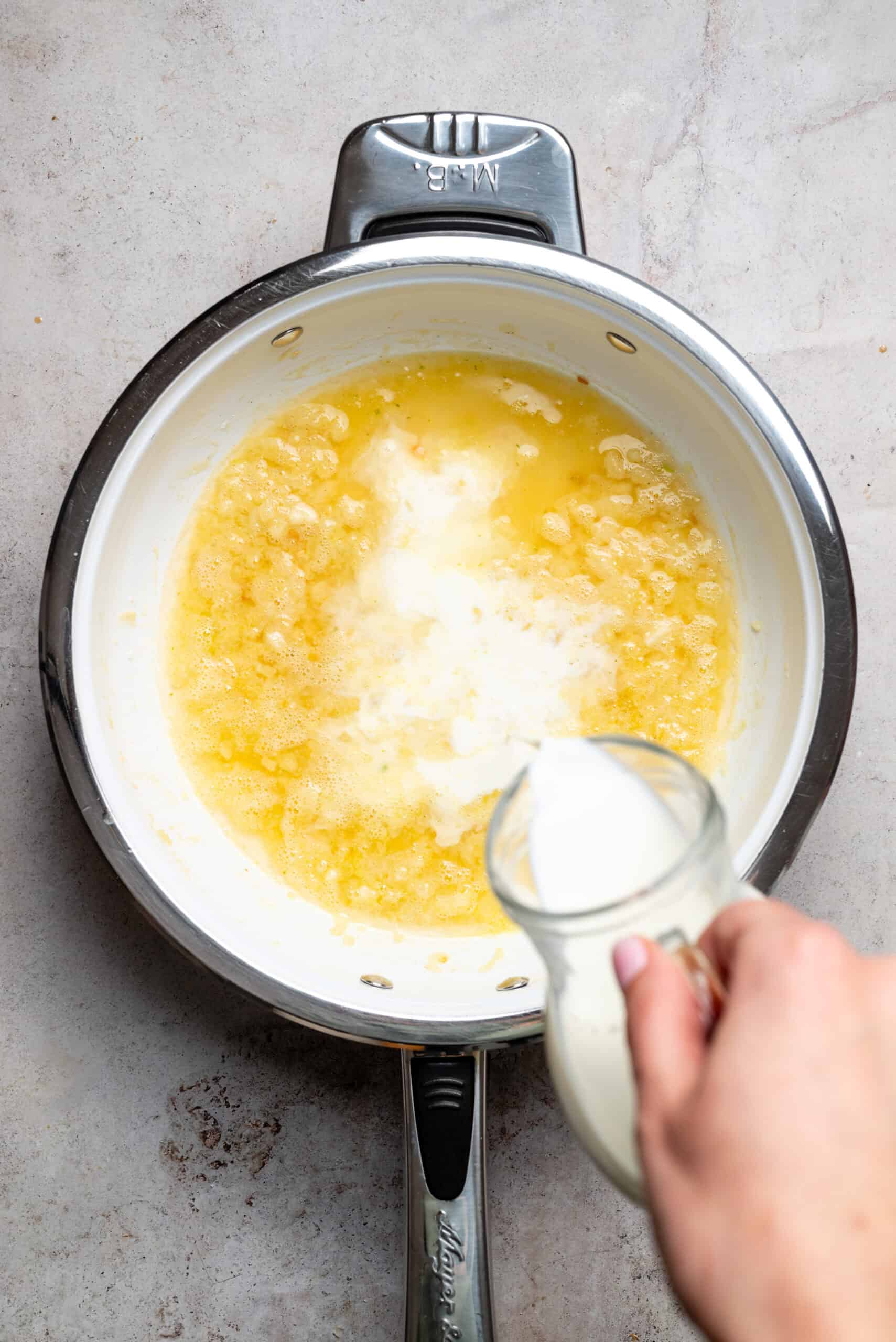
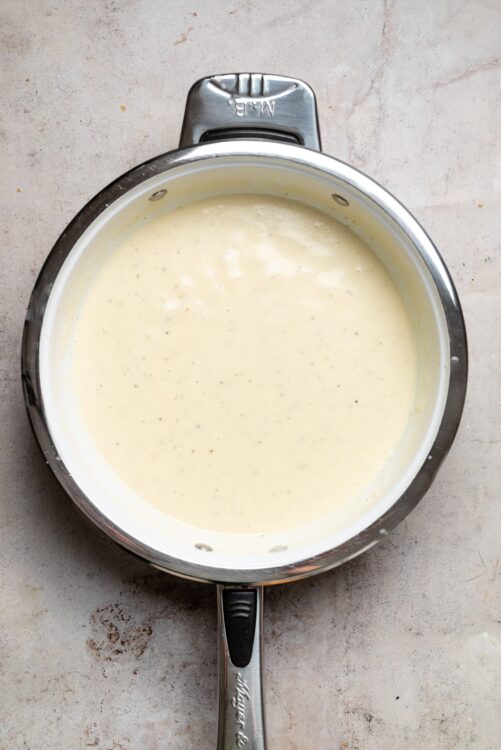
In steps three, four, and five, you are essentially making a white sauce from scratch. If that sounds intimidating, don’t worry, it’s easier than you might think! The flour combined with the butter makes what’s called a roux (pronounced “roo”), and once you stir in the broth and milk, it thickens into a sauce. The secret? Add the liquids gradually while continually stirring. It takes a little patience, but making a sauce from scratch is not rocket science. Once you stir in the shredded cheese in step eight, it upgrades the white sauce to a cheese sauce and adds that irresistible cheesy tang to the Tuna Helper.
How do I store leftovers?
Store leftovers in an airtight container in the refrigerator for up to 4 days. You can also freeze leftovers for up to 3 months. Reheat it in the microwave or in a nonstick skillet over low heat. You may need to add a splash of milk when reheating to avoid a dry texture, as the cooked pasta will absorb some of the sauce during storage.
Serving suggestions
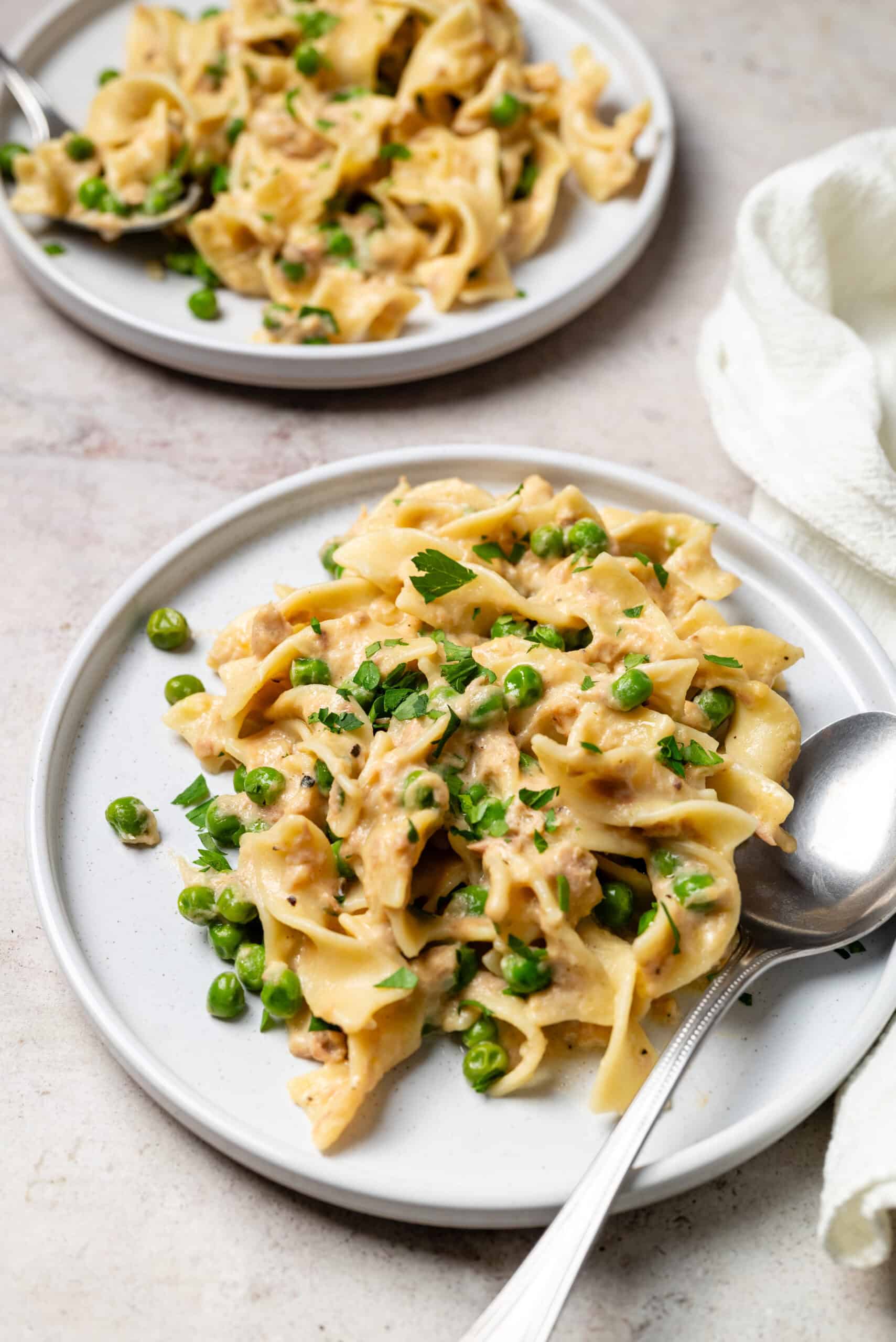
Tuna Helper is a great main for a weeknight dinner, and it’s also a perfect offering for potlucks. It goes well with this simple House Salad Recipe, but you can also add a warm vegetable side such as Air-Fryer Zucchini or Sautéed Asparagus. To make the meal even more substantial, serve it with a basket of warm Garlic Breadsticks or a loaf of No-Yeast Bread.
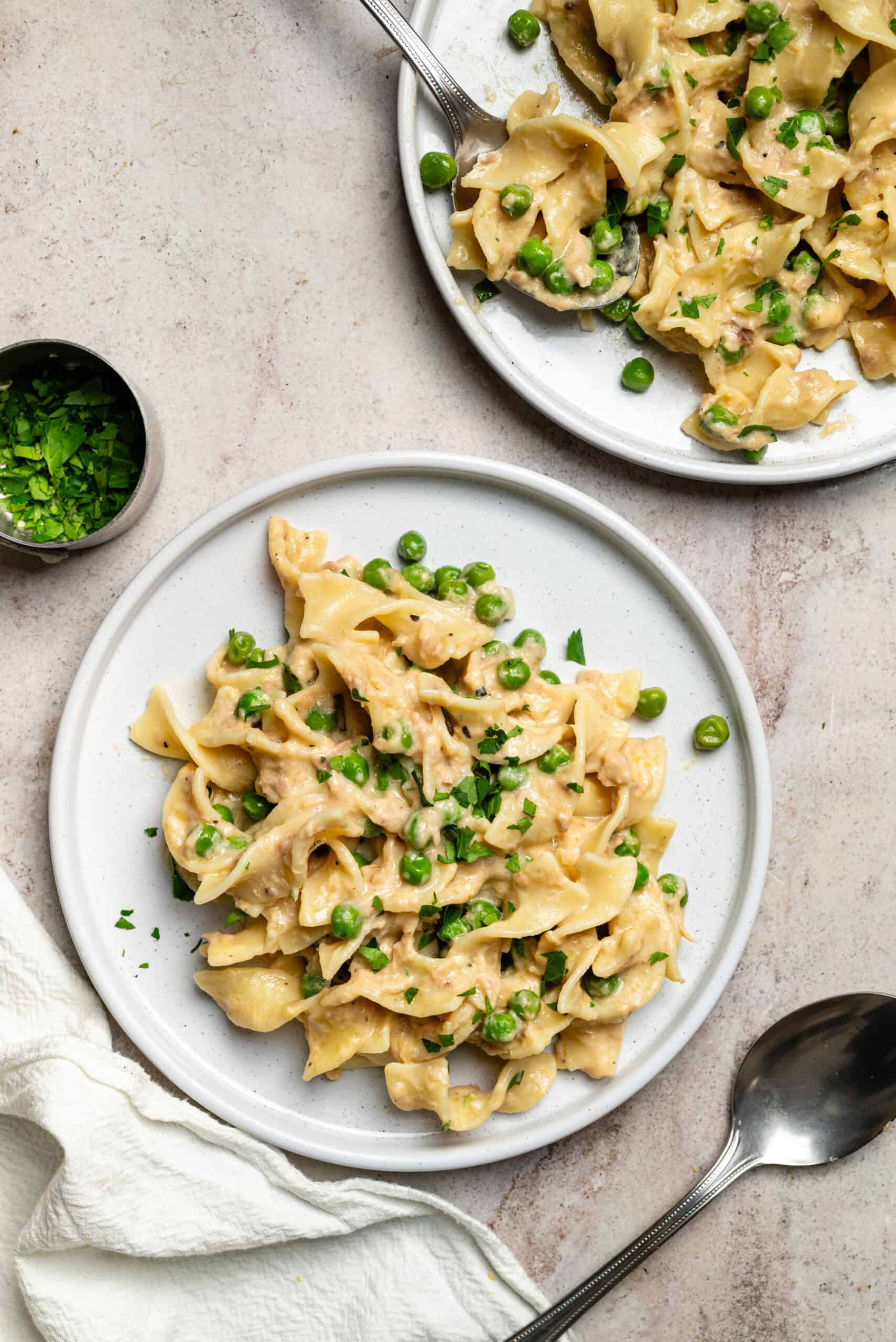
Tuna Helper

Ingredients
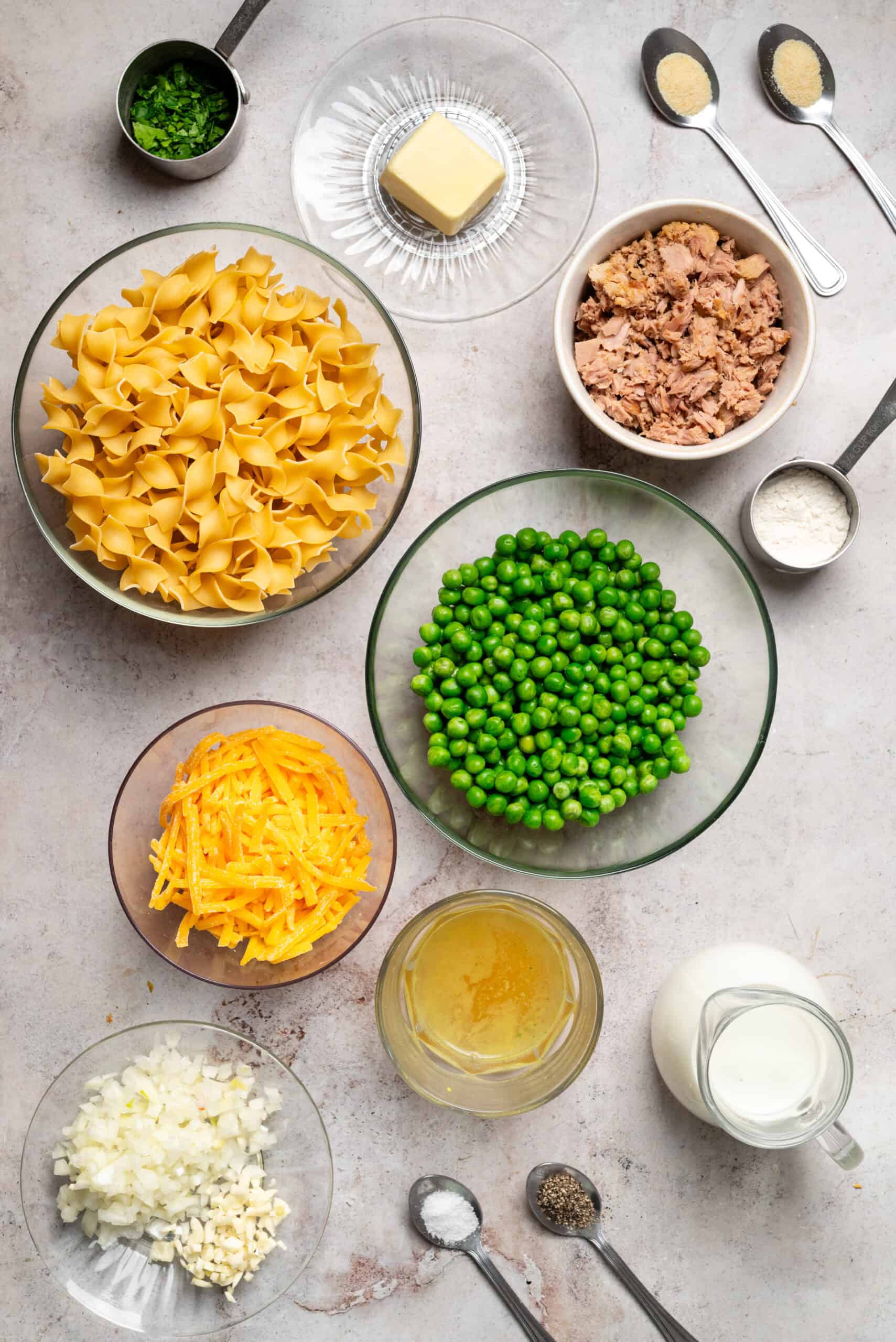
- 8 ounces egg noodles
- 2 tablespoons unsalted butter
- 1 small onion diced
- 2 cloves garlic minced
- 2 tablespoons all-purpose flour
- 2 cups milk
- 1/3 cup chicken broth
- 3/4 teaspoon garlic powder
- 3/4 teaspoon onion powder
- Salt and pepper to taste
- 2 cans tuna (5 ounces each) drained
- 1 1/2 cups frozen peas
- 1 cup shredded cheddar cheese
- Fresh parsley chopped, for garnish
Instructions
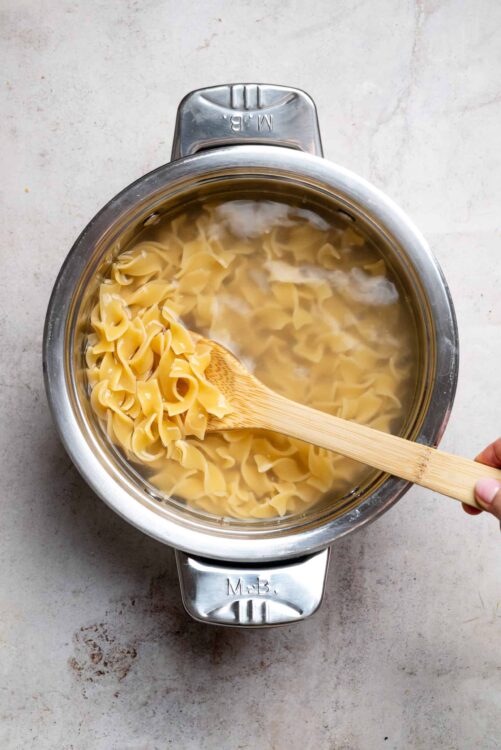
- Bring a large pot of salted water to a boil. Add egg noodles and cook according to package directions until al dente. Drain and set aside.
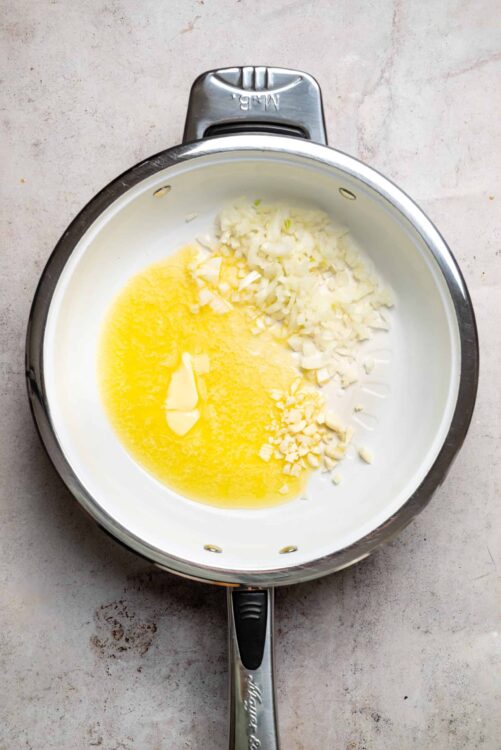
- In a skillet over medium heat, melt butter. Add diced onion and cook until soft, about 5 minutes. Stir in garlic and cook for 1 minute.
- Sprinkle flour over the onions and garlic. Stir constantly for 2 minutes to combine.
- Slowly pour in milk and chicken broth, whisking to prevent lumps.
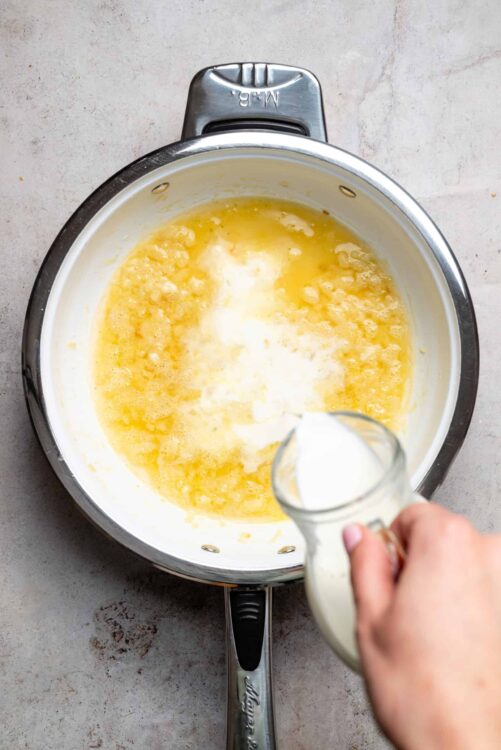
- Stir in garlic powder, onion powder, salt, and pepper. Keep cooking, stirring often, until the sauce thickens, about 5 minutes.
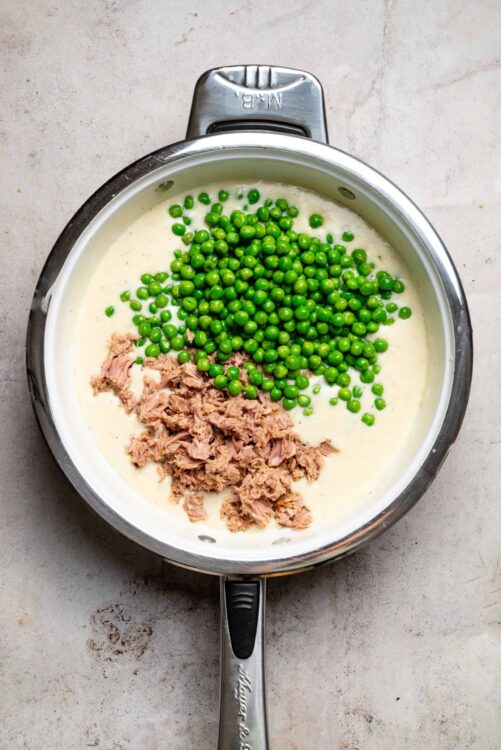
- Stir in drained tuna and frozen peas. Cook for 2-5 minutes until heated through.
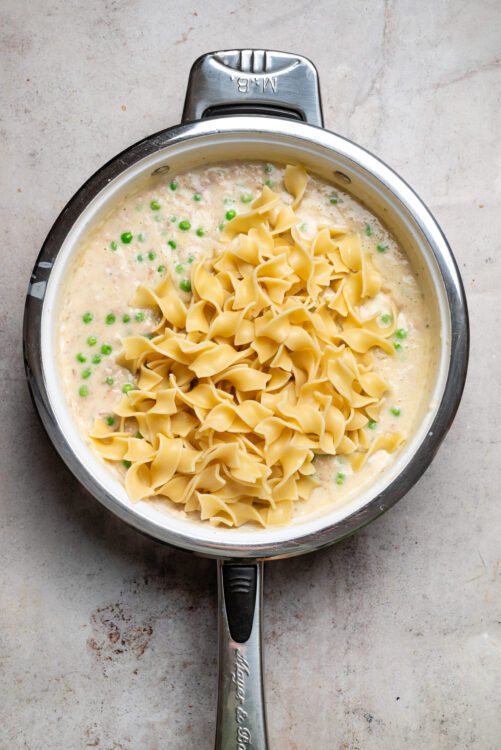
- Add the cooked noodles into the skillet and stir well.
- Stir in shredded cheddar cheese until it melts and combines smoothly.
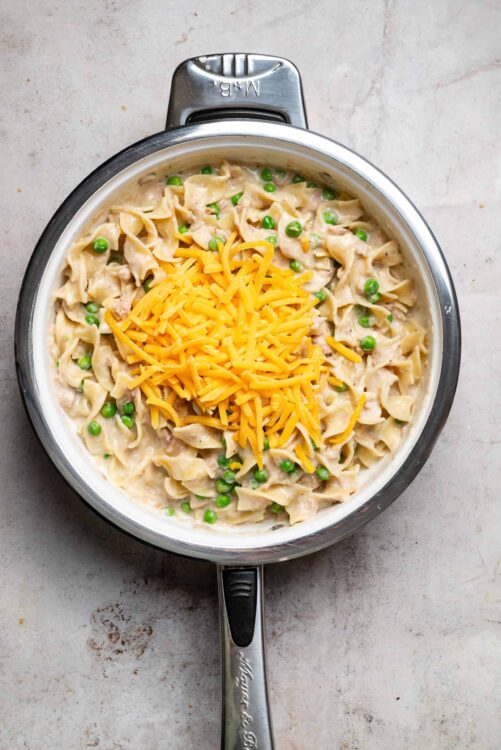
- Taste and adjust seasoning if needed. Serve warm, garnished with parsley.

Leave a Comment