

No yeast? No problem, with this delicious No-Yeast Bread!
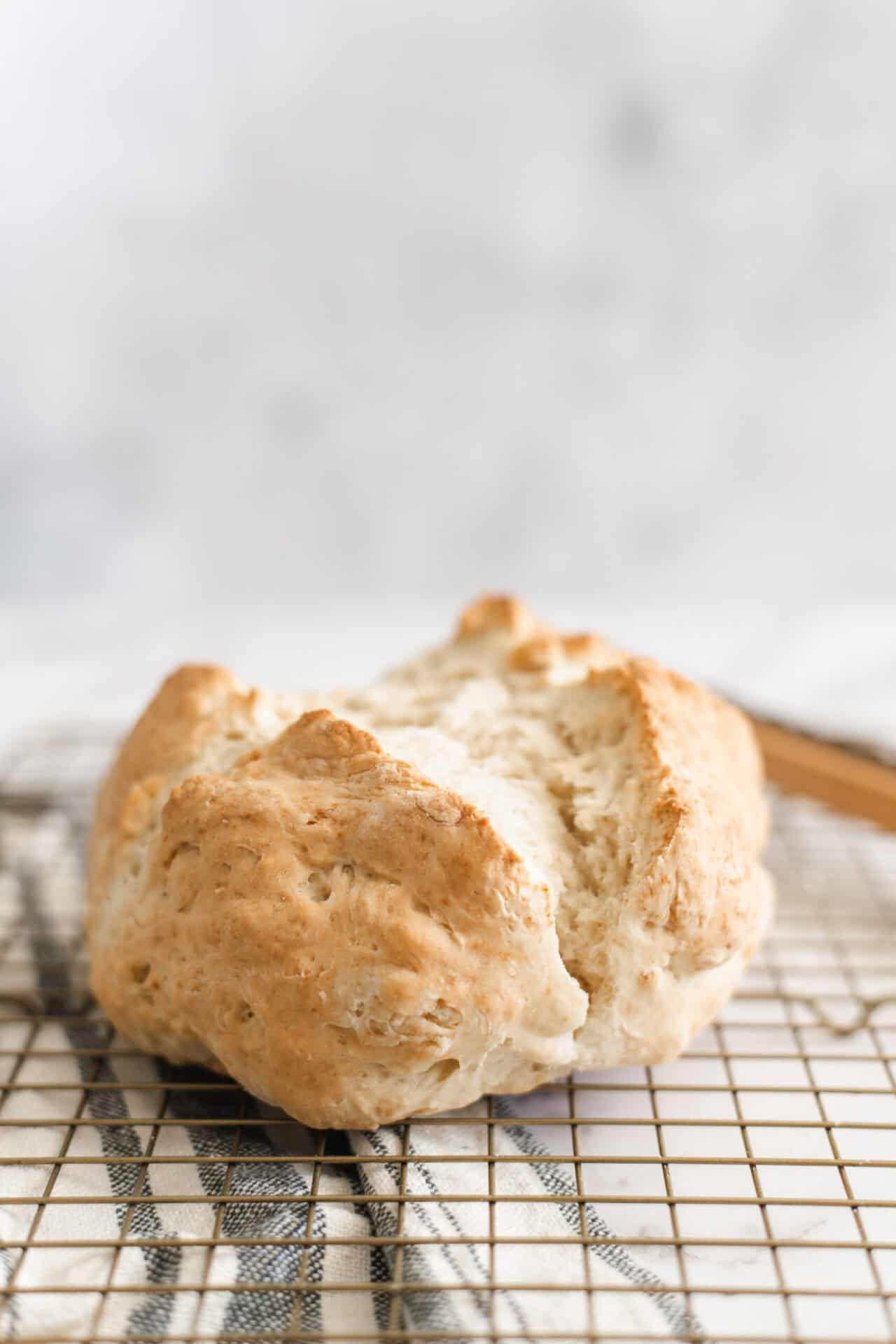
Way back in the days of the COVID-19 quarantine, toilet paper wasn’t the only hot commodity at the grocery store. Yeast was also in short supply. Of course, I didn’t realize this until I got to the store, list in hand, ready to tackle at-home bread baking as a replacement for binge-watching shows. There was no yeast at all! Instead of throwing in the towel and going back to my shows, I did a deep dive into the world of no-yeast bread.
As it turns out, I’d been making one very popular type of no-yeast bread for years: Irish soda bread. This type of no-yeast bread relies on baking soda and buttermilk to make it rise. However, I wanted something more versatile, and that’s when I discovered this no-yeast bread. It doesn’t use baking soda or buttermilk, but uses baking powder as a key leavening ingredient instead.
As much as I love Irish soda bread, sometimes the baking soda in it creates a bit of a bitter aftertaste. With this no-yeast bread, the taste is really mild and lovely. You will also love the ease of no-yeast bread. It uses only six simple ingredients plus a very simple process, even for novice bakers! The bread slices up just like yeast bread and is really versatile.
Baking Powder 101
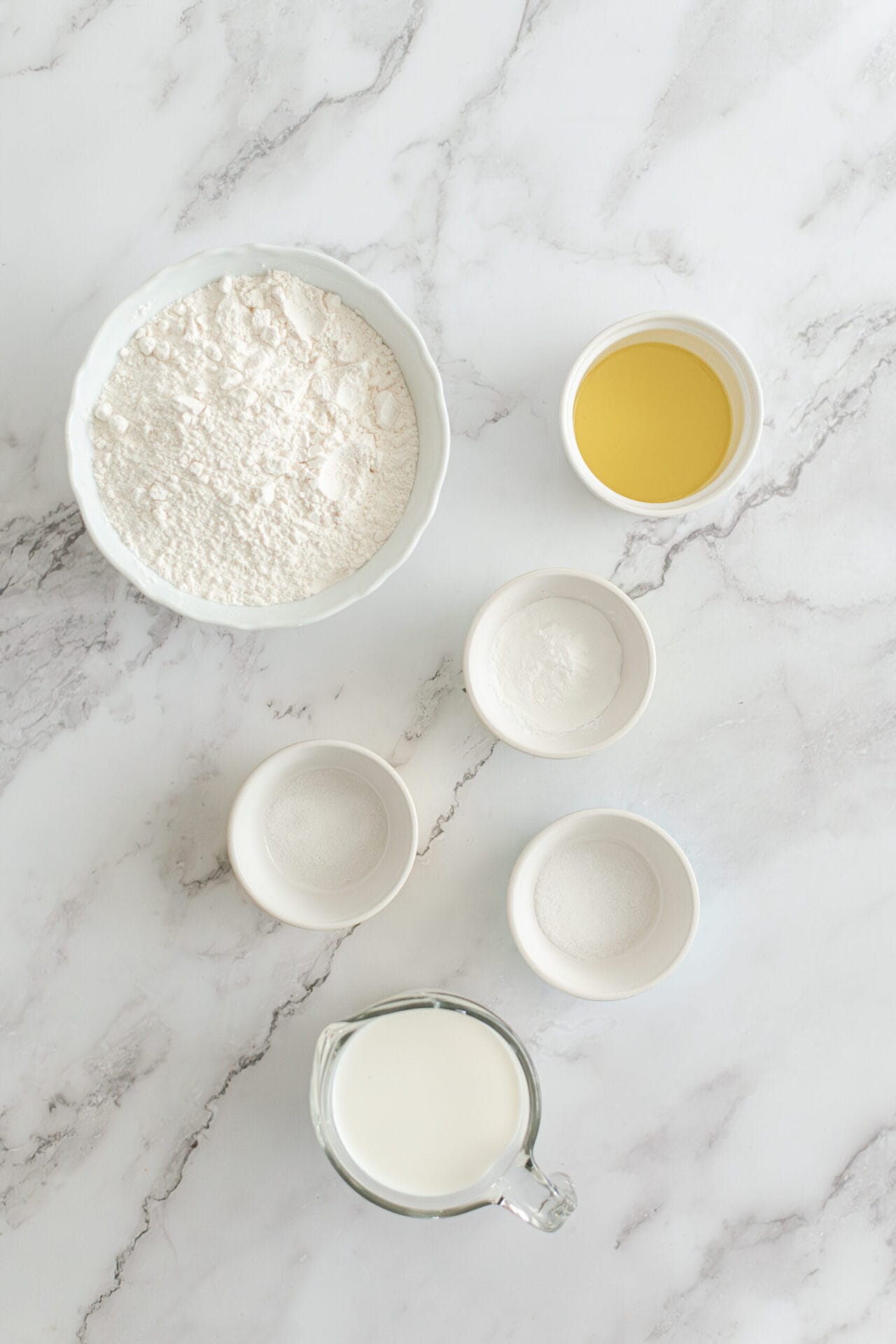
How does baking powder make bread—and other baked goods—rise, especially when there’s no yeast? While yeast, baking soda, and baking powder are all leavening agents, they work differently. Yeast is a living organism that ferments, creating gas over time, while baking soda is a single ingredient (sodium bicarbonate) that needs an acid to react. Baking powder, on the other hand, is a pre-mixed leavening agent that already contains baking soda, along with an acid (like cream of tartar) and a starch (like cornstarch) to keep it stable. In this recipe, double-acting baking powder helps the dough rise in two stages—first, when mixed with liquid, it creates tiny air bubbles, and then again when heated, expanding the dough and giving it a light, fluffy texture.
How Do I Store Leftovers?
To store leftover no-yeast bread, keep it wrapped in a clean kitchen towel or in a paper bag at room temperature for up to 2–3 days to help maintain its texture. Avoid plastic wrap or airtight containers, as they can trap moisture and make the bread soggy. For longer storage, freeze the bread by wrapping it tightly in plastic wrap or foil, then placing it in a freezer bag for up to 3 months. When ready to eat, simply thaw it at room temperature and, if desired, warm it in the oven for a few minutes to refresh the texture.
How Can I Make This Vegan?
Converting no-yeast bread to a vegan recipe is a breeze. Simply swap out the whole milk with your favorite plant-based dairy substitute. Since there are no eggs in this recipe, that’s the only thing you have to change.
Serving Suggestions
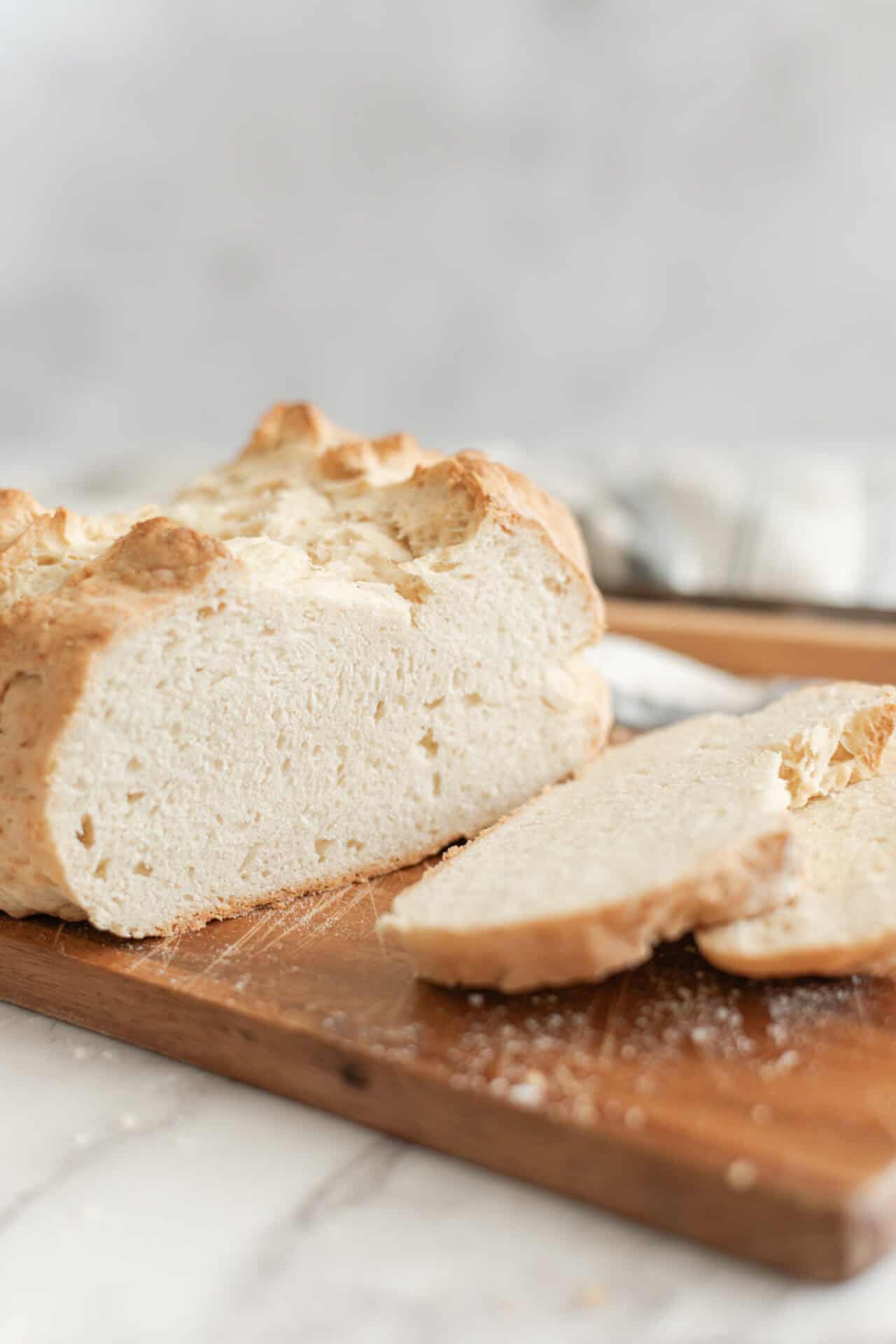
No-yeast bread is truly versatile. It’s delicious as a slice right out of the oven, with a little Whipped Butter. Try it toasted with this delicious Orange Marmalade. It makes excellent French toast, and it’s wonderful in this Streusel French Toast Casserole. Not in the mood for breakfast? Use no-yeast bread to make an Open-Faced Hot Honey And Ham Grilled Cheese.
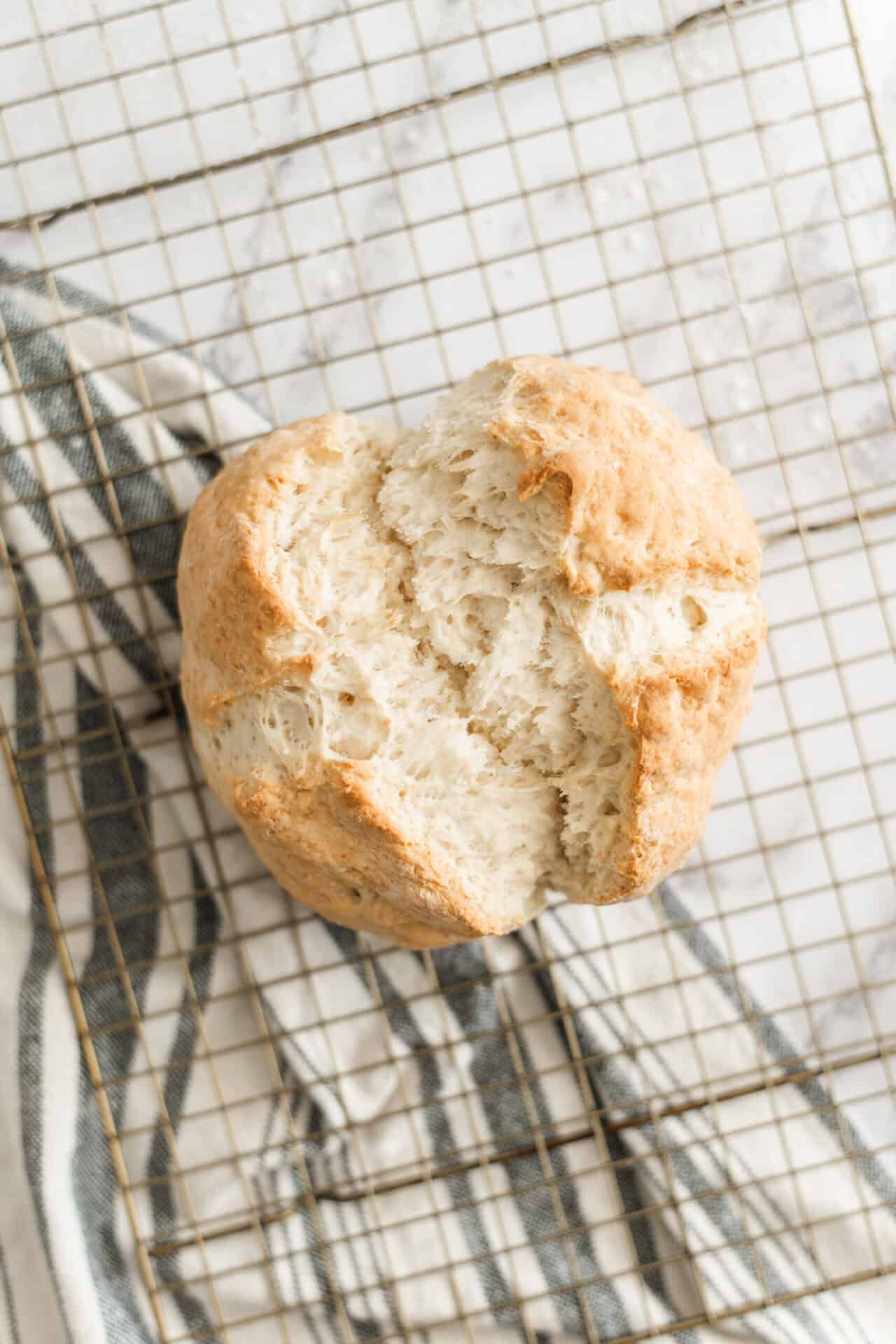
No-Yeast Bread

Ingredients
- 2 1/2 cups all-purpose flour
- 2 1/4 teaspoons baking powder
- 1/2 teaspoon sugar
- 3/4 teaspoon salt
- 1 cup whole milk
- 1 tablespoon vegetable oil
Instructions
- Preheat the oven to 400°F.
- In a large mixing bowl, combine the dry ingredients.
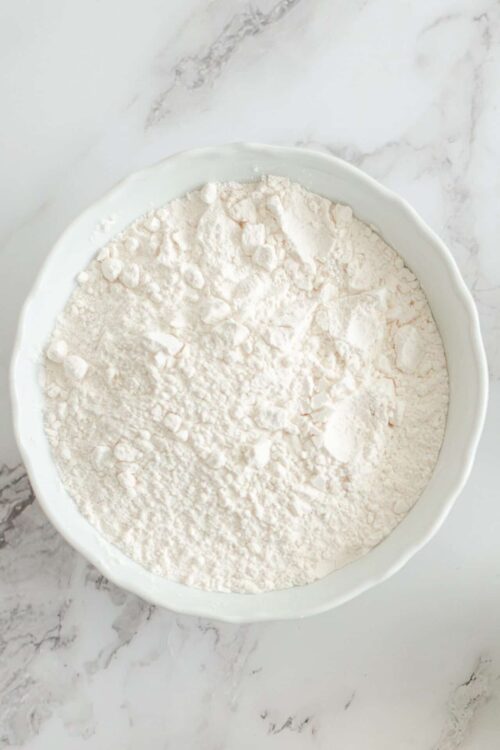
- Add milk and vegetable oil to the dry ingredients and mix until a dough forms.
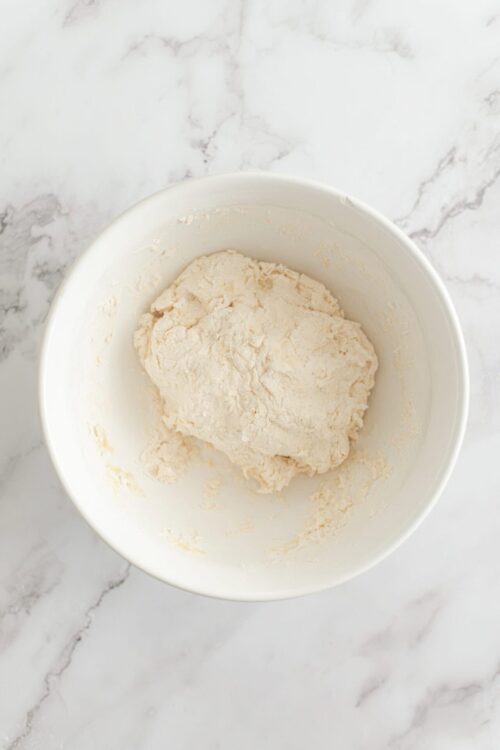
- Turn the dough onto a lightly floured surface and knead for 1-2 minutes until smooth.
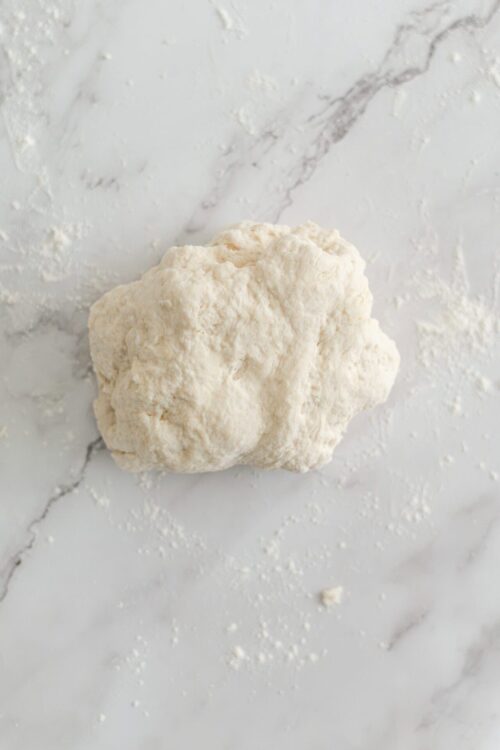
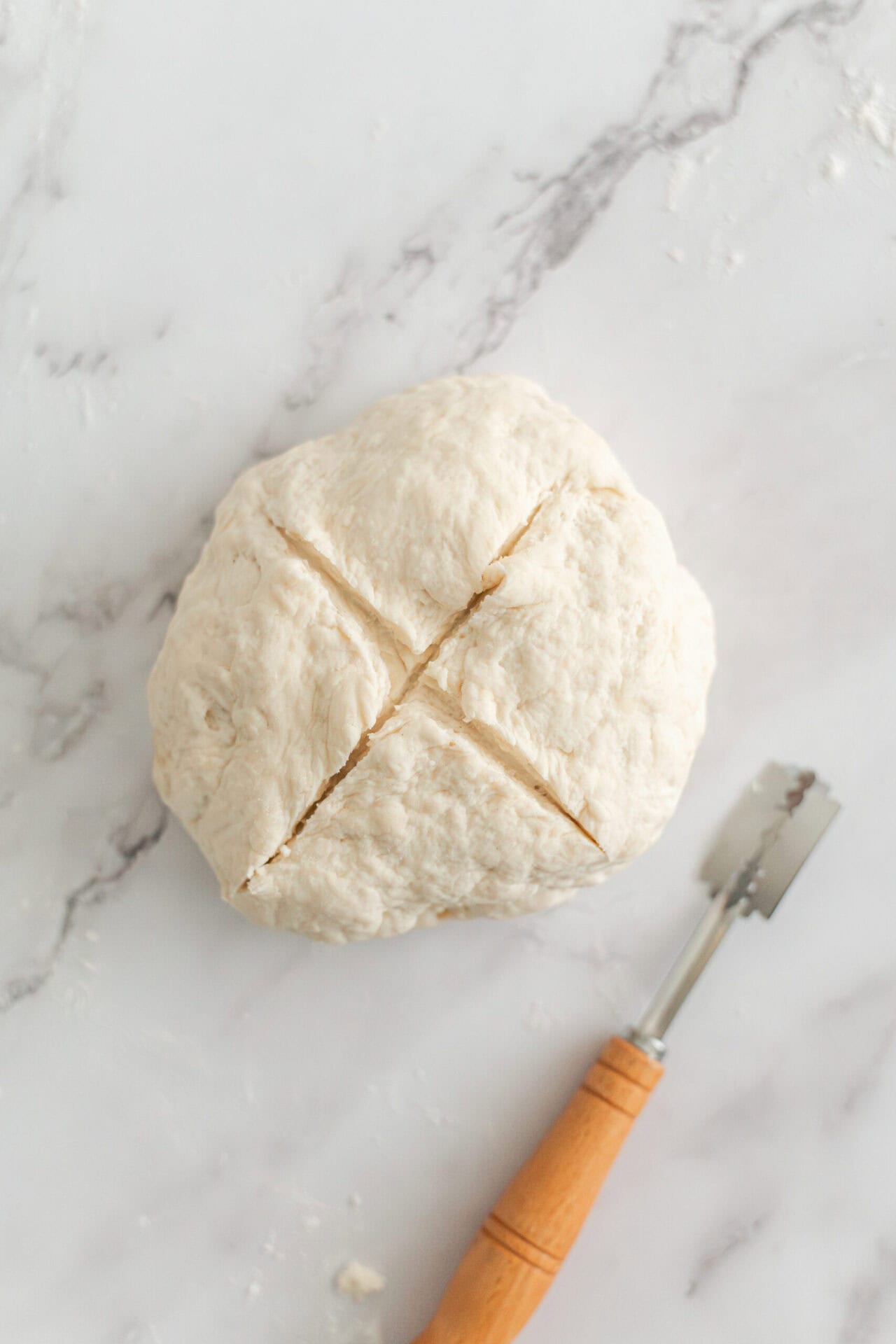
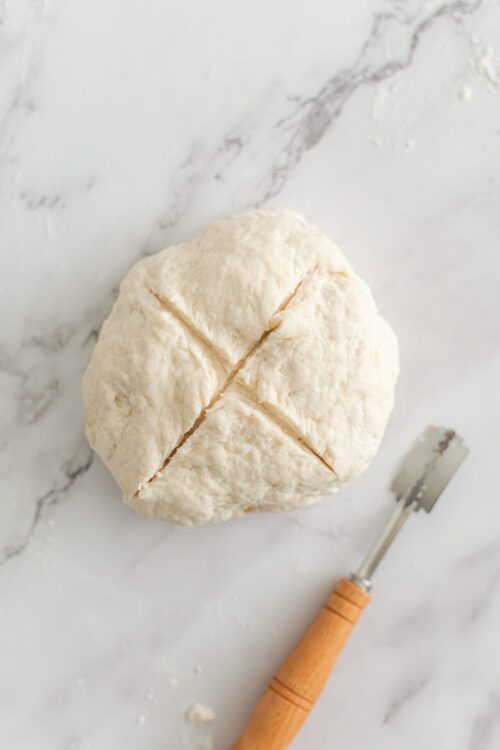
- Shape the dough into a round disc, about 1 1/2 inches thick. Score an “X” on the top of the bread with a knife.
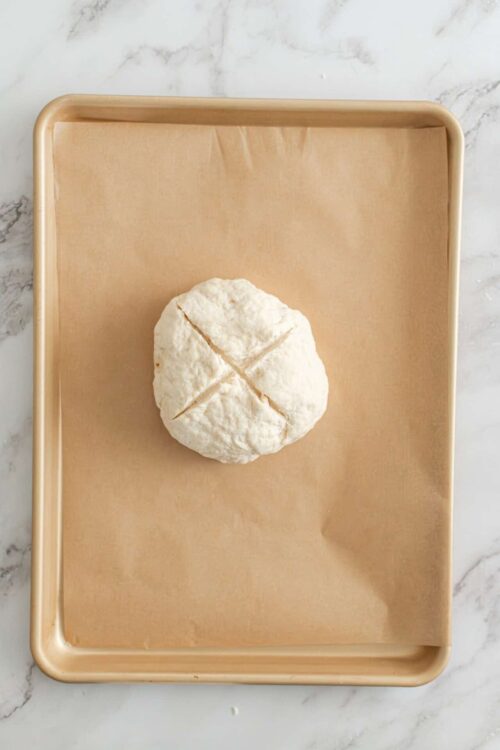
- Place the dough on a baking sheet and bake for 30 minutes, or until the bread sounds hollow when tapped on the bottom.

Leave a Comment