

Gently cooked spring vegetables with lemon and Parmesan make this pasta dish both easy and deliciously rewarding.
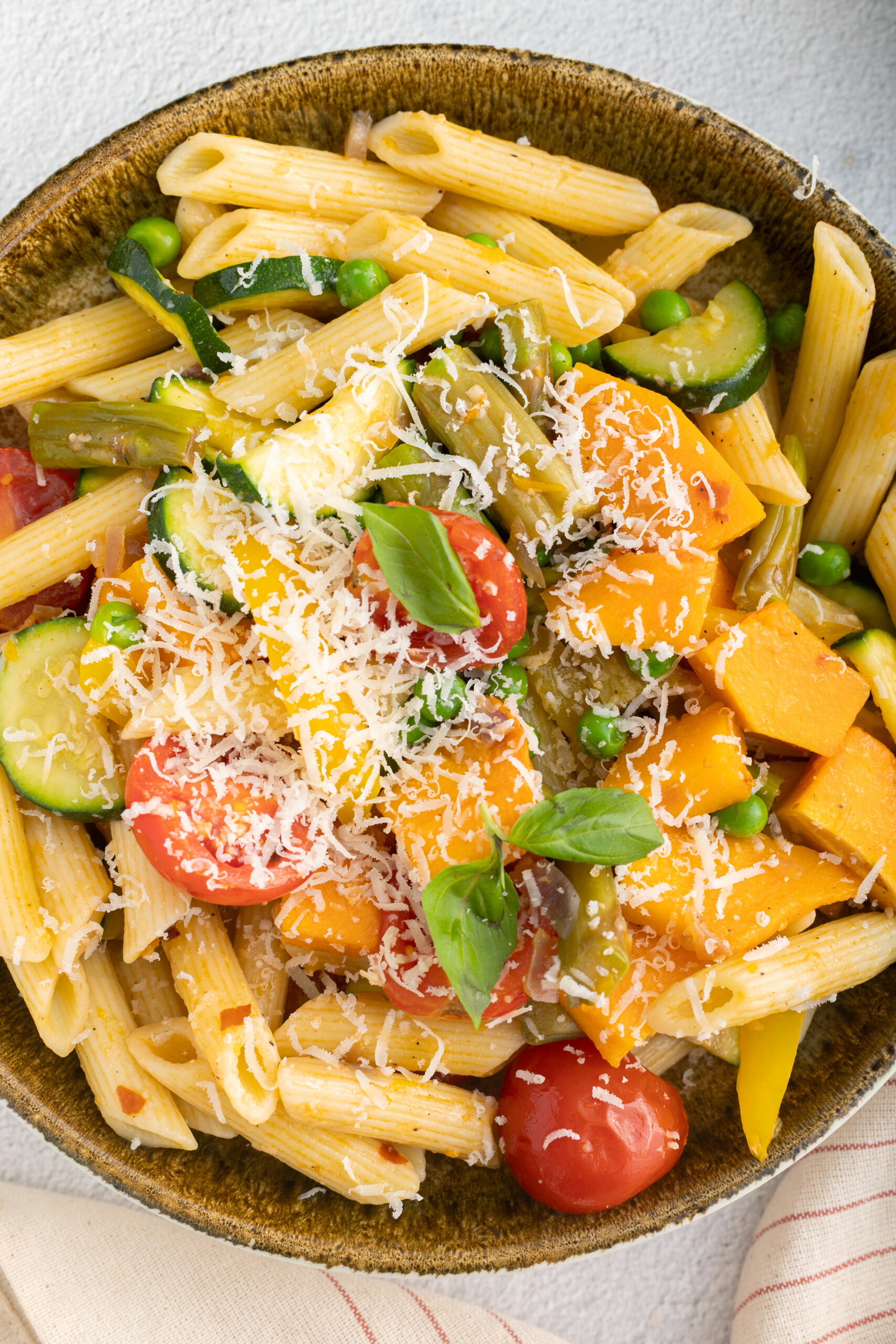
In Italian, primavera means “spring,” and this dish is very much deserving of such a name. The first pasta primavera I ever had was over ten years ago at one of my favorite plant-based restaurants in Austin. Their version made use of their house-made fettuccine—the kind that’s knife-cut by hand into gorgeous, nonuniform ribbons.
I’ve always been partial to creamier pastas over tomato sauce-laden kinds; if I must choose between a carbonara and a thick Sunday gravy, nine times out of ten I’m going with the former. This primavera sauce differs from a carbonara or an Alfredo, as it includes no meat, egg, or cream. Its creaminess comes from lemon, Parmesan, and starchy pasta water combining to create an ultralight, silky coating. The squash, zucchini, asparagus, cherry tomatoes, bell pepper, peas, and red onion lend a magnificent mix of color and texture throughout.
Enjoy this meal with your favorite people—as an ode to good weather, fresh vegetables, and all the possibilities that come with the changing of the seasons.
So, what makes pasta primavera special?
Pasta primavera, as we know it today, can be traced back to 1970s New York—specifically to a buzzy little restaurant you might have heard of called Le Cirque. The dish was created by Le Cirque’s owner, Sirio Maccioni, a restaurateur from the small Tuscan town of Montecatini Terme. You may be wondering what made this pasta dish in particular so popular. After all, it’s just pasta tossed with spring vegetables and a light lemon-cream sauce. But in the realm of Italian cooking, that combination was far from commonplace. The vegetables were very lightly cooked—just tender enough while still preserving some snap. The idea of including more than one or two vegetables in a single pasta dish was almost unheard of. That novel concept, combined with its presentation and taste, is what drew patrons to this Manhattan haunt in droves.
How do I store leftovers?
Store leftover pasta primavera in an airtight container and refrigerate for up to 3 days. When you’re ready to reheat, add a splash of water or broth to loosen the sauce and warm it gently on the stovetop over low heat, stirring often. If you’re in a pinch, you can microwave it in 30-second increments. Be sure to stir in between so it reheats evenly.
Serving suggestions
This pasta primavera begs to be paired with this crusty, chewy Focaccia or this Garlic Bread. Both are absolutely superb, so take your pick. Just trust me on that. These rich and robust Boursin-Stuffed Mushrooms are always a stellar side for this kind of pasta dish. For a yummy salad option, I’d recommend this luscious and tangy Green Salad or this Arugula-Caprese Salad With Lemon-Basil Dressing.
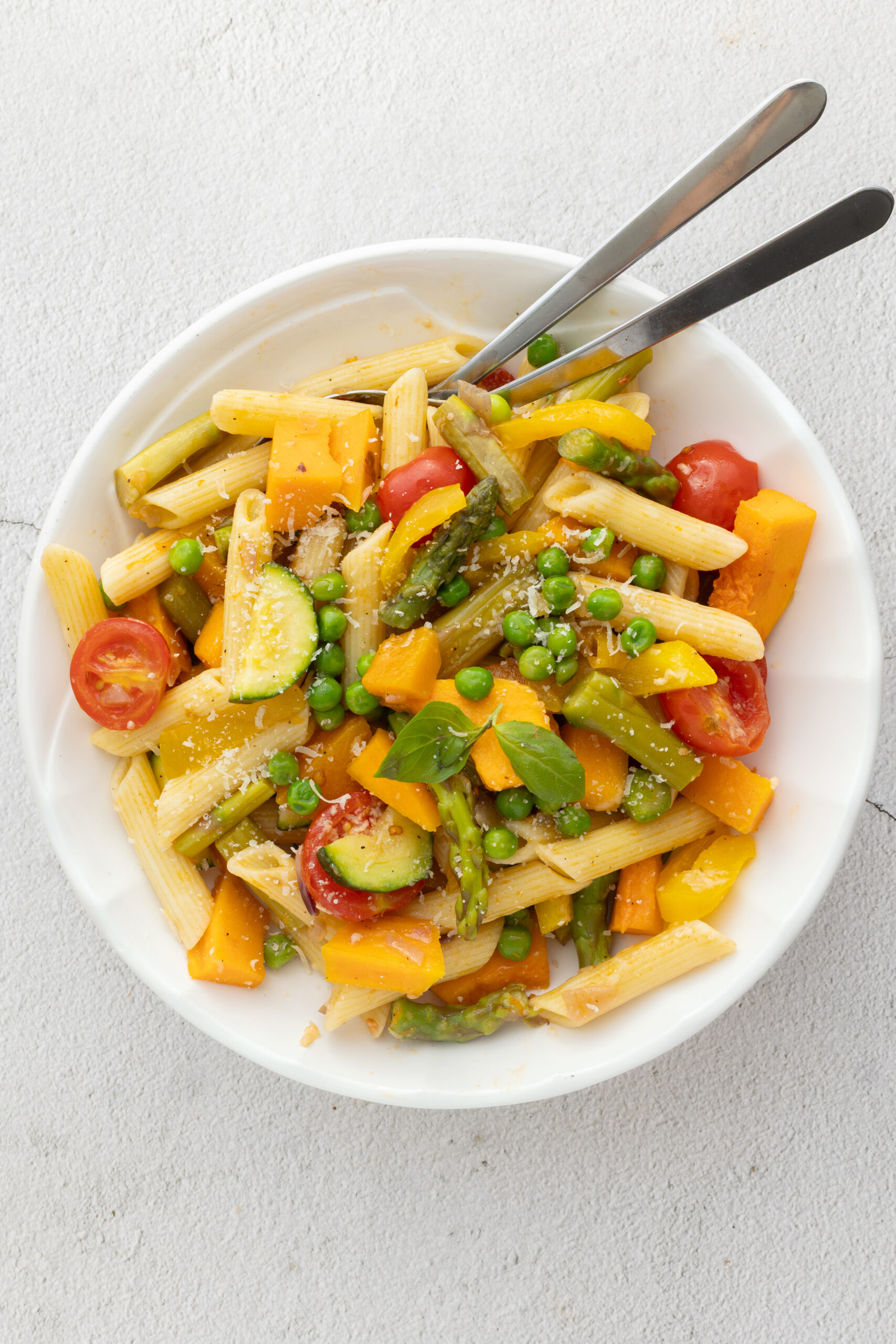
Pasta Primavera

Ingredients
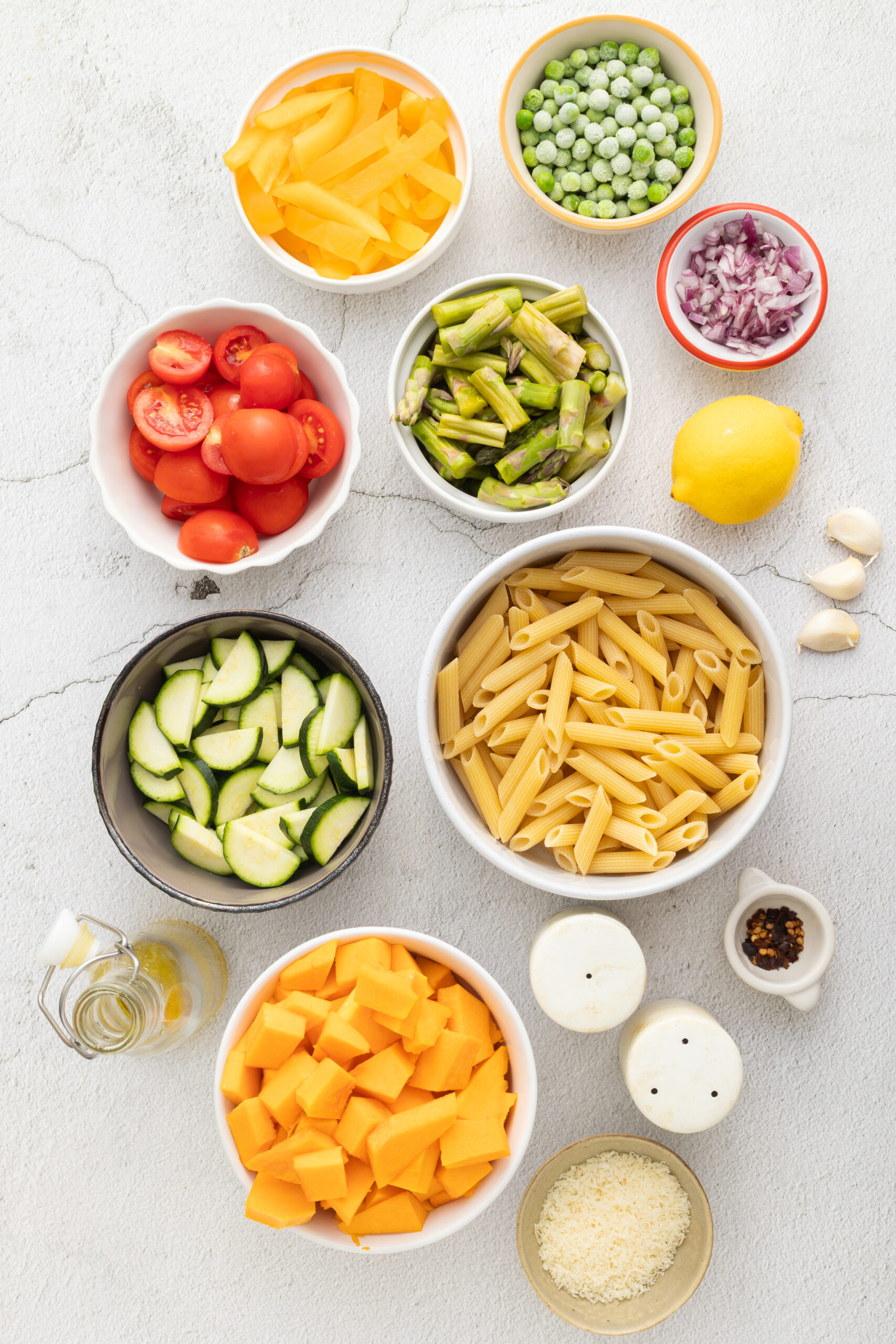
- Salt for pasta water and seasoning
- 12 ounces penne pasta
- 1 1/2 tablespoons extra-virgin olive oil plus extra for drizzling
- 3 garlic cloves sliced
- 1 yellow squash (or other type of squash) sliced into thin half-moons
- 1 zucchini sliced into thin half-moons
- 1 bunch asparagus trimmed and cut into 1-inch pieces
- 3/4 cup cherry tomatoes halved
- 1 bell pepper thinly sliced (any color)
- 1 cup thinly sliced red onion
- A pinch of red pepper flakes optional
- Black pepper to taste
- 1/2 cup frozen peas thawed
- 3/4 cup grated Parmesan cheese
- Juice of 1 lemon
- 1 cup fresh basil leaves roughly torn
Instructions
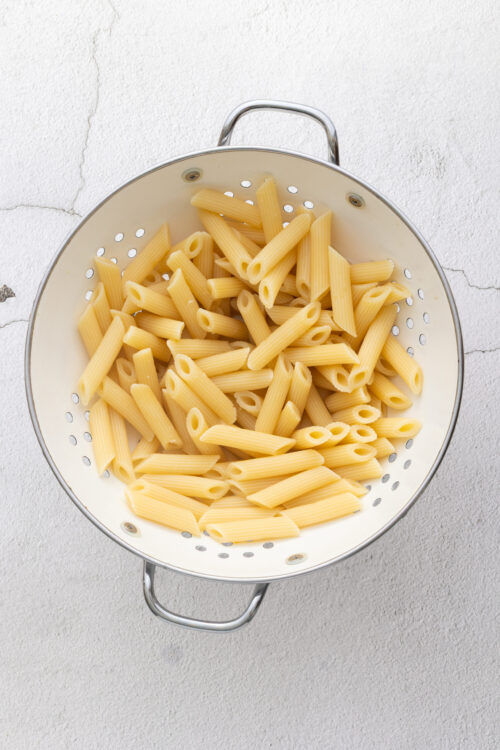
- Bring a large pot of water to a boil. Add a good pinch of salt and the pasta.
- Cook until the pasta is al dente according to the package instructions. Reserve about 1/2 cup of pasta water and then drain the pasta. Drizzle a little olive oil over the pasta to prevent sticking.
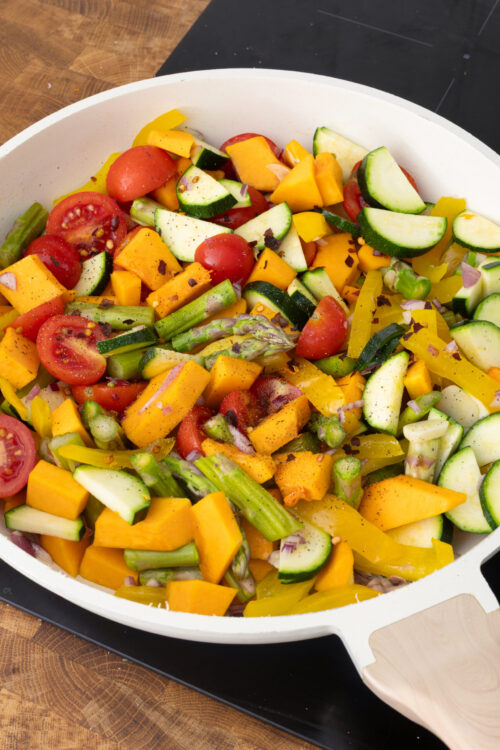
- Heat olive oil in a large, deep skillet over medium heat. Add the sliced garlic and cook for about 1 minute until fragrant.
- Add the squash, zucchini, asparagus, cherry tomatoes, bell pepper, and red onion. Season with salt, a pinch of red pepper flakes if using, and a few grinds of black pepper. Sauté for 3 to 4 minutes until the vegetables start to soften.
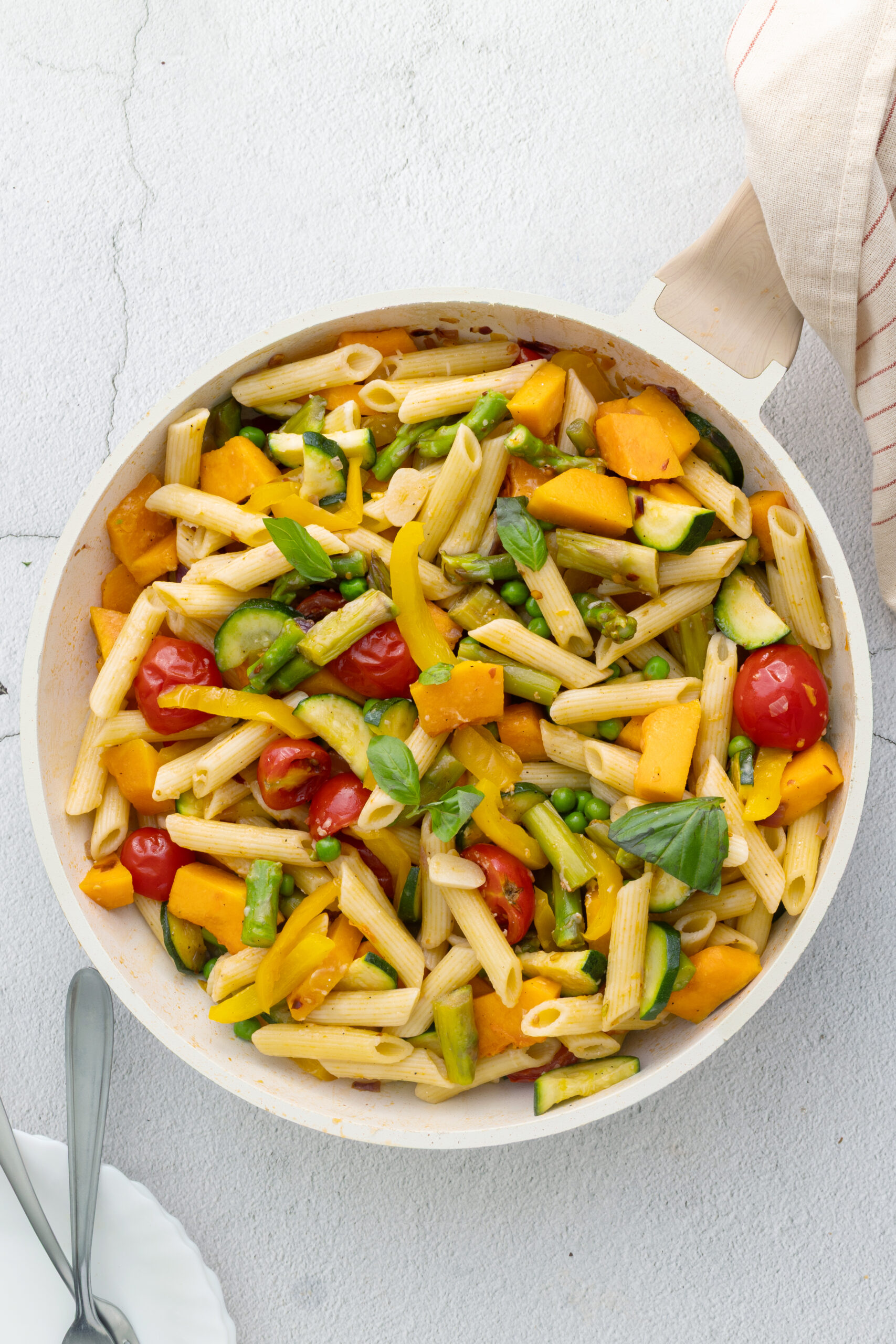
- Add the peas and cook for another minute. Toss in the cooked pasta, grated Parmesan, and fresh lemon juice. Stir to combine and add a splash of reserved pasta water if the sauce seems dry.
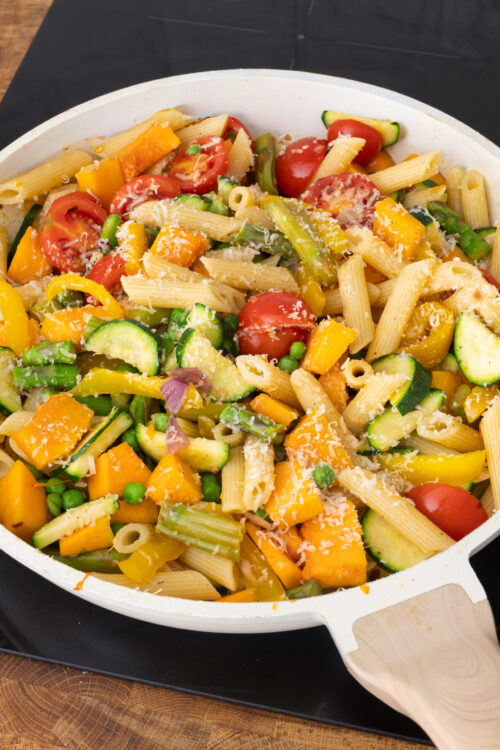
- Finally, fold in the fresh basil leaves. Taste and adjust seasoning if needed, then serve warm.

Leave a Comment