

These delicious onions and peppers add so much wonderful flavor to so many different dishes.
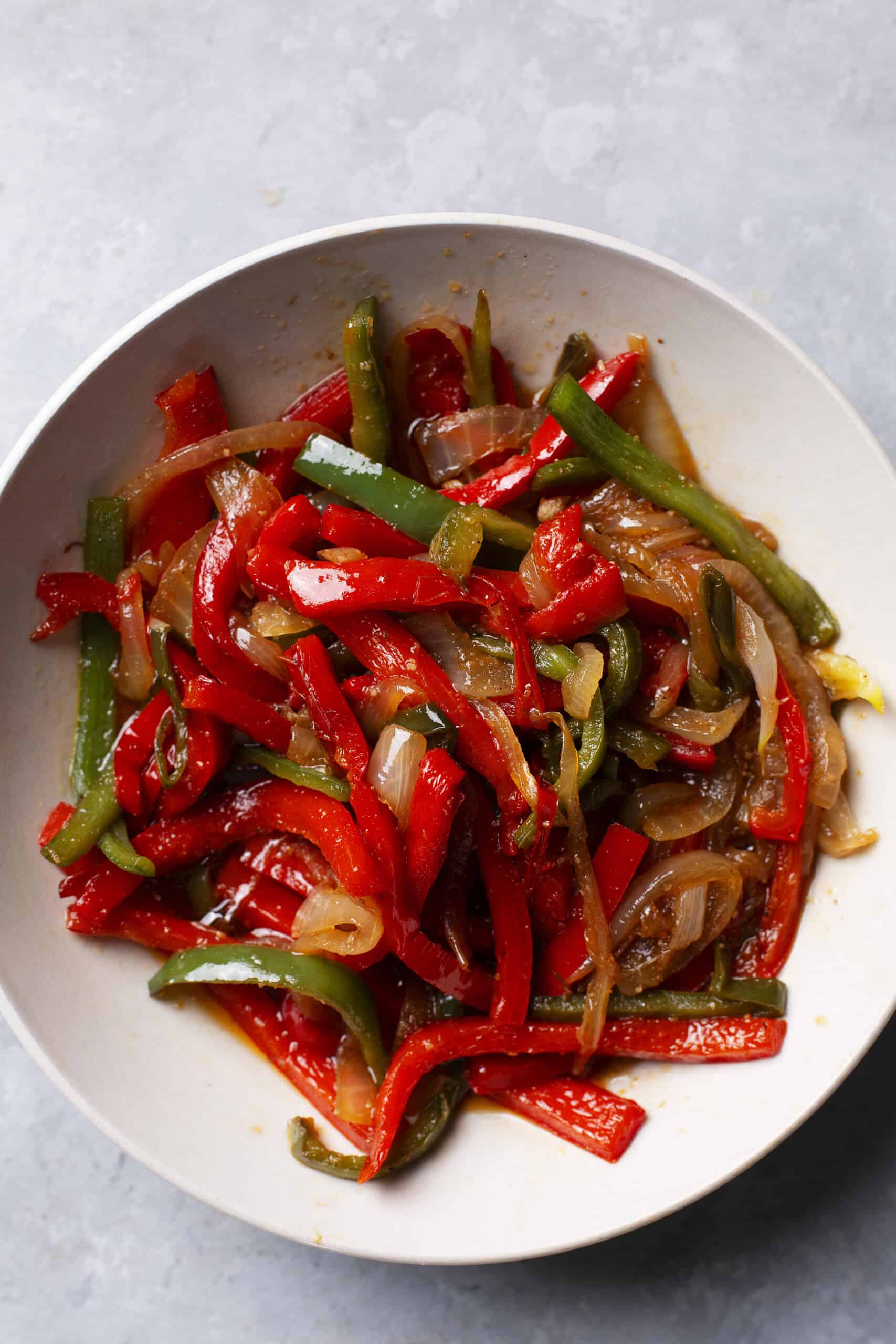
Sweet onions and bell peppers defy culinary categorization because they are an essential part of various cuisines. Italian, Cajun, Mexican, Spanish, Indian, East Asian… so many of our favorite dishes start with a mix of onions and peppers. And the reason is obvious: these two readily available and very affordable veggies bring a burst of fabulous flavor.
You can eat onions and peppers raw, of course, in salads and on sandwiches. You can also have them lightly sautéed as a side dish or tossed with pasta. But when you take the time to cook onions and peppers slowly over medium heat so that they caramelize and develop a deep, rich, umami flavor, they can transform any dish they become part of.
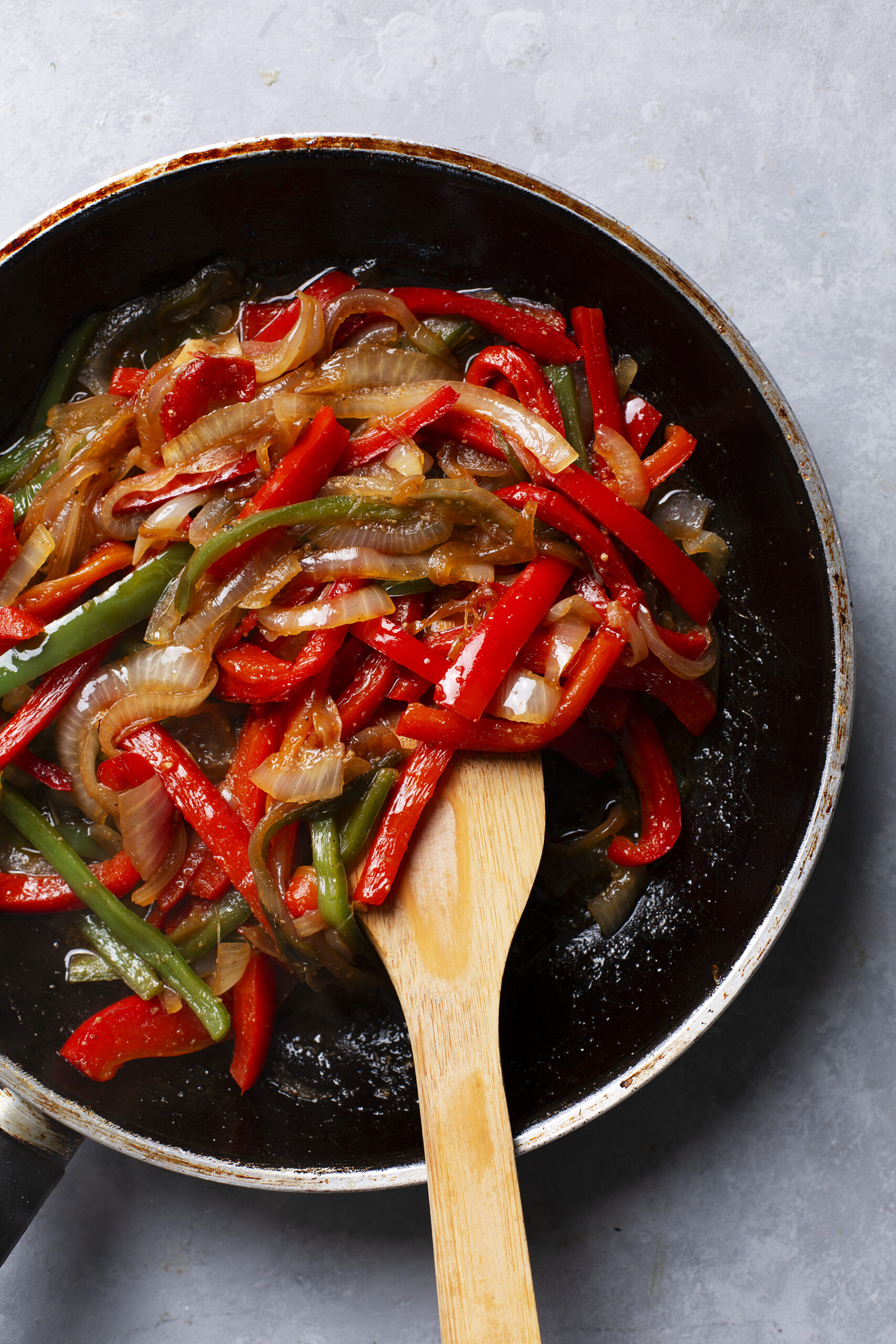
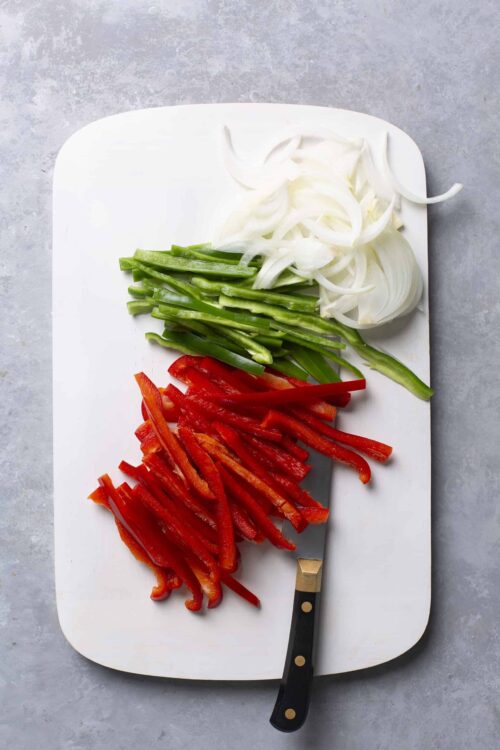
Onions and peppers sauté also adds vibrant color and a luscious texture. In our recipe, we’re using red and green bell peppers, but you can also use the yellow and/or orange varieties. Even Anaheims or Cubanelles will work in this recipe if you’re looking for something more distinctive. But we like bell peppers best here for their sweetness and beautiful ability to caramelize. They’re also so easy to cook. Simply slice the peppers and onions into thin strips, add them to the heated olive oil, season, and then let them do their thing (meaning you should stir occasionally, but mostly leave them alone to soften and get golden brown).
What Exactly Is Caramelization?
Caramelization is a cooking method that adds great depth of flavor to vegetables by breaking down their natural sugars slowly over moderate heat. In our recipe for onions and peppers sauté, cooking these veggies over medium heat until they soften and become a beautiful golden color takes about 15 minutes. The process is well worth the wait. Once caramelized, the peppers and onions will have developed a savory yet slightly sweet taste and a wonderfully tender texture.
FAQs & Tips
How Do I Store Leftovers?
Cooled onions and peppers sauté can be stored in an airtight container in the refrigerator for up to 5 days and in the freezer for up to 4 months. Thaw from frozen overnight in the fridge.
Can I Use A Different Oil?
We like olive oil best for this recipe because of the flavor it brings and how well it works with the moderate heat caramelization requires. That said, you can also use canola oil, vegetable oil, or even a mix of olive oil and butter.
Can I Use Fresh Garlic?
Sure. Peel the cloves, but don’t add them until you’re about 5 minutes into the cooking (fresh garlic can burn). Another super delicious thing you can do is make this Roasted Garlic and then squeeze the soft cloves into the onions and peppers sauté during the last 5 minutes of cooking.
Serving Suggestions
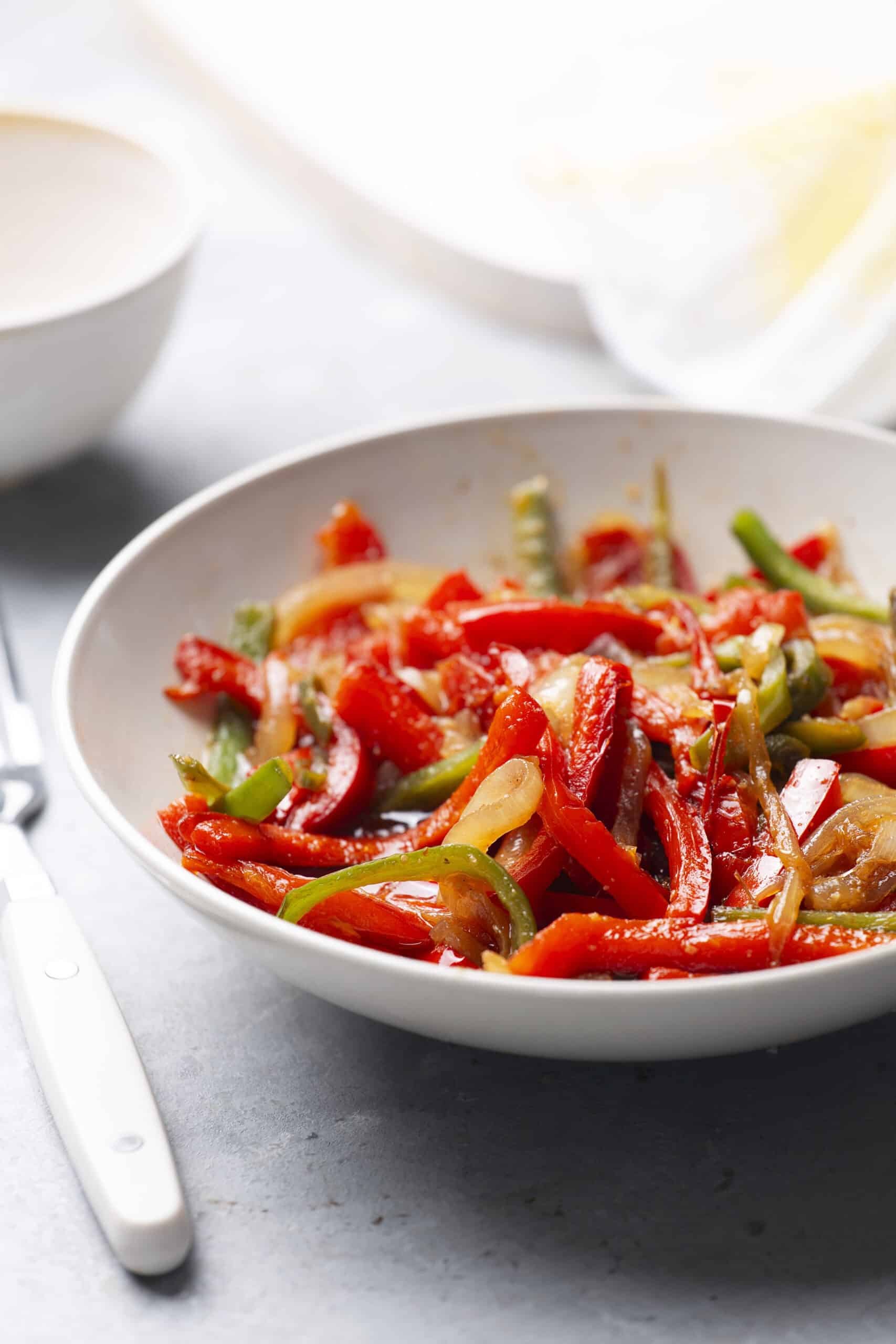
There’s a restaurant in my neighborhood that serves their Shrimp And Grits with onions and peppers, so I love to add this sauté to mine. It’s also great with other Southern-inspired dishes, such as a garnish for Vegan Gumbo, on top of warm slices of Jenny’s Cornbread, or as a perfect side to Chicken-Fried Steak.
These onions and peppers are so versatile that they go with nearly any kind of cuisine. Italian? Stuff them into these Italian Drip Beef Sandwiches or spoon them over a bowl of this Delicious Creamy Polenta (with some Homemade Meatballs, of course!), or serve them as a side with Sausage Rigatoni. Asian? Toss the onions and peppers into this Asian Noodle Bowl or pair these flavorful veggies with Asian Meatballs and some Baked Rice.
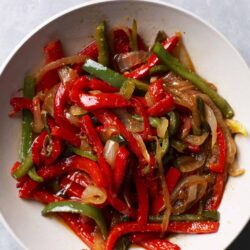
Onions And Peppers Sauté

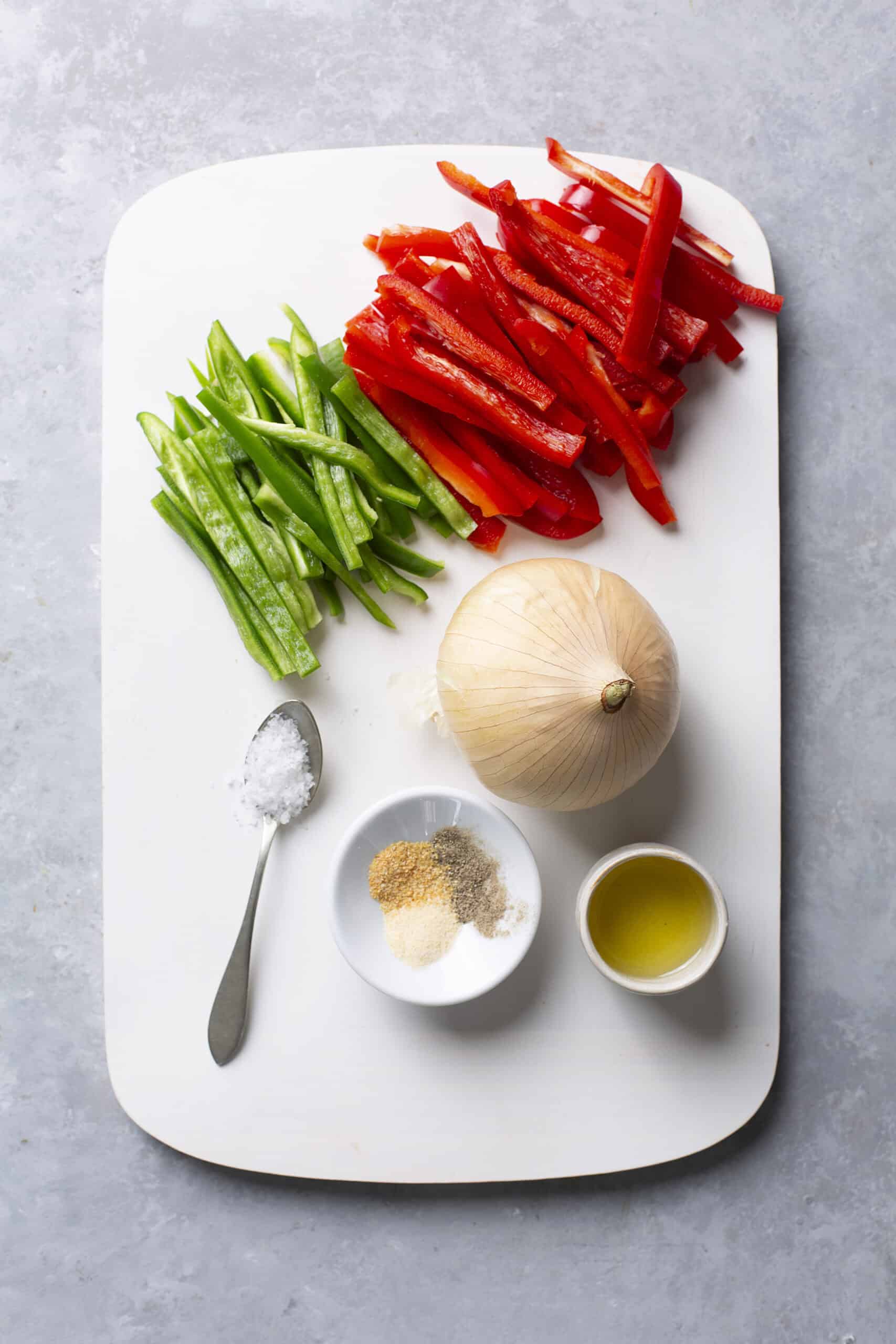
Ingredients
- 1 large red bell pepper
- 1 large green bell pepper
- 1 large onion
- 2 tablespoons olive oil
- 1/2 teaspoon garlic powder
- 1/2 teaspoon onion powder
- 1/2 teaspoon salt
- 1/4 teaspoon black pepper
Instructions
- Slice the bell peppers and onion into thin strips.
- Heat olive oil in a large skillet over medium heat. Add the sliced peppers and onions. Season with garlic powder, onion powder, salt, and pepper.
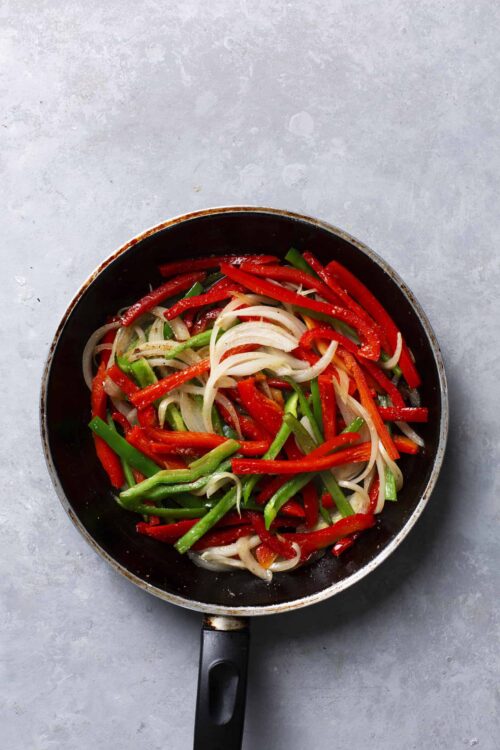
- Sauté for about 15 minutes, stirring occasionally, adding more oil during cooking if needed.
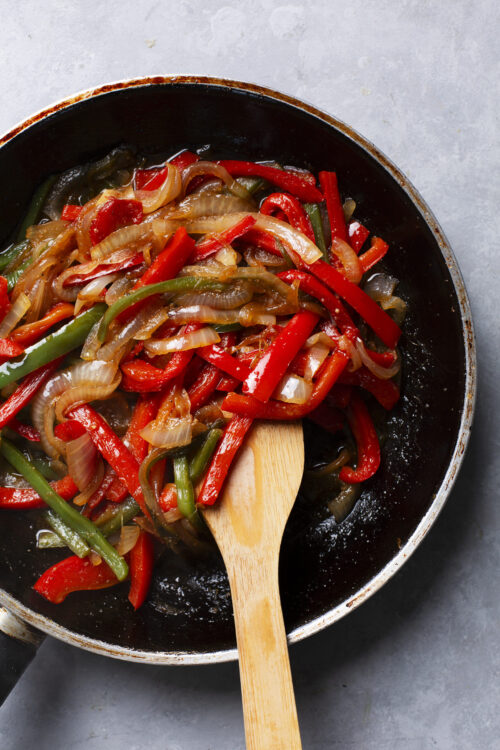
- Remove the vegetables from the heat when they are tender and slightly caramelized.


Leave a Comment