

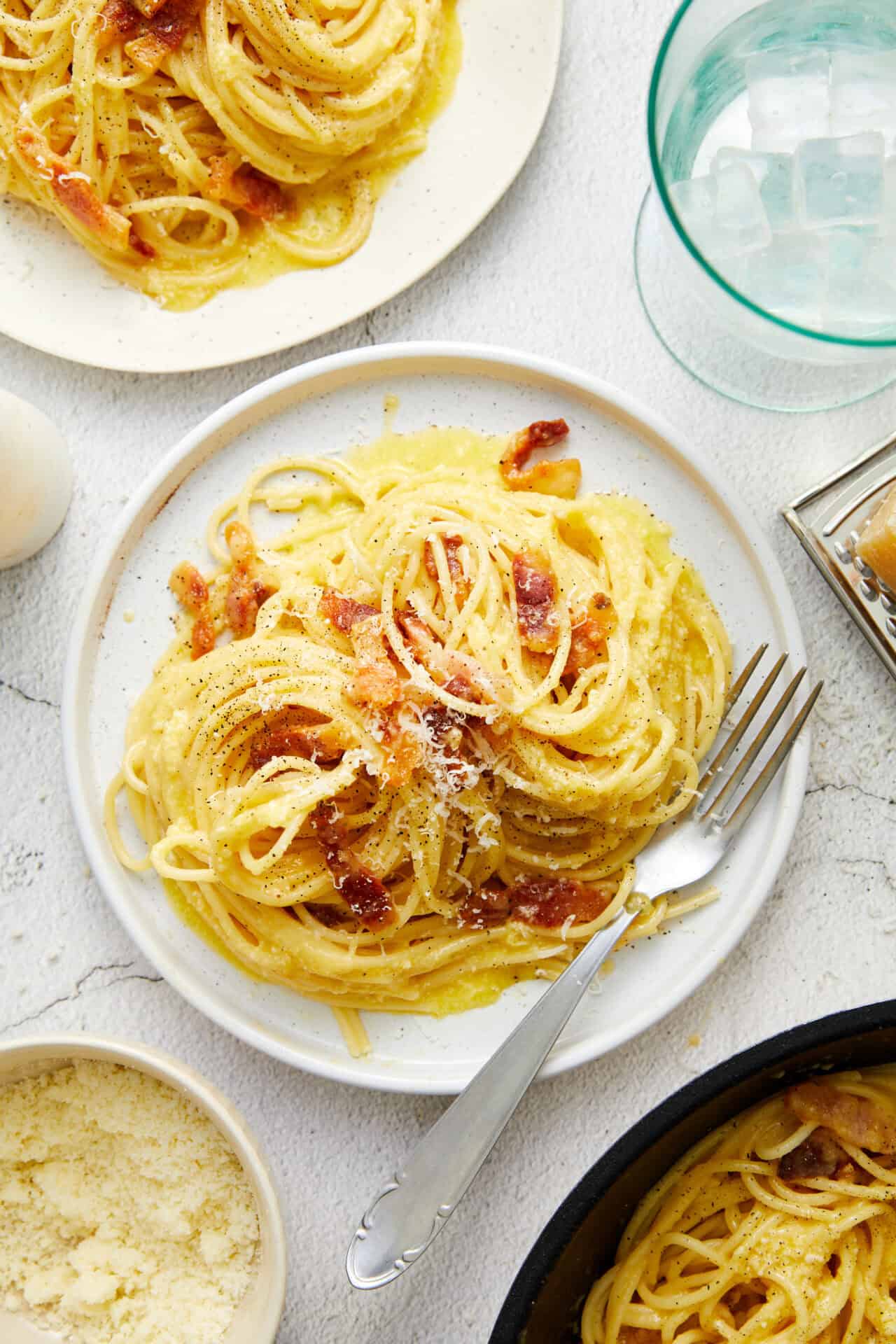
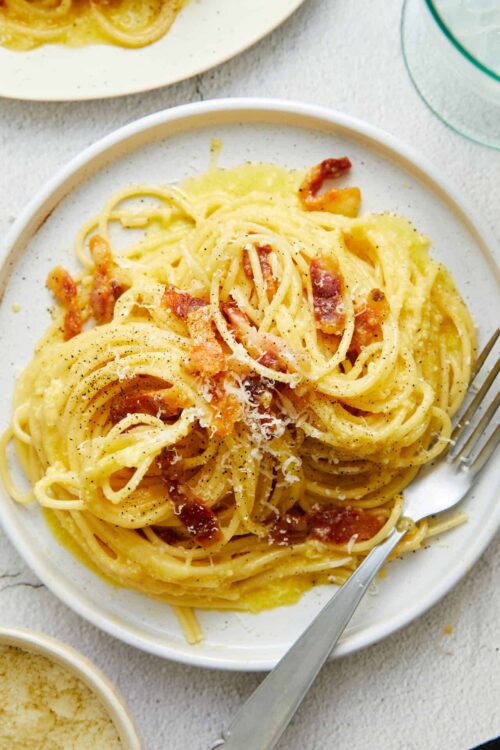
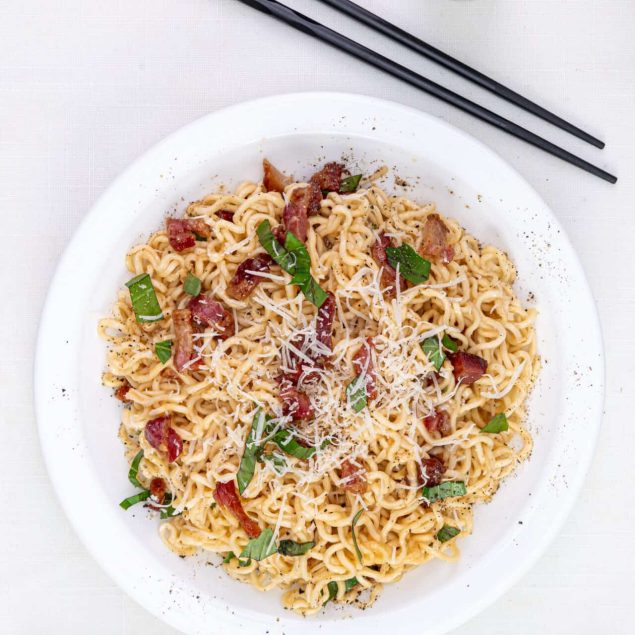
Carbonara gets its rich, robust taste and velvety texture from just 5 simple ingredients.
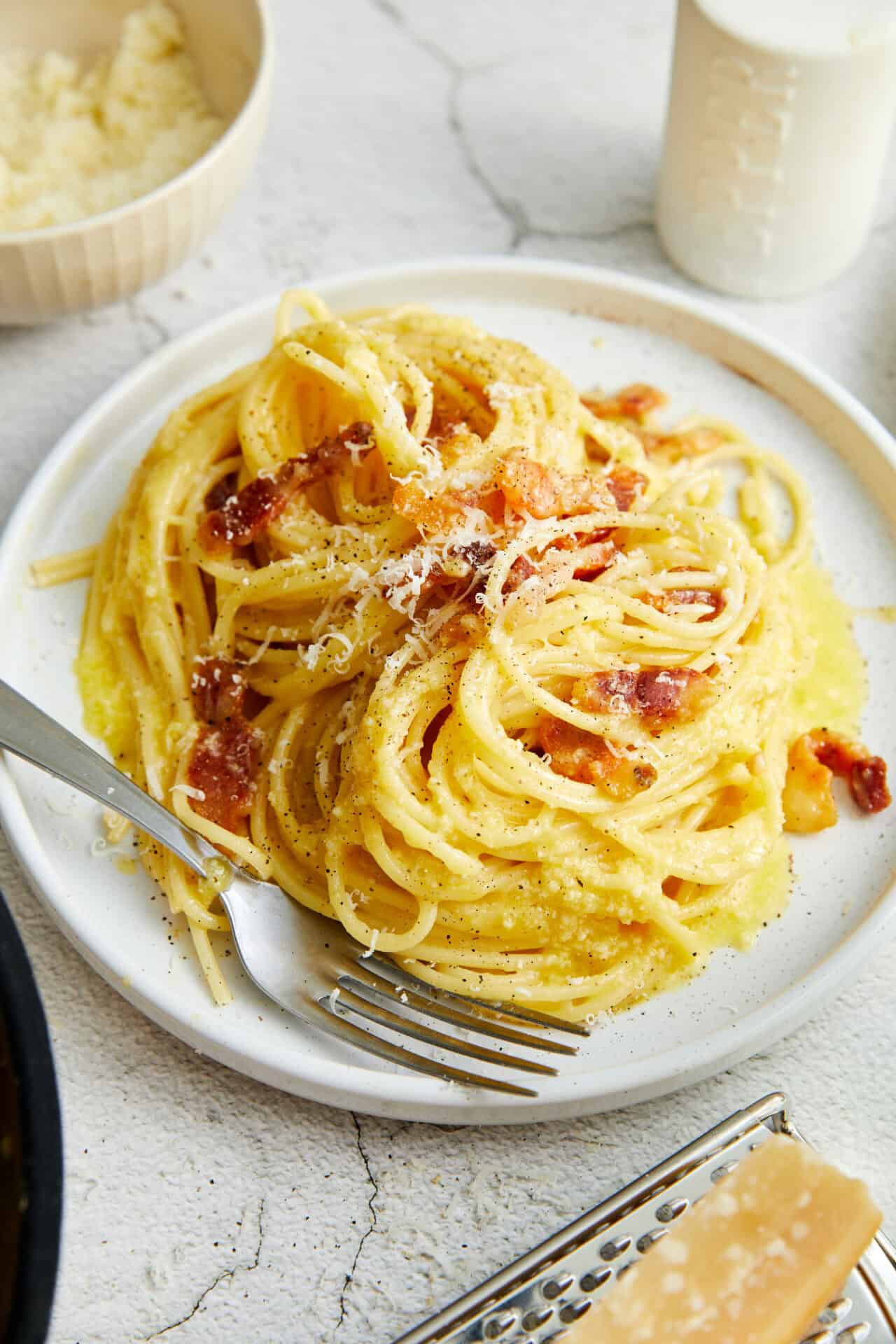
Bacon, eggs, and cheese are a classic combo we reinvent in so many ways. Omelets, breakfast sandwiches, quiche…add some potatoes to make a yummy casserole or some torn bread for a lovely strata. But if you want the most rich and decadently delicious way to marry crispy cured pork with eggs and cheese, you really must make Carbonara.
There is a lot of debate regarding the true origin of Carbonara, but a theory that many people believe is that American soldiers stationed in Italy during WWII asked for “spaghetti breakfast,” a mix of their bacon and egg rations with pasta. In the early 1950s, actual recipes for Carbonara began to appear in cookbooks (one in Chicago, one in Britain, one in Italy), though the ingredients varied. In 1960, the first Carbonara recipe using guanciale appeared in the Italian cookbook La Grande Cucina, and the rest, as they say, is history: today, Carbonara is one of the most iconic Italian pasta dishes and is served all over the world.
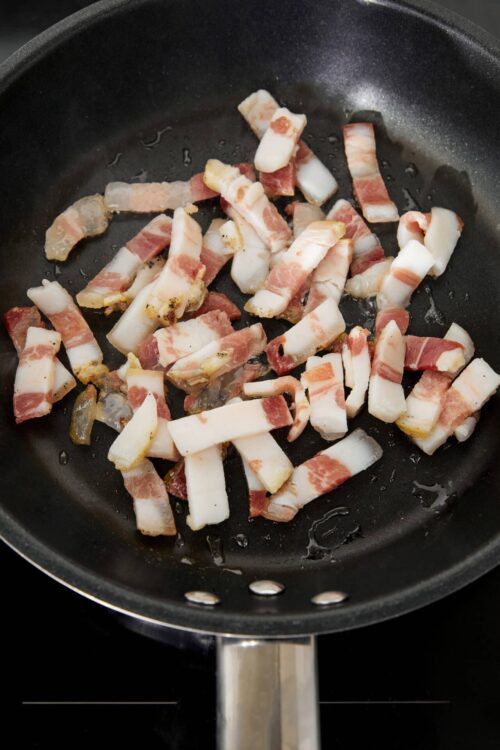
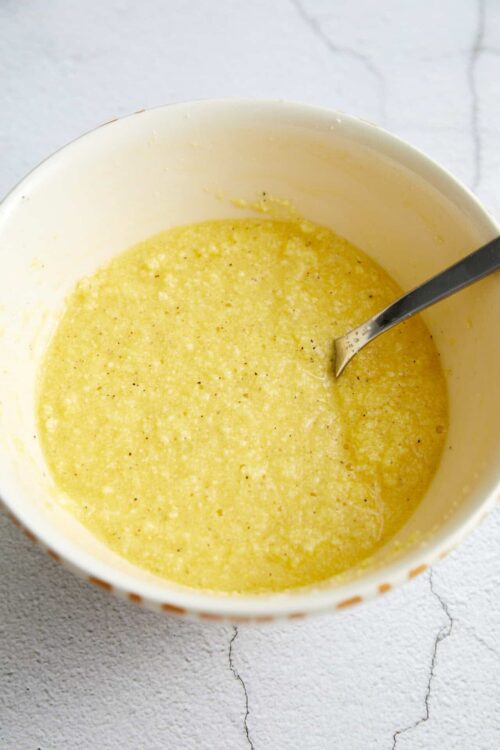
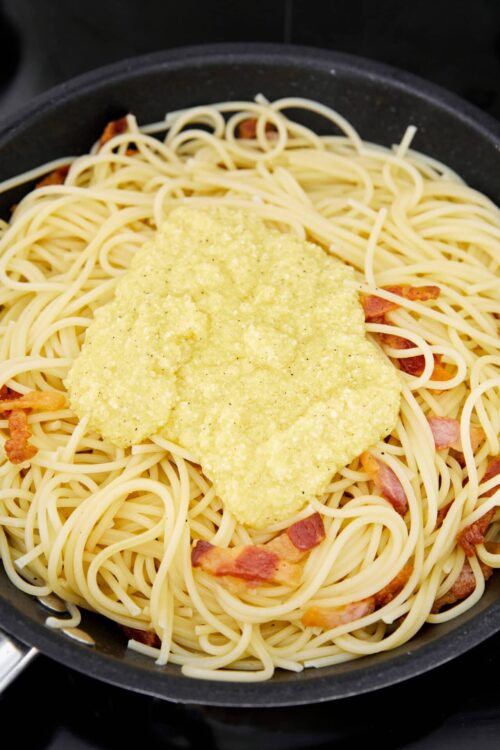
And now that includes in your kitchen! You don’t have to be a restaurant chef to make it, though we are going to use some “chef-y” techniques. First, we’ll render the diced cubes of guanciale, which basically means cooking them in a hot pan until the fat is released (that’s where the deep flavor comes from). Next, we’ll toss the cooked, drained spaghetti into that crispy meat and fat to coat the noodles thoroughly. And don’t let Carbonara’s creamy texture fool you: there’s no cream in an authentic Carbonara! Instead, the velvety sauce is created by whisking (yes, you must whisk!) the eggs with the Pecorino Romano and quickly tossing that thick mix with the pasta in the pan and then adding a bit of pasta-cooking water for consistency. And don’t forget to be generous with the freshly ground black pepper.
Another very important key to this recipe is to make sure you use the highest quality ingredients. In other words, while you could use grated Parmesan, we don’t recommend it: the distinctly sharp, salty flavor of Pecorino Romano brings the umami depth. We do prefer guanciale or pancetta, in that order, but if you have a Carbonara craving and don’t have either of those, good old Thick-Cut Bacon will be delish.
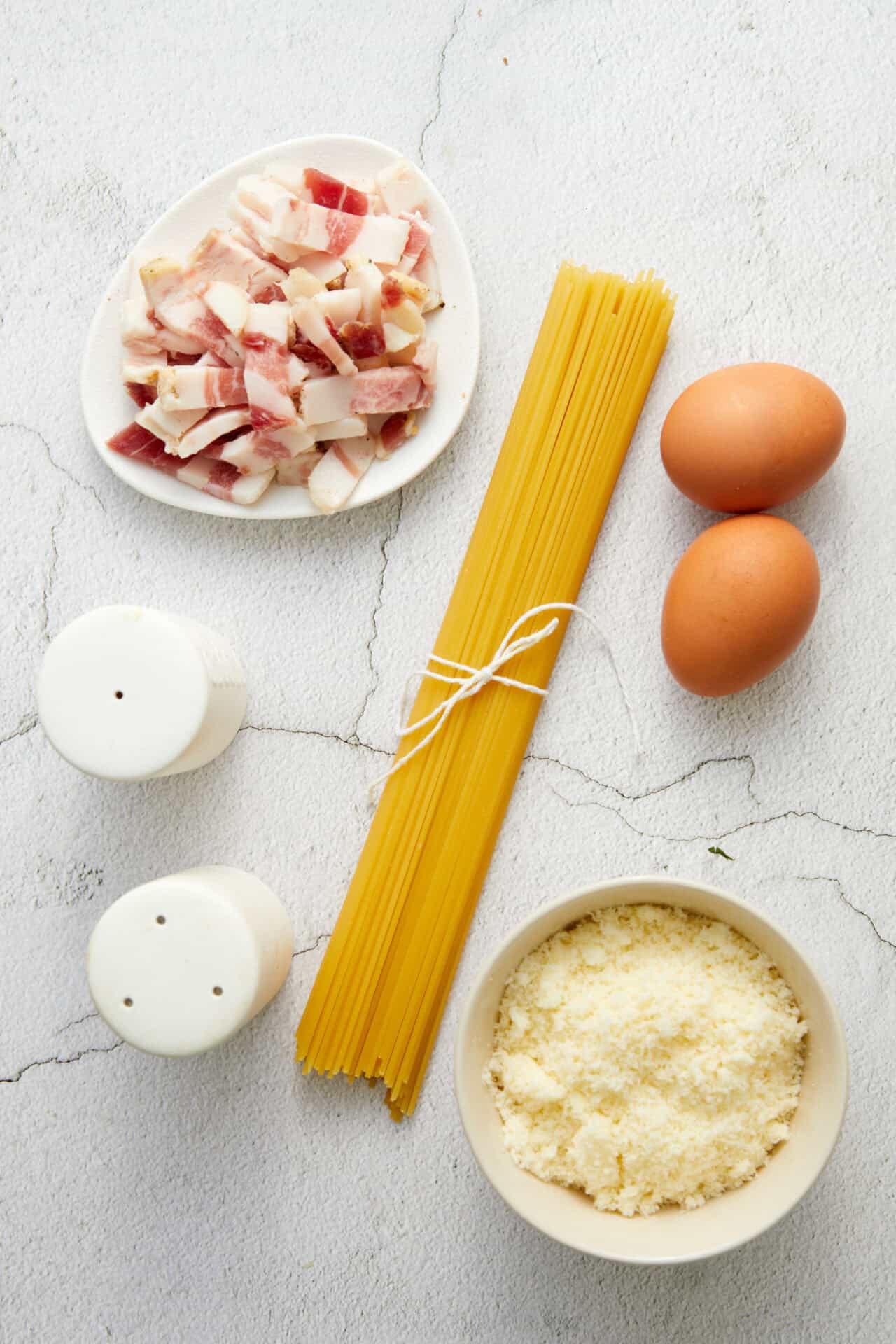
What’s the Difference Between Guanciale, Pancetta, and Bacon?
What’s in a name? It’s a good question when you’re trying to distinguish between these 3 pork products!
Let’s start with what we know best: beloved bacon! Bacon is salt-cured pork that comes from the pig’s belly, back, or sides and has a signature smoky taste (because, generally, it’s either smoked after being cured or injected with some liquid smoke). Even “uncured” bacon is cured—it’s just cured with natural instead of synthetic nitrates. Pancetta is cured pork belly; unlike bacon, it is not smoked. Guanciale, the richest and fattiest of them all, comes from the pig’s cheek or jowl. Because of the way they are aged and cured, Pancetta and Guanciale are safe to eat cooked or uncooked (although most people still cook them). Meanwhile, while bacon, as we know, must be cooked to be consumed. While you can use any one of these for Carbonara, guanciale is preferred for the authentic version, and we love it because it brings the most flavor.
How to Make Ahead and Store?
Carbonara is best served immediately, so it’s not really a make-ahead dish. Leftover Carbonara can be stored in an airtight container in the refrigerator for up to 3 days. We don’t recommend freezing it since it alters the taste and texture of the dish.
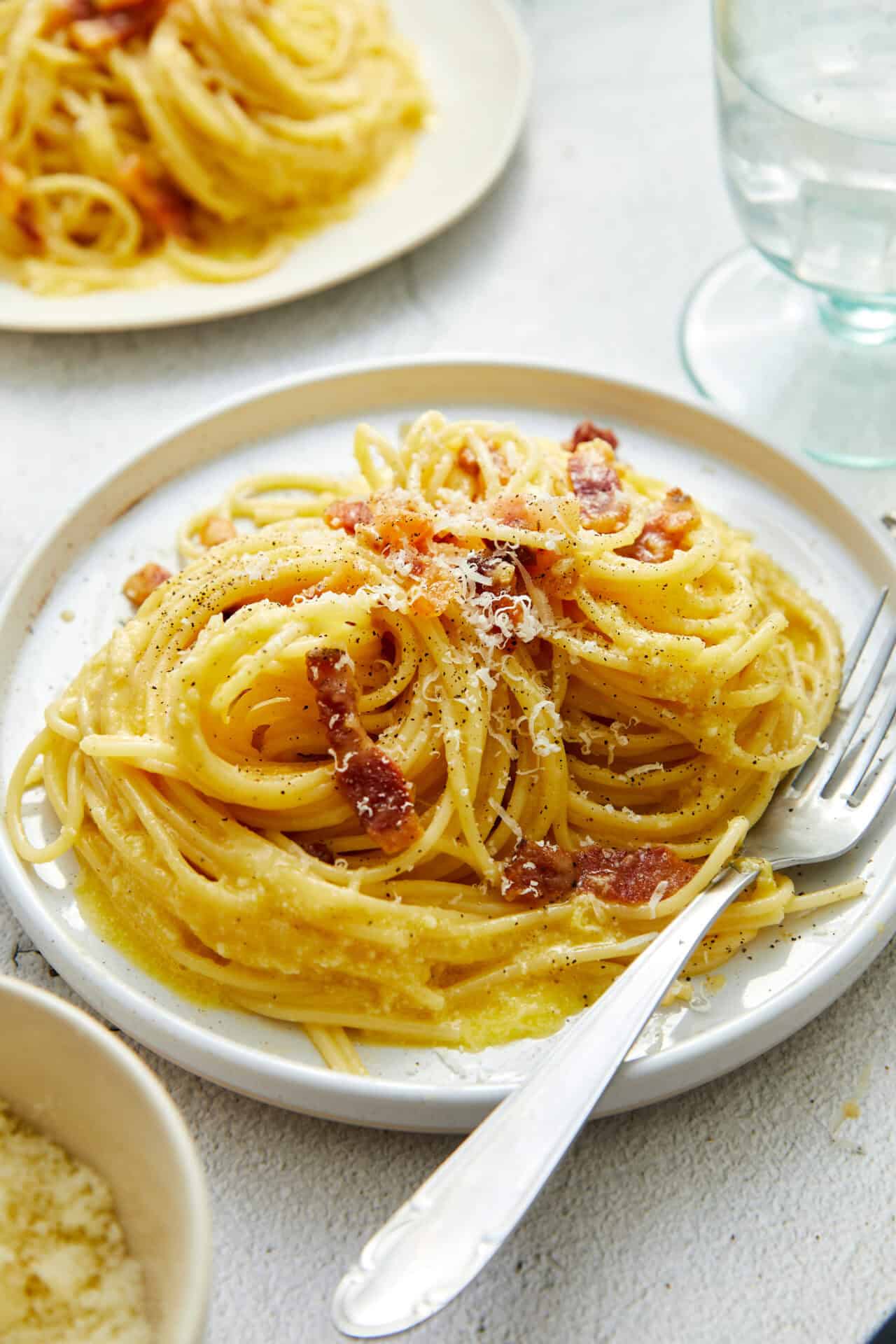
Serving Suggestions
Carbonara’s fatty richness makes it a perfect main to serve with a crisp green salad; although we love it with this Kale Caesar, it also pairs really well with the classic Wedge (and if the blue cheese dressing that we recommend for the Wedge feels too heavy to serve with Carbonara, you can always make some tangy Italian Dressing). It’s always a good idea to have some bread with a plate of pasta, so try these Garlic Rolls. Or, to add even another layer of deliciousness to this meal, try Spiced Tomatoes and Chickpeas on Homemade Flatbread.
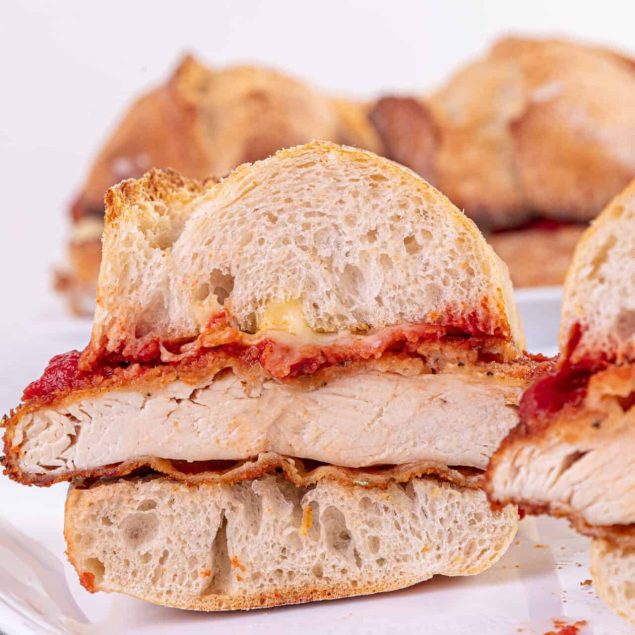
Sometimes, with a Carbonara, I like to serve hot vegetables instead of cold salad and I’ve found that a simple Sauteed Broccoli or Grilled Green Beans does the trick. I’ve also discovered that even though Carbonara is a classic entree, adding another protein, like Crispy Baked Chicken Cutlets, is inspired because chicken and salty pork are a great match, and the chicken’s crunchy coating adds a wonderful texture.
Carbonara Recipe

Ingredients
- 12 oz spaghetti
- 6 oz guanciale diced (can substitute with pancetta or thick-cut bacon)
- 2 large eggs
- 1 cup finely grated Pecorino Romano cheese
- 1 teaspoon black pepper freshly ground
- Salt to taste
Instructions
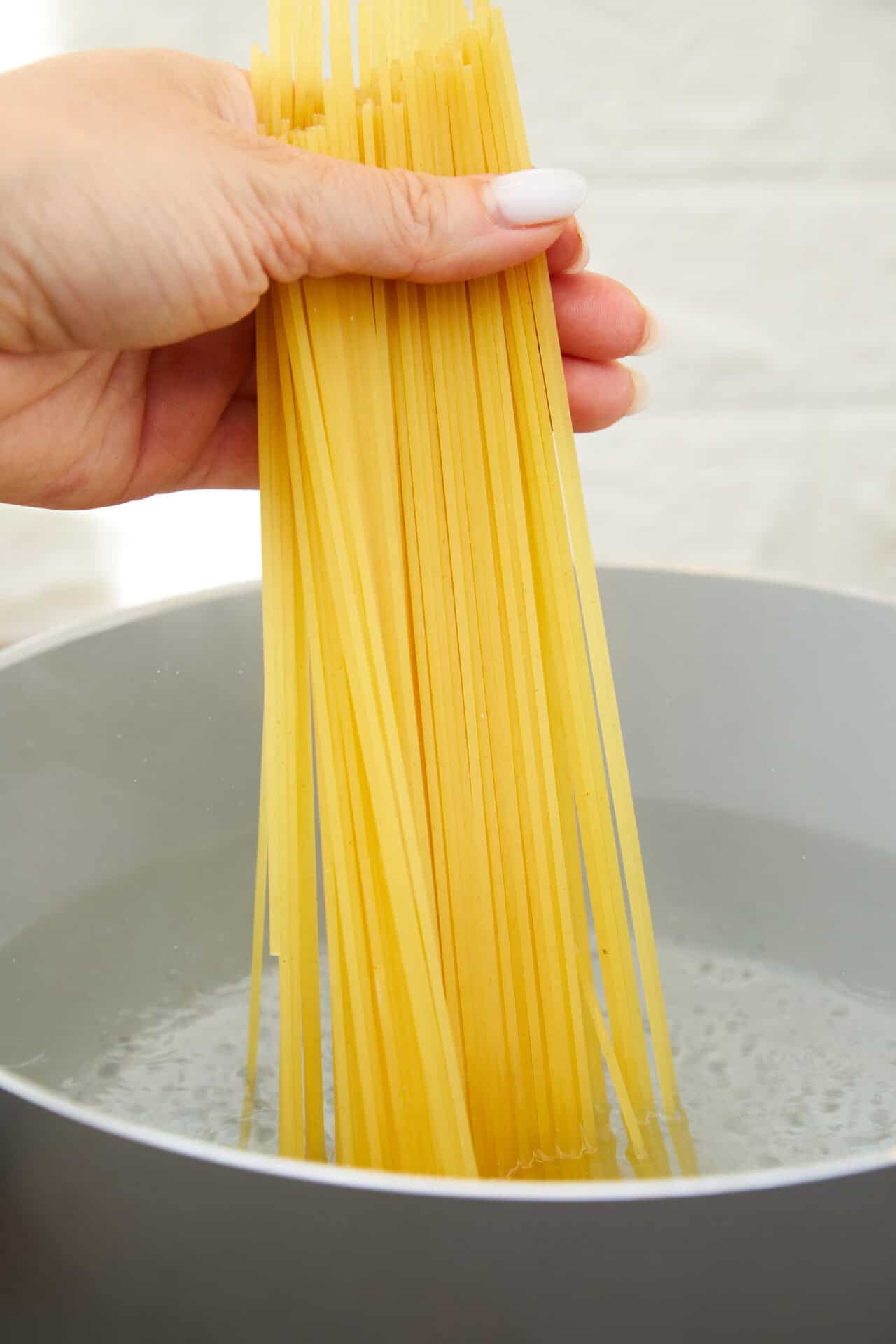
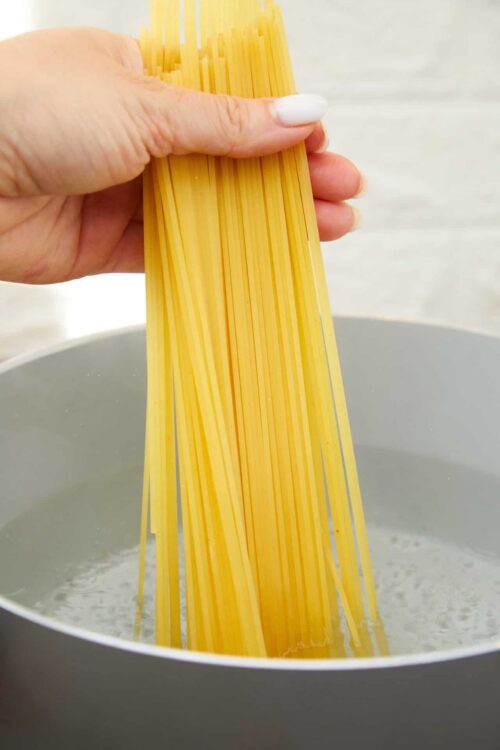
- Bring a large pot of salted water to a boil. Add spaghetti and cook until al dente, about 8 minutes.
- While the pasta cooks, heat a large skillet over medium heat. Add the guanciale and cook until it is crispy and the fat has rendered, about 5-7 minutes.
- In a mixing bowl, whisk together the eggs, Pecorino Romano cheese, and black pepper.
- Drain the pasta, reserving 1 cup of the pasta cooking water. Add the hot pasta to the skillet with guanciale. Mix well to coat the pasta in the fat.
- Remove the skillet from heat. Quickly pour the egg and cheese mixture over the pasta, tossing continuously to coat the pasta and prevent the eggs from scrambling. If the sauce is too thick, add reserved pasta water a little at a time until desired consistency is reached.
- Season with salt to taste and serve immediately with additional cheese if desired.

Leave a Comment