

This elegant scallop dinner whips up surprisingly fast, but it looks and tastes so great, you’d think you’re eating at a restaurant!
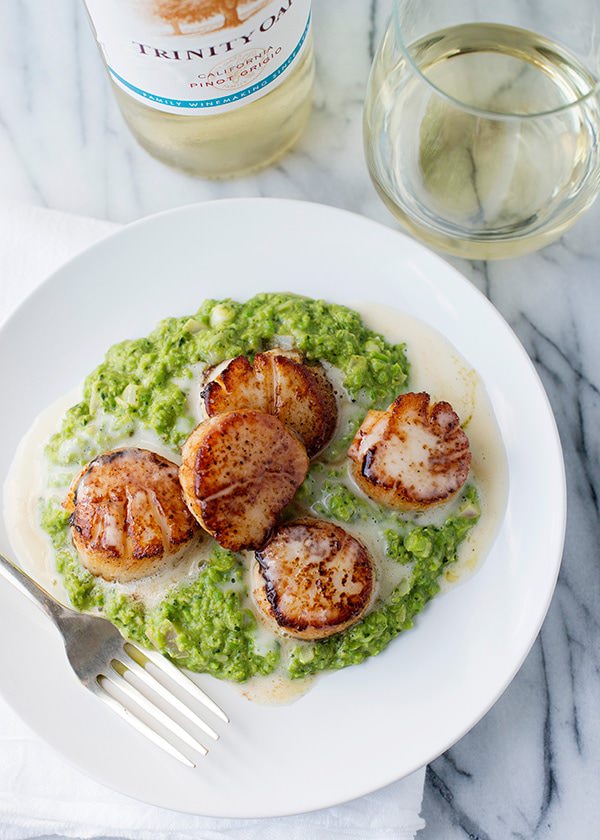
Those who know me well—or even not so well—are aware of my deep appreciation of bivalve mollusks. I talk about them so much, it might be the first thing some people learn about me. When I’m visiting my home state of Louisiana, I eat raw, chargrilled, and fried oysters by the dozen. In my new home state of Colorado, I order buttery garlic mussels every time I see them on a menu. And no matter where I am, I will seek out the fattest sea scallops around and sear ’em up with garlic, white wine, and butter. They might be my favorite mollusk.
When cooked right, sea scallops are a delicacy. They are every bit as succulent and juicy as a fillet of fresh trout or a perfectly steamed lobster tail. If I haven’t had them in more than a few months, I crave them in the worst way.
Let me introduce you to the scallop dish I make when I’m home by myself, when my husband is out of town. Why wait for him to leave, you ask? Well, it’s decadent, but it’s such a simple dish, my man would want some pasta or something to go with it. But for me by myself, this plate is all I could want. It has all my favorites: buttery, creamy beurre blanc sauce; garlicky pesto fortified with peas; and a pile of my absolute favorite bivalve mollusks in the world.
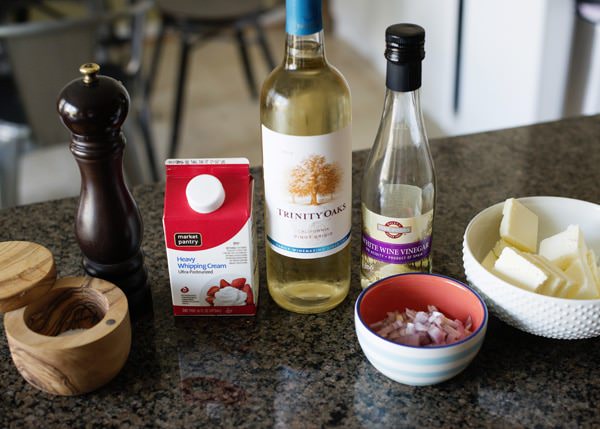
Tips for a perfect plate of seared scallops
Never seared a scallop before? Fear not! It’s really easy, and they’re cooked in a flash. But it’s just as easy to cook them wrong as it is to cook them right, so pay attention to these tips for amazing scallops every time.
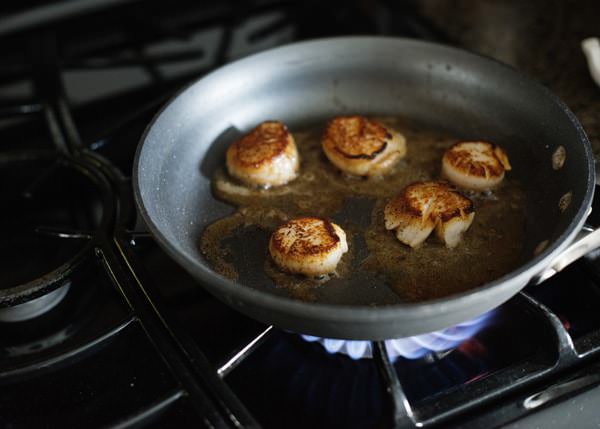
- Dry the scallops well: A dry scallop is necessary for the beautiful, flavorful brown crust to develop during the cooking process, so make sure they’re good and dry!
- Resist the urge to move the scallops around the pan: Another important part of developing that brown crust is not moving the scallop once it’s on the hot pan! If you move it too soon, you’ll disturb the crust formation.
- Use high heat but don’t overcook them: Over high heat, the scallops should cook perfectly at about 90 seconds per side. If you leave them longer than that, they could burn or simply overcook. Overcooked scallops can take on a chewy or rubbery texture.
How do I store leftovers?
Leftover beurre blanc and pea puree pesto can be transferred to an airtight container and stored in the fridge for up to 4 days, as long as the scallops are stored separately. I personally never have to deal with leftover cooked scallops—I just eat them all in one sitting—but you can store them in an airtight container in the fridge for up to 2 days. I don’t recommend freezing cooked scallops or beurre blanc, but you can freeze the pea puree pesto in a freezer-safe container or bag for up to 3 months. Simply let it thaw in the fridge overnight before reheating in a saucepan or in the microwave.
Serving suggestions
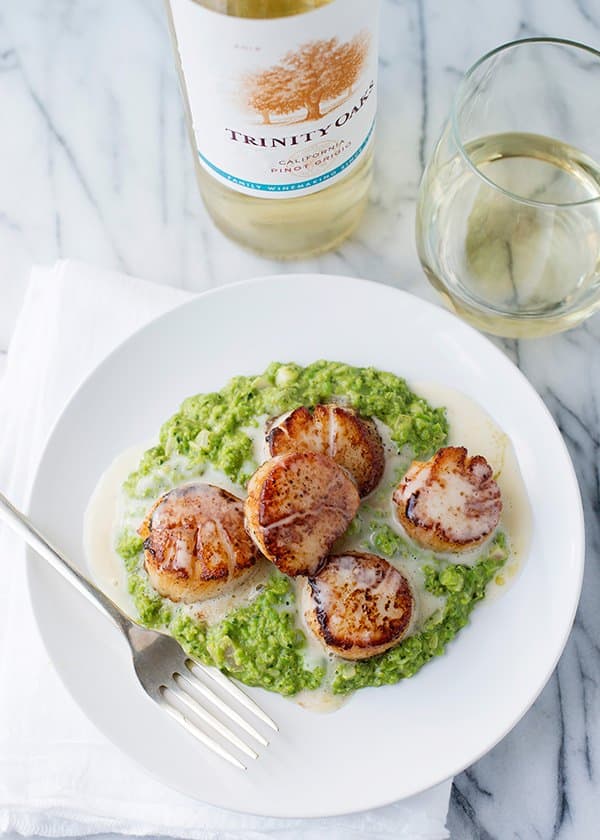
Serve this incredible entrée solo; it stands alone quite well! If you need a little more starch on the plate, consider toasting up some fresh crusty bread. If you go the bread route, Sourdough Bread is what you want!
Alternatively, this meal is even more lovely with a serving of Gnocchi or Homemade Pasta underneath all that sauce.
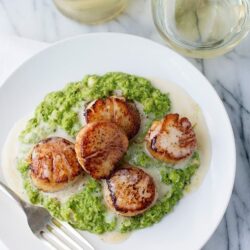
Seared Scallops Beurre Blanc and Pesto Pea Puree

Ingredients
For The Beurre Blanc:
- 1 shallot minced
- 1/4 cup white wine vinegar
- 1/4 cup white wine
- 2 tablespoons heavy cream
- 1 cup butter cut into slices
- Salt and pepper to taste
For The Pesto Pea Purée:
- 2 cups water
- 1 clove garlic peeled and crushed
- 1 bag frozen peas (10 ounces)
- 3 tablespoons pesto
- 2 tablespoons Parmesan
- Salt and pepper to taste
For The Seared Scallops:
- 1 pound sea scallops
- Salt and pepper to taste
- 1 tablespoon butter
- 1 tablespoon olive oil
Instructions
Make The Beurre Blanc:
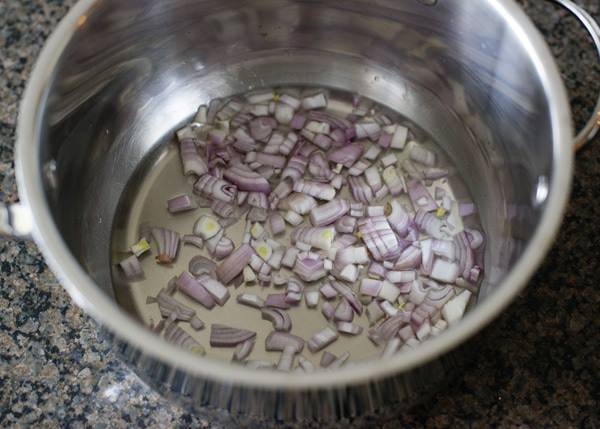
- To make the beurre blanc, add the minced shallots, vinegar, and wine to a saucepan. Simmer over medium heat until it is reduced by more than half, about 5 minutes.
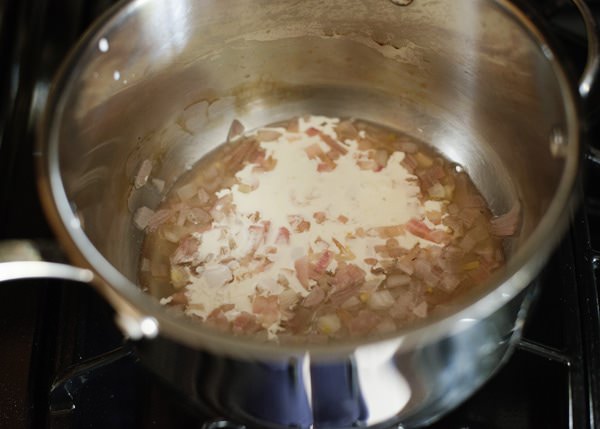
- Slowly add the cream and stir to incorporate.
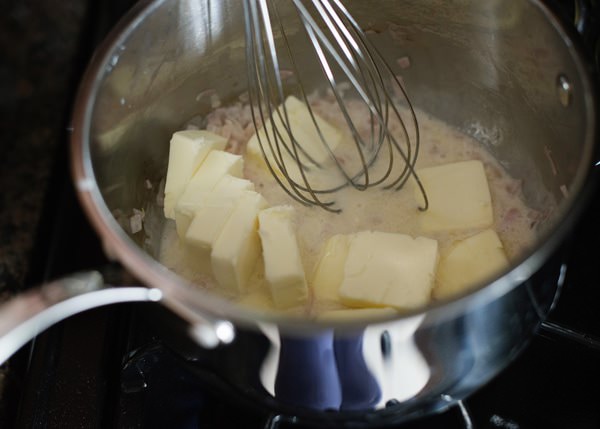
- Add the butter chunks to the pan all at once. Turn the heat to high and whisk while moving the pan until it has completely melted. Season with salt and pepper to taste.
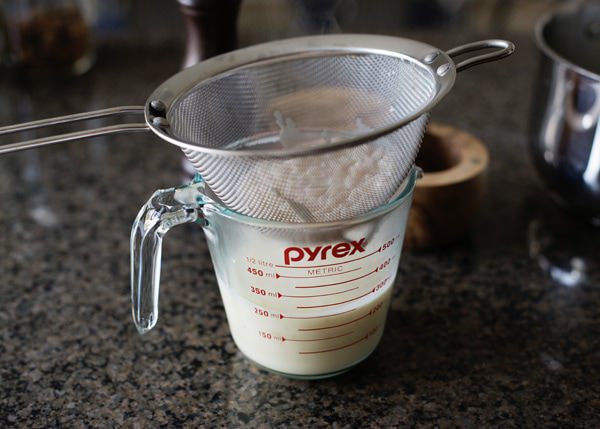
- Strain out the shallots with a fine mesh sieve.
Make The Pesto Pea Purée:
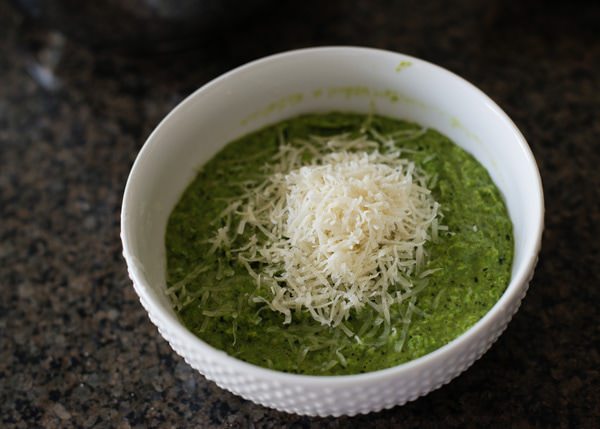
- To make the pesto pea puree, boil the water in a saucepan, then add the garlic clove and frozen peas. Cook the peas until tender, about 3 minutes. Strain the peas, but reserve some of the liquid. Remove garlic clove. Add the peas to a food processor or blender with the pesto, and season with salt and pepper to taste. Pulse until you get a consistency you like. Use a little of the cooking water to thin if necessary. Remove from the food processor and mix in the Parmesan.
Sear The Scallops:
- Pat the scallops dry with a paper towel, then season with salt and pepper. Heat a sauté pan over high heat. Add butter and oil. When the butter is melted, place scallops in the pan.
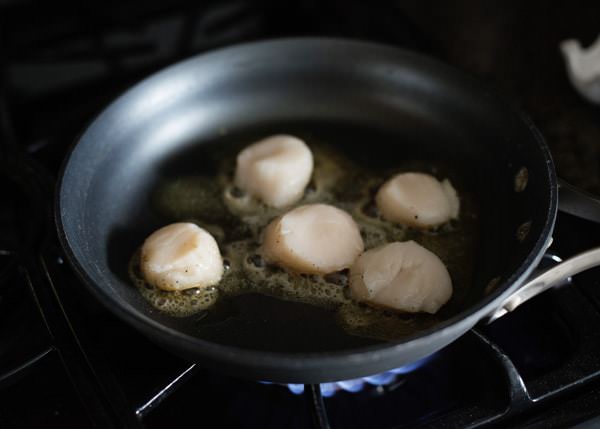
- Leave them alone for about a minute and a half before flipping each scallop carefully. They will develop a golden crust.
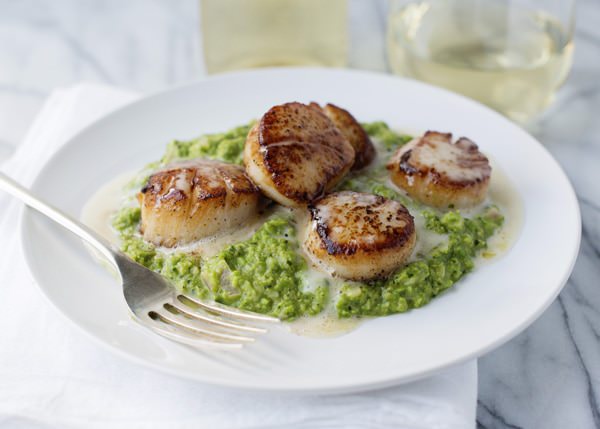
- Add pesto pea puree to a plate. Arrange seared scallops on top, then pour beurre blanc on top.

Leave a Comment