

A delicious dough that gives and gives!
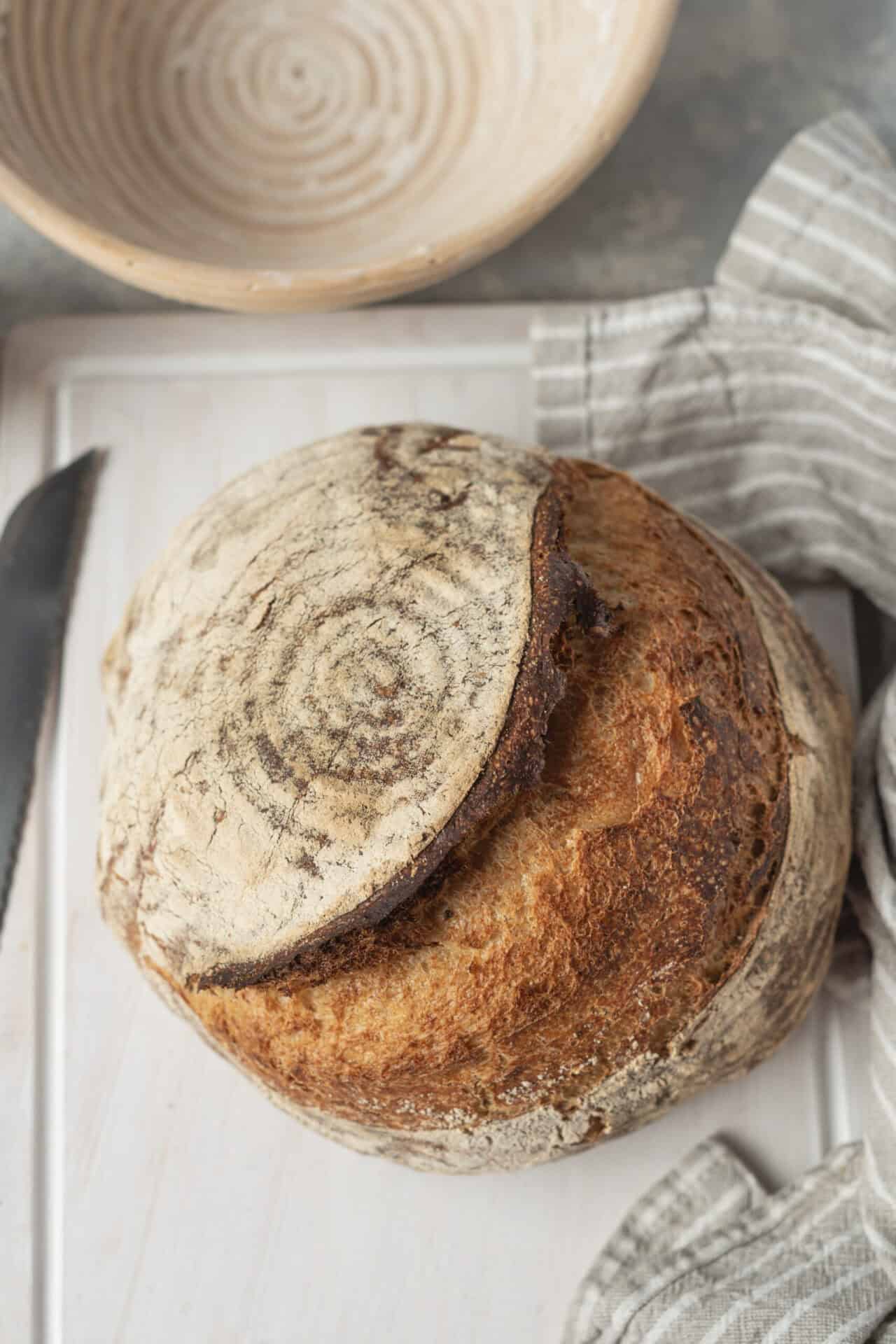
Sourdough is something that has fascinated me for years, ever since I heard my baking-inclined friends talk about their sourdough starters and feeding their mixtures. The entire concept is absolutely wild to me, that you can leave dough for so long and have it still be good and use dough from a starter decades old. There’s even a bakery in San Francisco that uses the very same starter from 150 years ago, called the Boudin Bakery.
Sourdough as we know it got its big boost in America with the Californian gold rush. That all said, the concept of sourdough has much more ancient origins. The Egyptians back in 3000 BCE discovered sourdough by accident after leaving out dough and letting it be colonized by wild yeast spores. Later iterations of sourdough were developed by the Ancient Greeks, then the Roman Empire. It’s safe to say that the idea of sourdough is one humans have been enjoying for a very, very long time.
What’s amazing about sourdough is how straightforward and easy it is. I used to think that sourdough was this long and difficult process, but that was before I did any research into it and all I knew was that people were using the same starters they had been for decades. You don’t need decades to perfect sourdough!
Fermentation Perfection
Sourdough flavor can vary depending on your loaf. It can have a strong tang, it can be mild, it can even be bitter. The fermentation process is what determines the depth of the flavor. Luckily, fermenting something isn’t difficult. The biggest key to this is keeping your starter at the right temperature. Too cold, you kill your yeast. Too hot, you cook your yeast. Keeping it around 74-76 degrees will have your fermentation process just right.
How to Make Ahead and Store
To prep in advance, you can follow the recipe up until step 6, at which point you can place your dough in an oiled bowl covered with plastic wrap and store it in the fridge overnight. Then, the next morning, you can bake the bread as directed. Once cooked, you can store your sourdough bread in the same way as you would any bread.
Serving Suggestions
There are so many things you can do with sourdough bread! You can do a basic peanut butter and jelly sandwich for your lunch. You can get fancy and serve a Creamy Spinach Dip or a delicious Artichoke Dip. You can have it as a side next to a main meal of Salisbury Steak with Mushroom Gravy. Or, just serve it next to any lunch or dinner meal as a side dish.
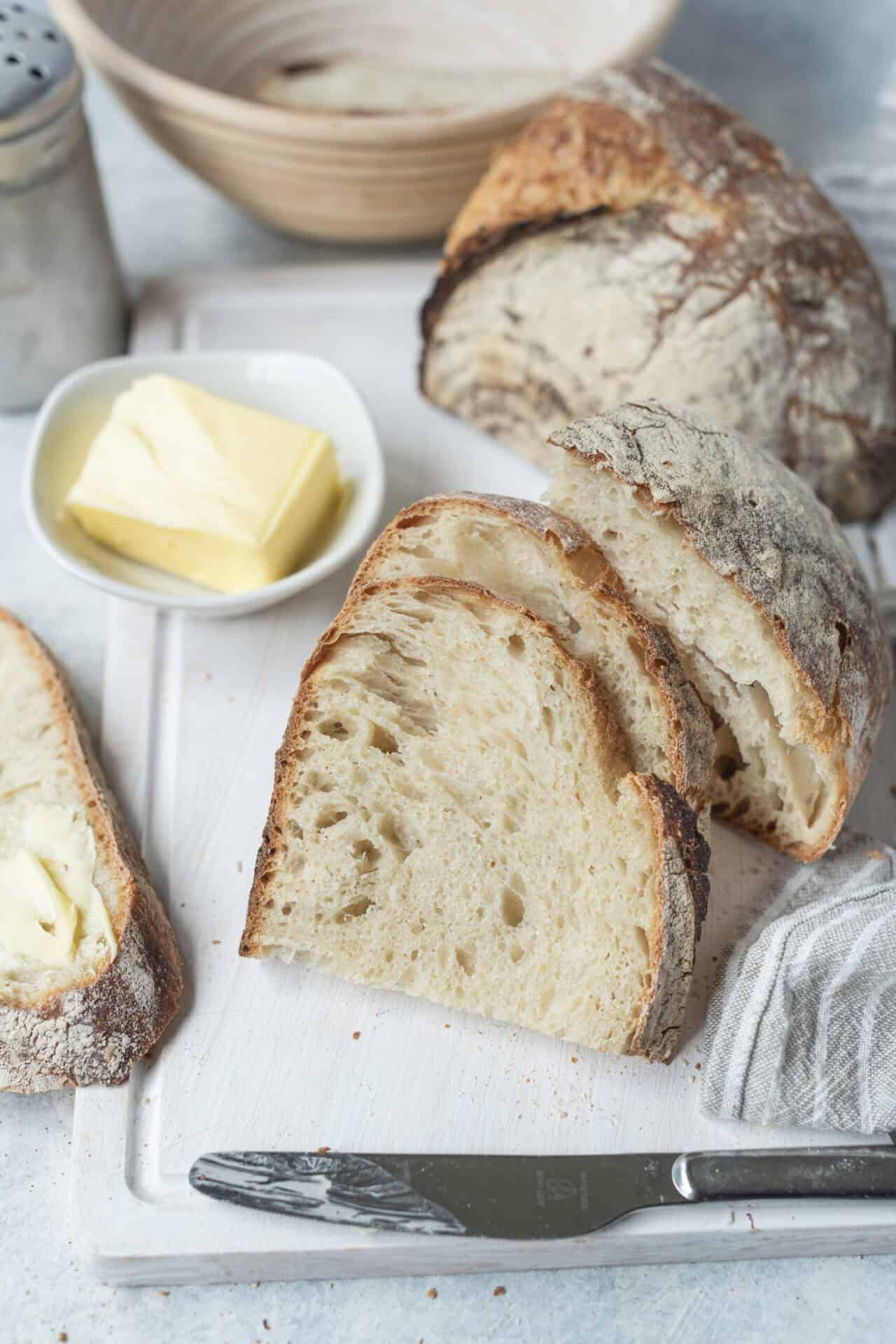
Sourdough Bread Recipe

Ingredients
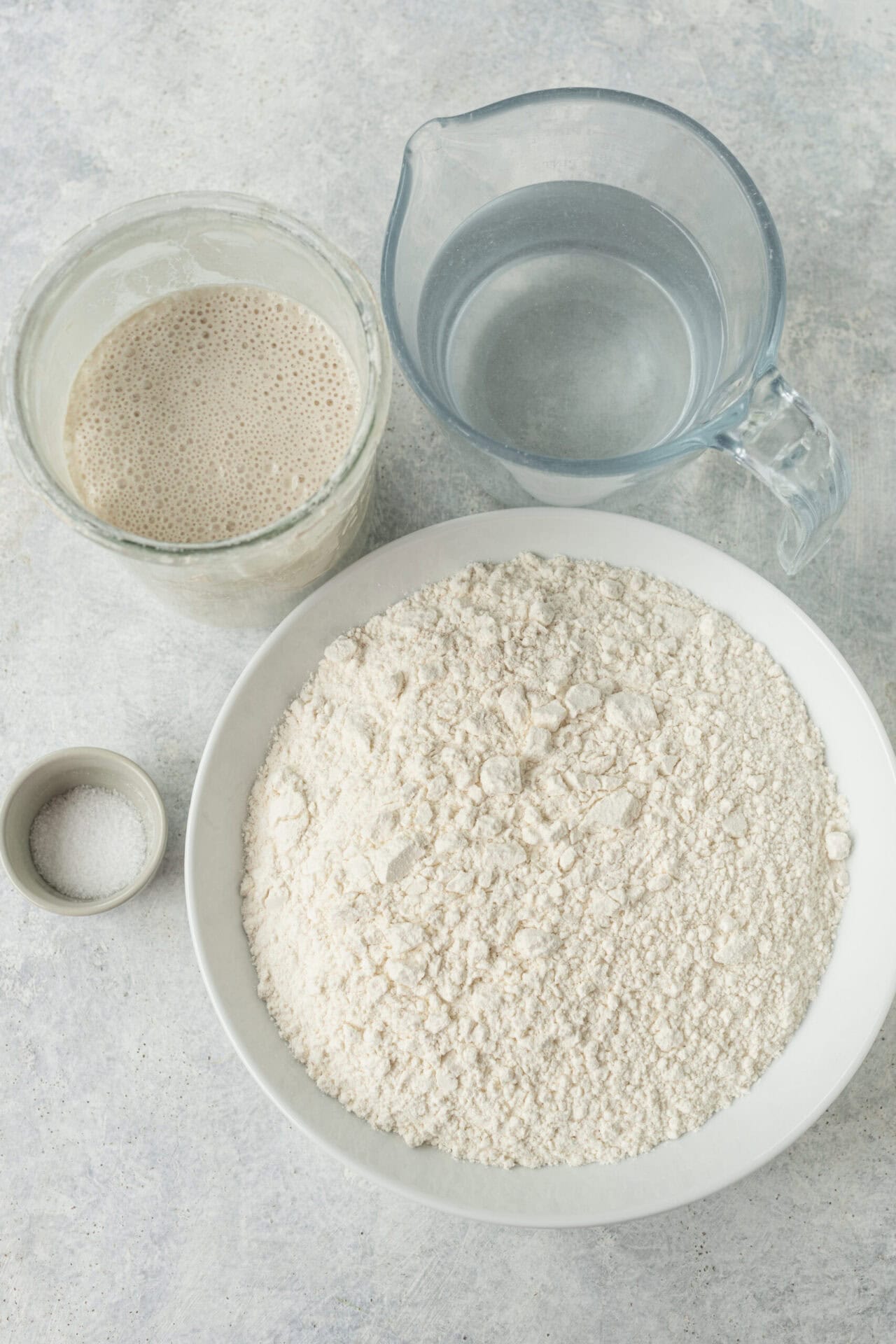
- 100 grams active sourdough starter
- 370 grams water lukewarm
- 500 grams bread flour
- 10 grams fine sea salt
Instructions
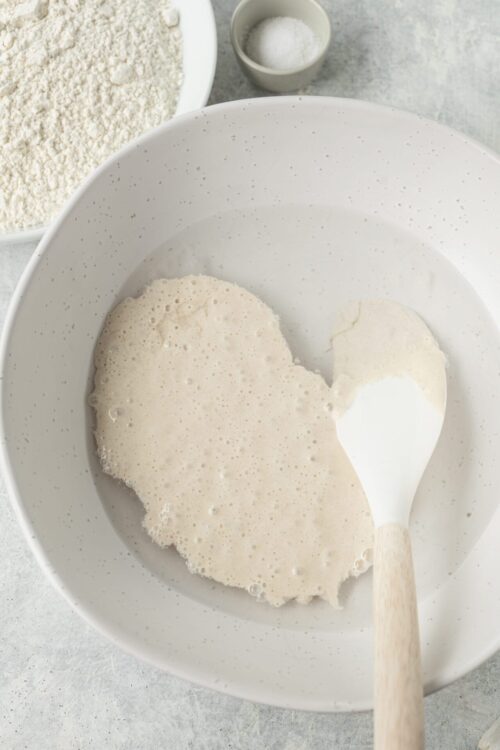
- In a large mixing bowl, combine the sourdough starter and lukewarm water. Stir to dissolve the starter completely.
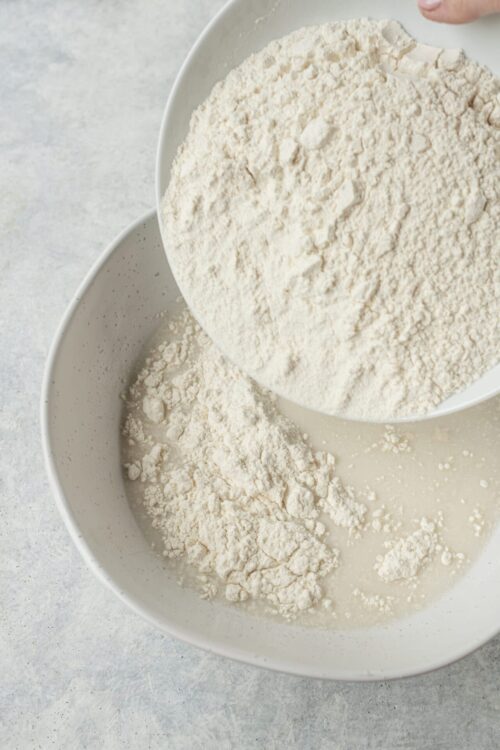
- Add the bread flour and sea salt to the bowl. Mix until a rough dough forms, ensuring there are no dry spots. If needed, add 1 tablespoon more of water at a time until the dough is no longer dry.
- Cover the bowl with a damp kitchen towel and let it rest for 30 minutes. This allows the flour to fully hydrate.
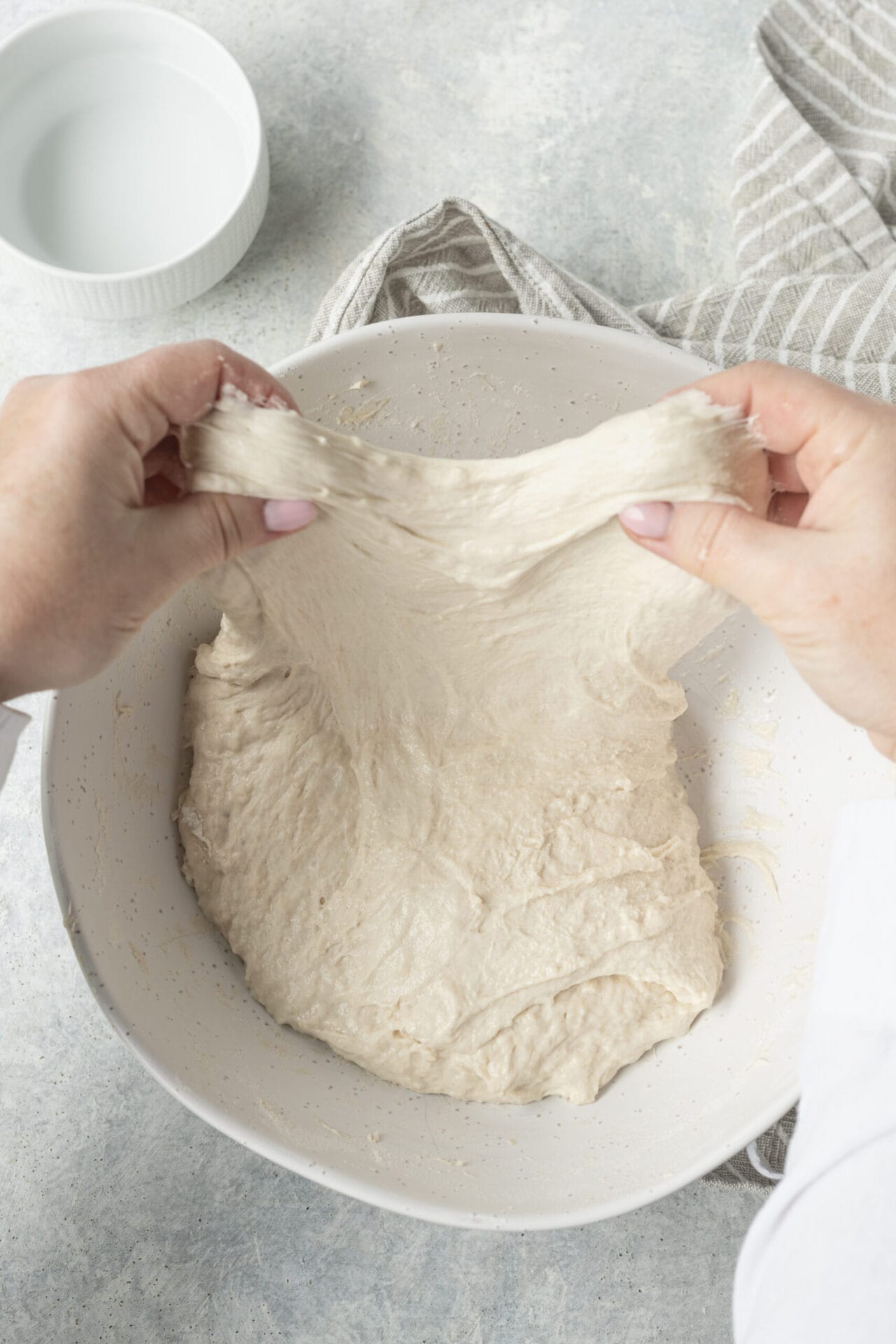
- Perform a series of stretches and folds on the dough. With wet hands, grab one end of the dough, stretch it upwards, then fold it over onto itself. Turn the bowl 90 degrees and repeat the process three more times. Cover and let the dough rest for 30 minutes. Repeat this step three more times at 30-minute intervals.
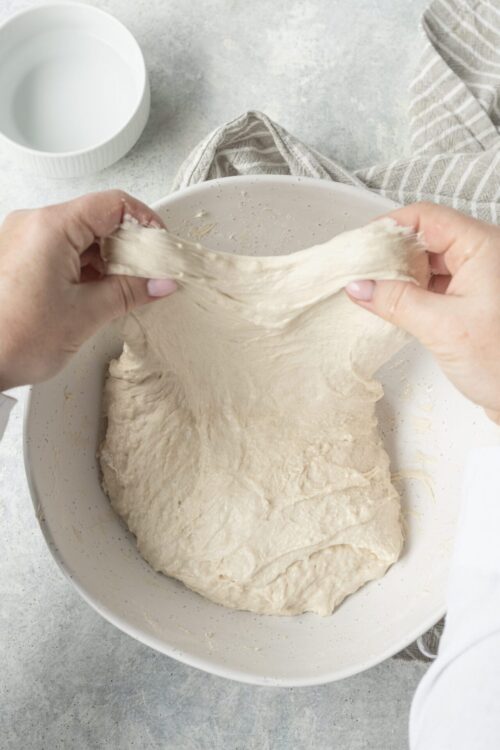
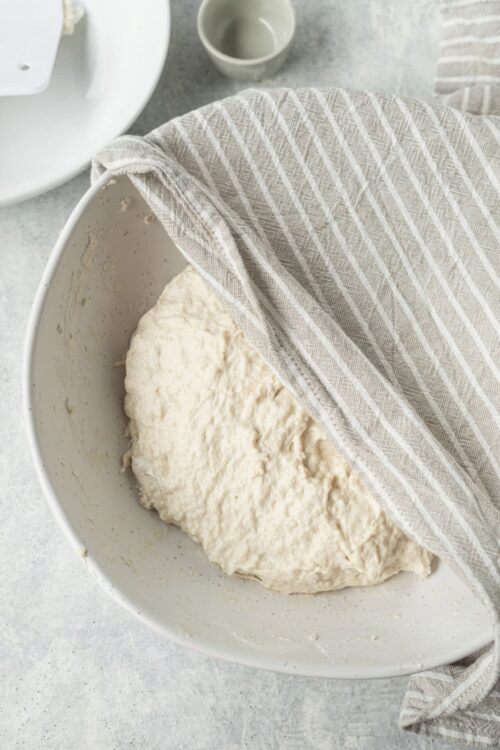
- After the last series of folds, cover the bowl and let the dough rise at room temperature until it has doubled in size, approximately 6 to 8 hours, depending on the room temperature.
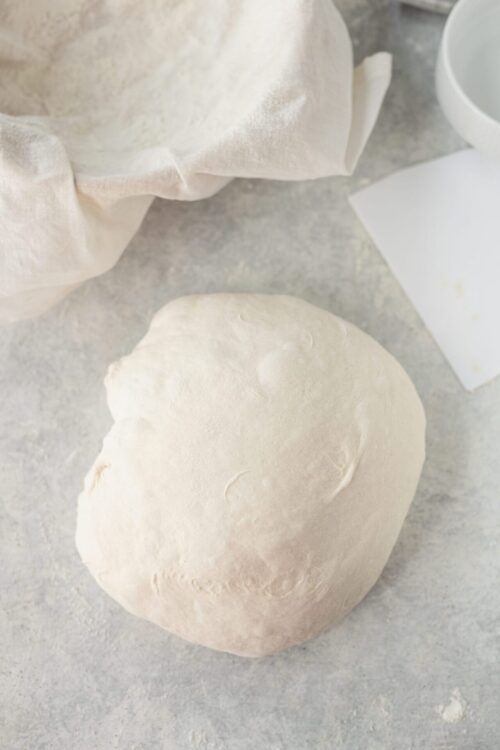
- Turn the dough out onto a lightly floured surface and shape into a tight ball. Place the dough seam-side up in a floured banneton or clean bowl lined with a floured towel. Cover and let it proof for an additional 1 to 2 hours, or until slightly puffy.
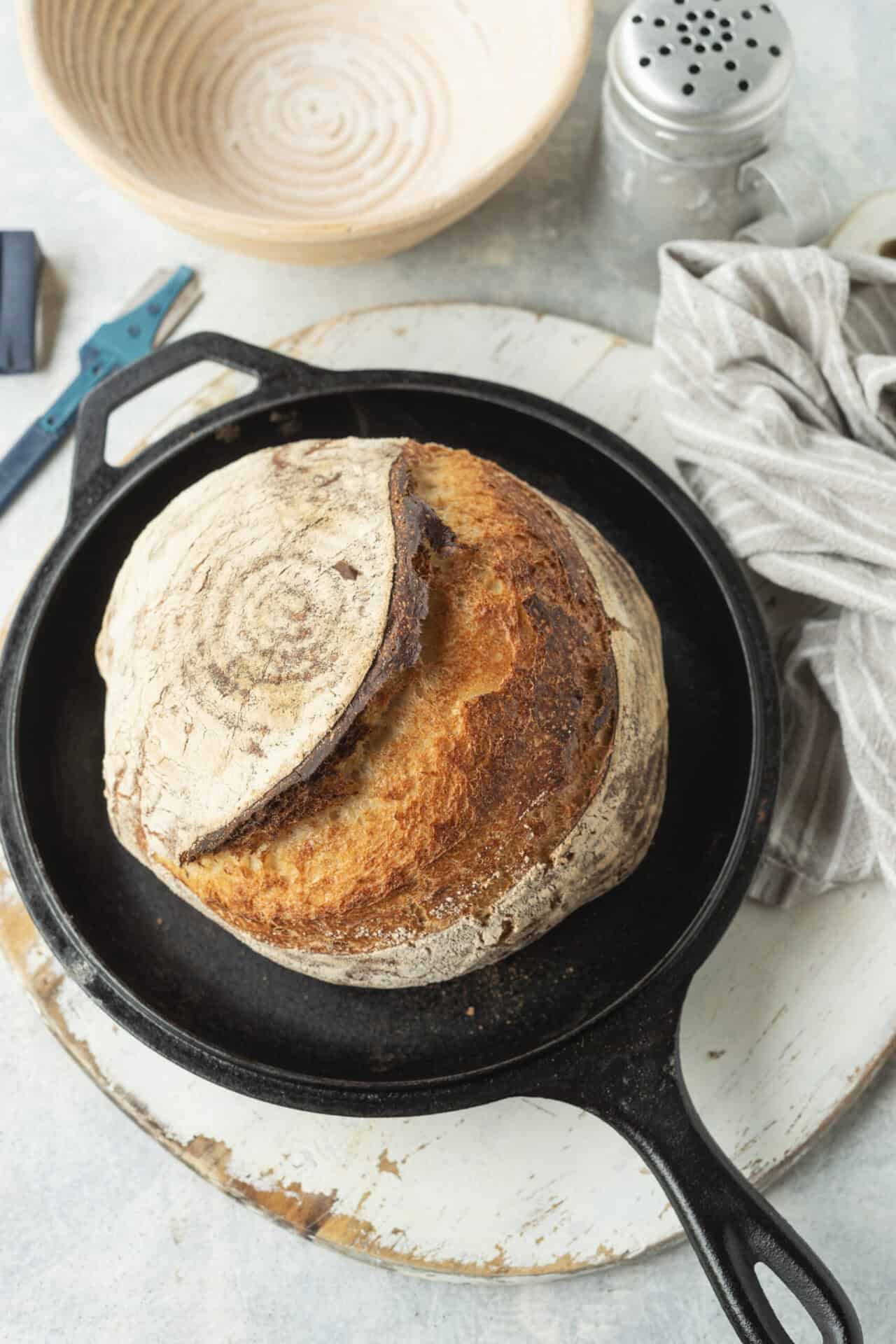
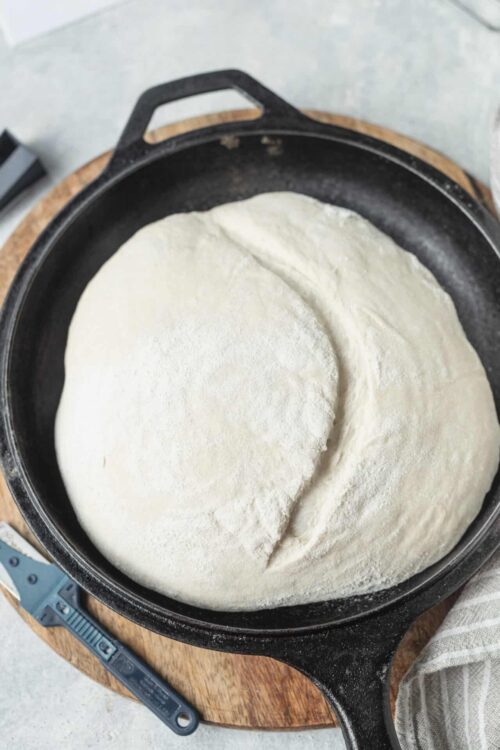
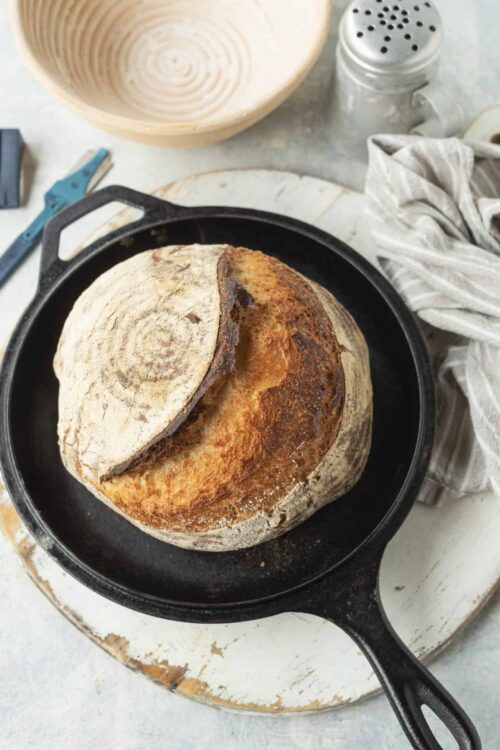
- Preheat your oven to 450°F with a Dutch oven inside. Once hot, gently place the dough into the Dutch oven, score the top with a sharp blade, and cover with the lid. Bake for 20 minutes, then remove the lid and continue to bake for another 20-25 minutes or until the crust is golden brown.
- Remove the bread from the Dutch oven and let it cool on a wire rack for at least an hour before slicing.



Leave a Comment