

Discover the foolproof method for achieving juicy, tender, flavorful chicken in less than an hour with a bonus batch of light broth!
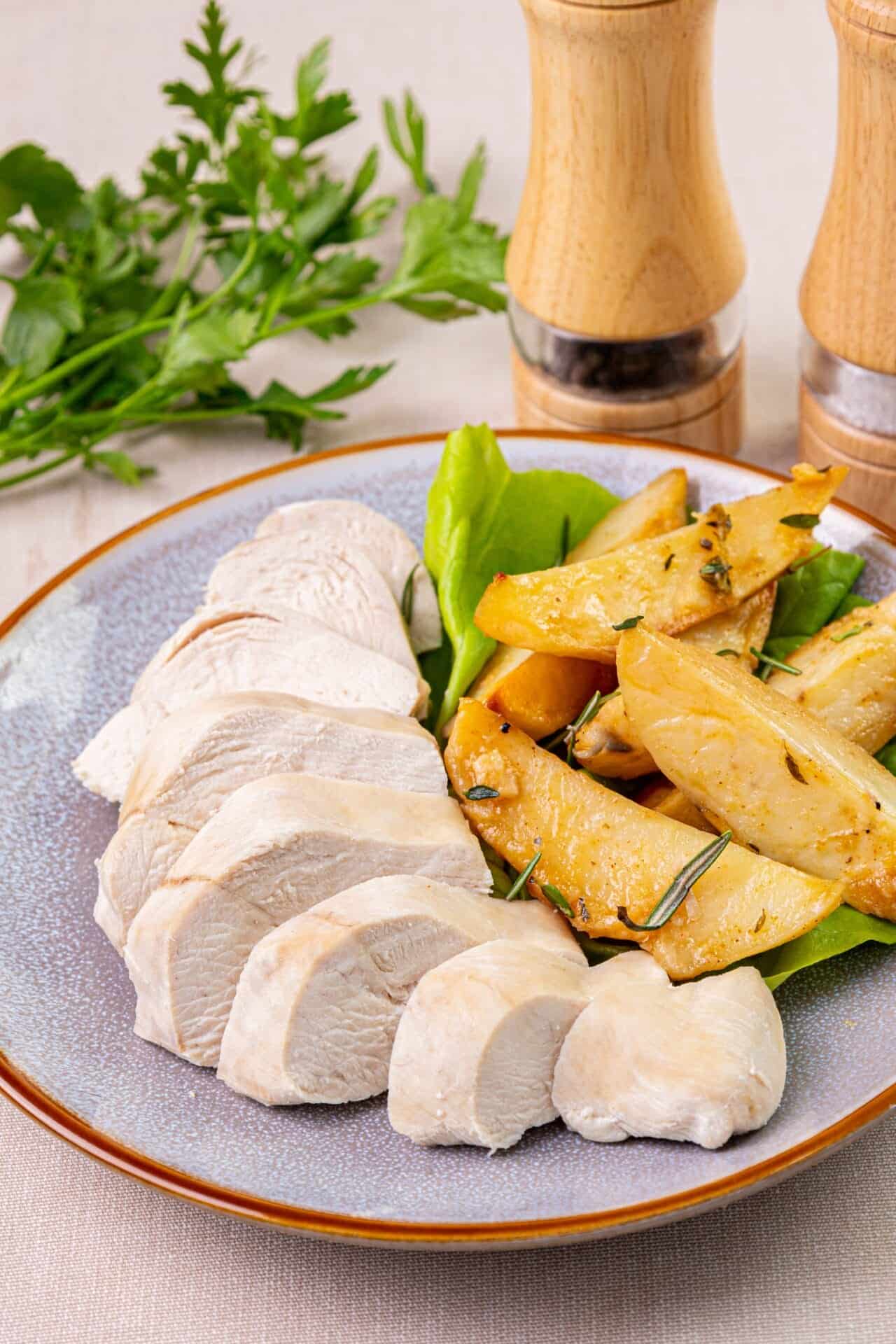
Looking for a foolproof method for avoiding tough, dry chicken breasts? Want to add a foundational skill to your culinary toolbox? Searching for low-calorie meals that pack in the savory flavor?
This poached chicken recipe is your solution! With just a few common ingredients and less than an hour, it helps you make the most of an ordinary skinless, boneless chicken breast.
We’ve all overcooked a piece of chicken. It’s practically a kitchen rite of passage. But poaching is the game-changer that helps you consistently serve up moist, juicy, tender chicken. This method cooks gently, preserves moisture, and infuses the meat with deep flavors that eliminate the need for heavy sauces. And you can switch up those flavors by simply including different aromatics. That means this recipe is super versatile and can elevate both weeknight meals and special occasion dinners. Plus, poaching produces a bonus batch of light broth you can use to enhance soups, stews, rice dishes, and more!
Whether you pair poached chicken with simple sides or use it in more complicated recipes, it’ll add variety to your meals and depth to your skill set.
The gentle science of poaching
Poaching is one of the most delicate cooking methods—and one of the oldest. It involves submerging food in a hot liquid that stays just below boiling, typically between 160°F and 180°F. This gentle temperature range is what sets poaching apart from simmering or boiling. Instead of bubbling rapidly, the surface of the liquid only quivers, keeping proteins tender and preventing them from toughening or unraveling—a common issue when cooking chicken at higher heat.
The science behind poaching lies in controlled heat and gradual flavor exchange. At these moderate temperatures, muscle fibers in meats like chicken contract slowly, locking in moisture rather than squeezing it out. Meanwhile, the cooking liquid and the meat share flavors through a process called osmosis—where water and dissolved compounds move between the two until they reach balance. This means your poached chicken subtly takes on the essence of whatever aromatics you’ve added, while the liquid itself turns into a light, flavor-infused broth.
Because fat isn’t necessary for poaching, it’s also considered a healthier cooking method that produces juicy, versatile protein. The technique works beautifully not only for poultry but also for seafood, eggs, and even fruit. And as a bonus, both the tender meat and the poaching liquid become ready-made building blocks for soups, sauces, or meal prep later in the week.
How do I store leftovers?
Let your poached chicken and the poaching broth cool completely before storing—but never leave them at room temp for more than 2 hours. Store each in its own airtight container. The cooked chicken will keep in the fridge for up to 4 days and the broth for up to 5 days. You can also freeze the chicken or broth separately for up to 3 months in freezer-safe containers. Freezing the broth in an ice cube tray makes it easy to take out only what you need. Thaw frozen chicken overnight in the fridge. Reheat gently on the stovetop or in the microwave, ensuring the chicken reaches an internal temp of 165°F and the broth is steaming hot.
Serving suggestions
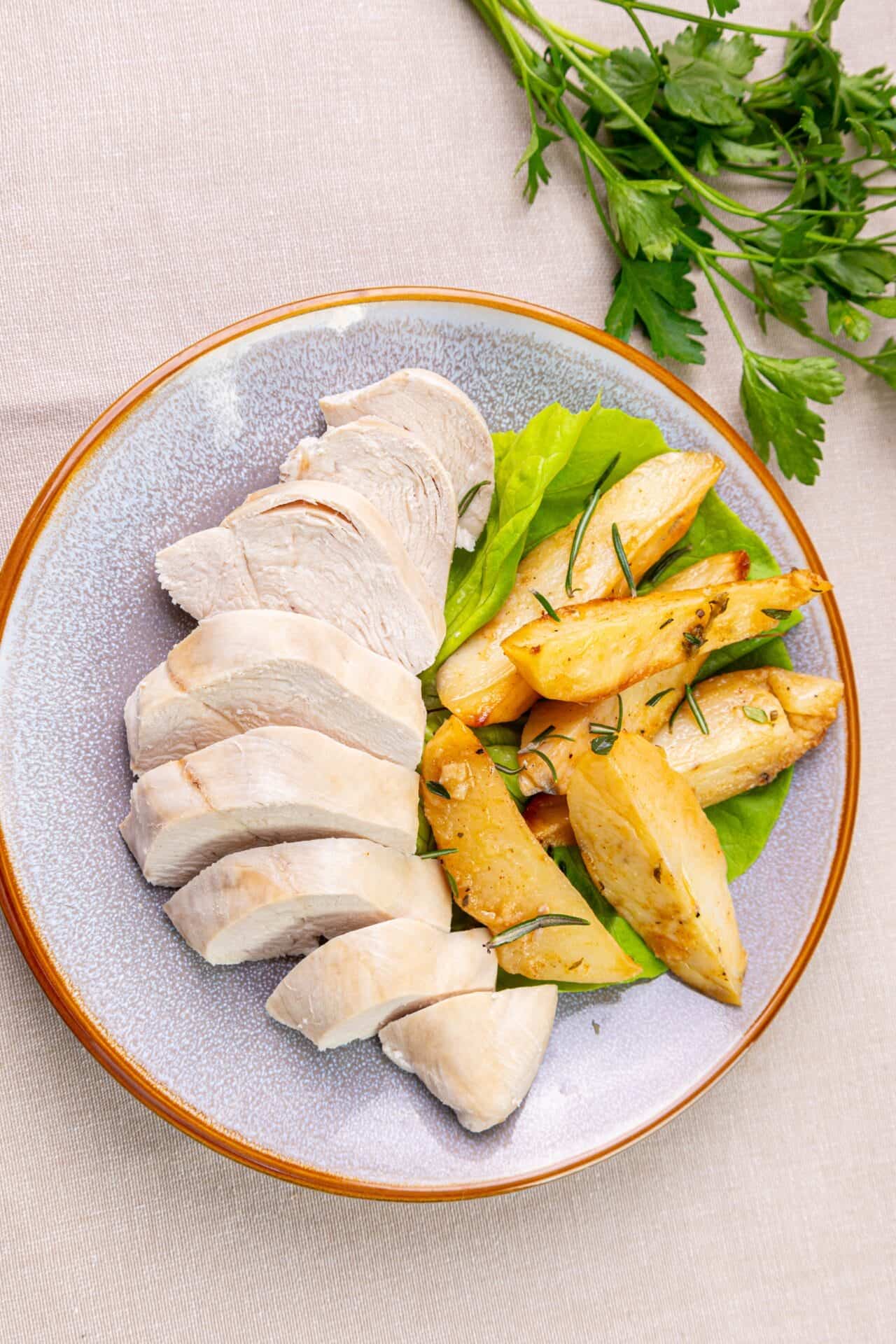
Serve poached chicken alongside a wide array of simple or complex dishes. It’s a great topper for a basic Green Salad or a Mediterranean Salad With Pomegranate Lemon Dressing. It pairs equally well with everything from date-night Tortellini Alfredo to a kid-friendly Tater Tot Casserole to this crowd-pleasing Loaded Baked Potato Recipe.
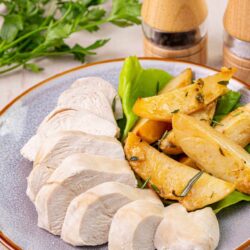
Poached Chicken Recipe

Ingredients
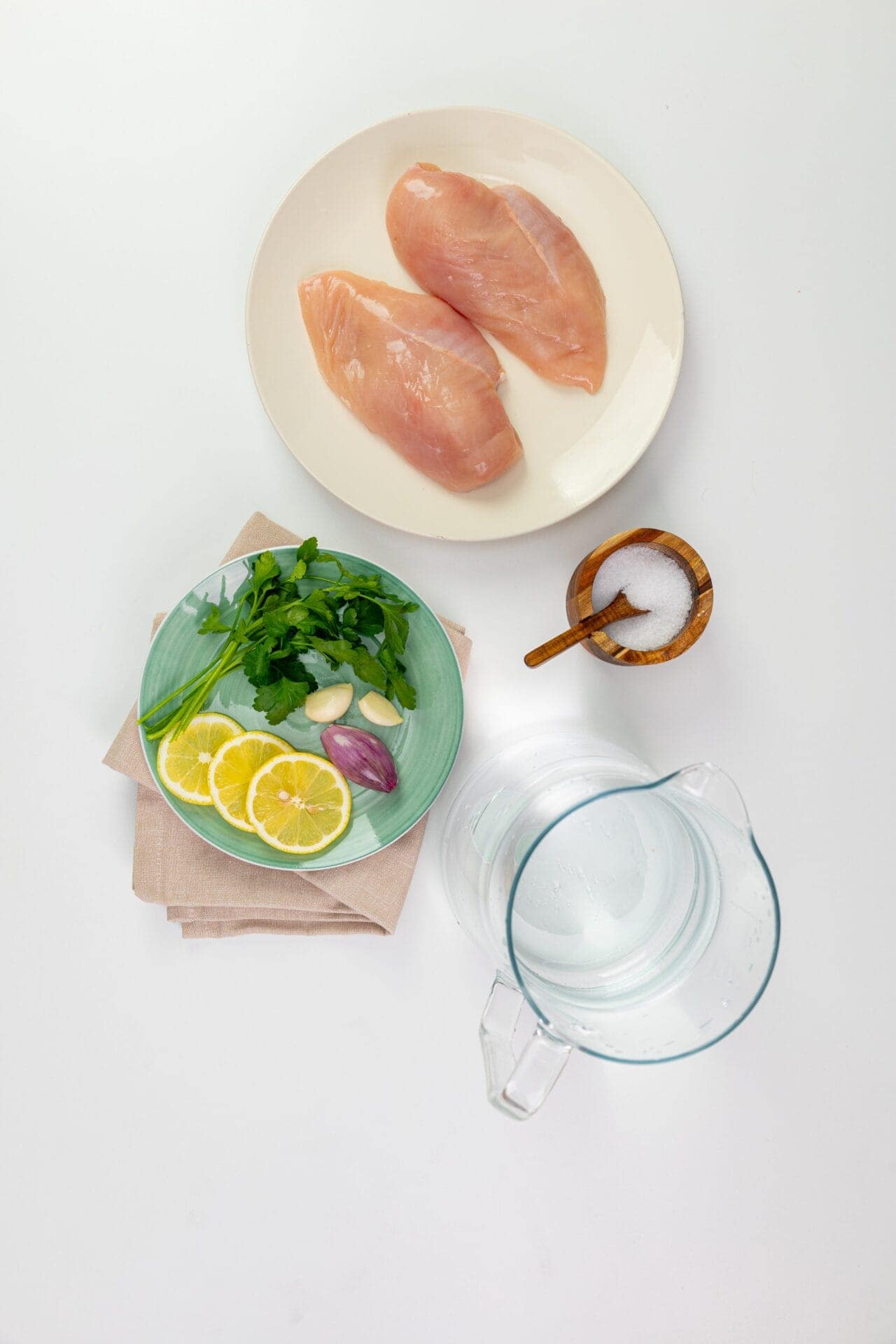
- 2 chicken breasts skinless and boneless
- Cold water or broth as needed to cover the chicken
- 1 teaspoon kosher salt
- Lemon slices, onions, garlic, herbs optional aromatics
Instructions
- Arrange the chicken breasts in a single layer in a medium saucepan. Add enough cold water or broth to cover the chicken by about 1 inch. Sprinkle with kosher salt, and add lemon slices, onion, garlic, or herbs if desired.
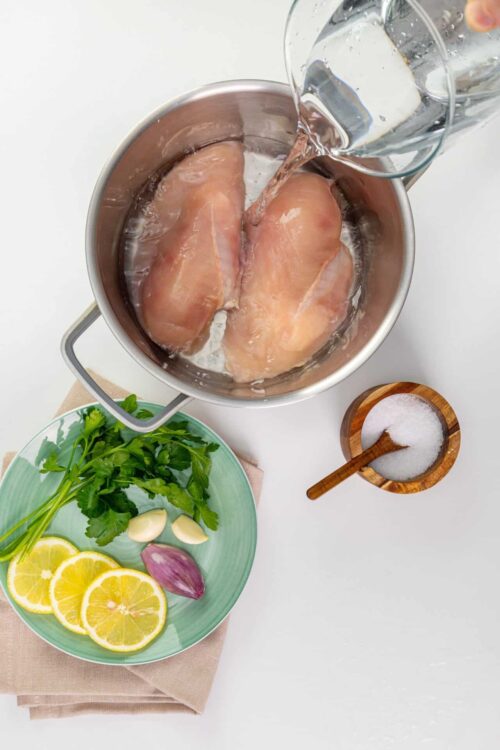
- Set the pot over medium heat and bring the liquid to a gentle simmer, which typically takes about 8-12 minutes. Skim off any white froth that forms on the surface—this is normal, just chicken protein and fat.
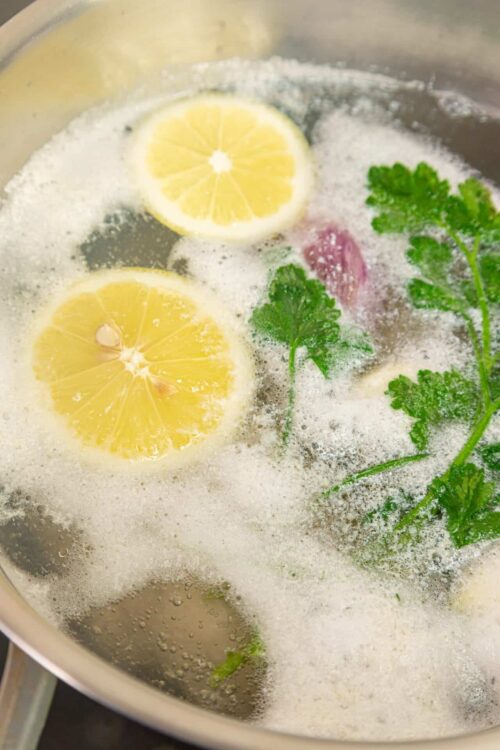
- Once the liquid starts to simmer, cover the pot and reduce the heat to low. Cook for 10 to 15 minutes, or until the chicken reaches an internal temperature of 165°F.
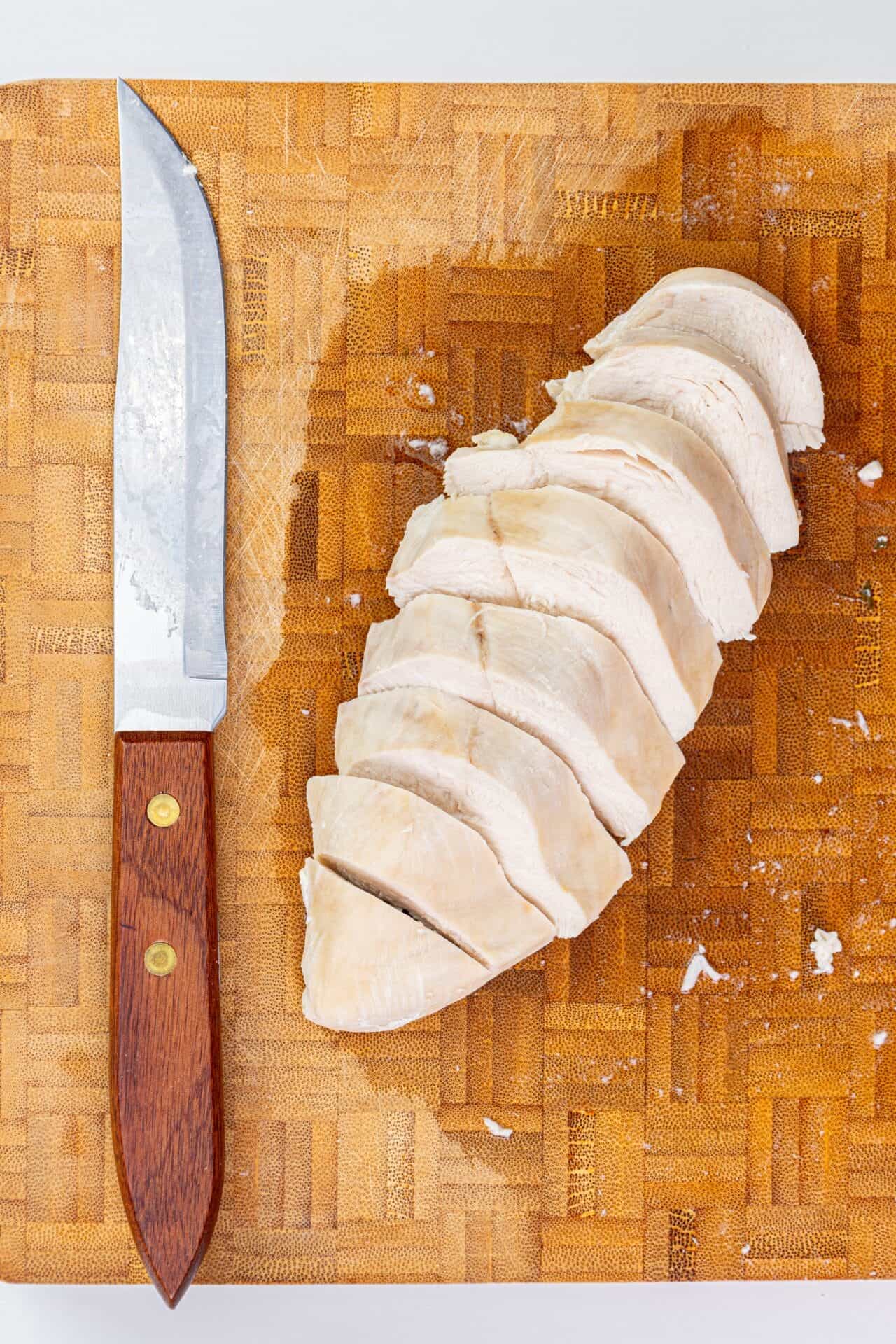
- Remove the chicken from the poaching liquid and let it rest for 5 minutes before slicing, dicing, or shredding as desired.
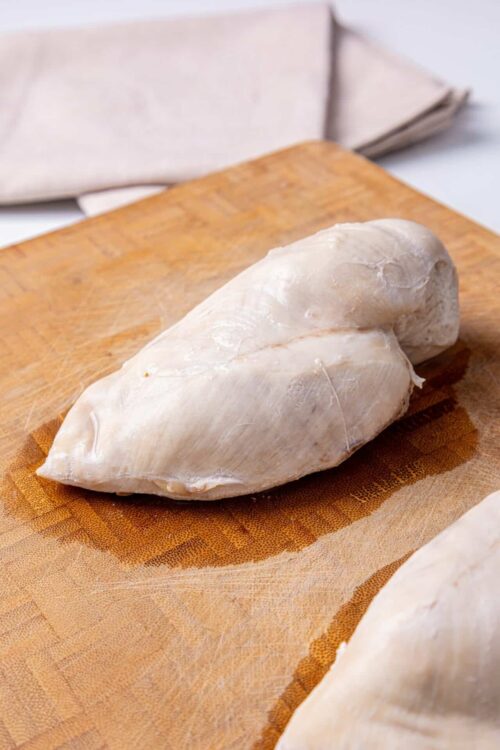
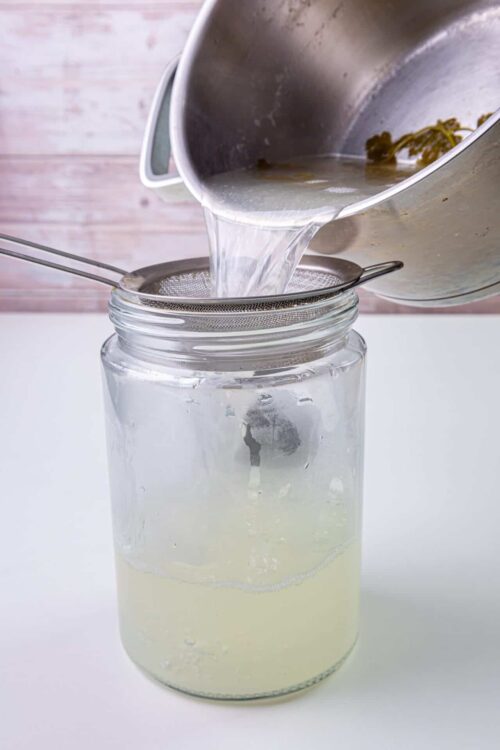
- If you wish to save the poaching liquid, strain it through a fine mesh sieve and refrigerate or freeze for future use as a light broth.

Leave a Comment