

Spice things up with homemade Jerk Seasoning. It’s not just for chicken!
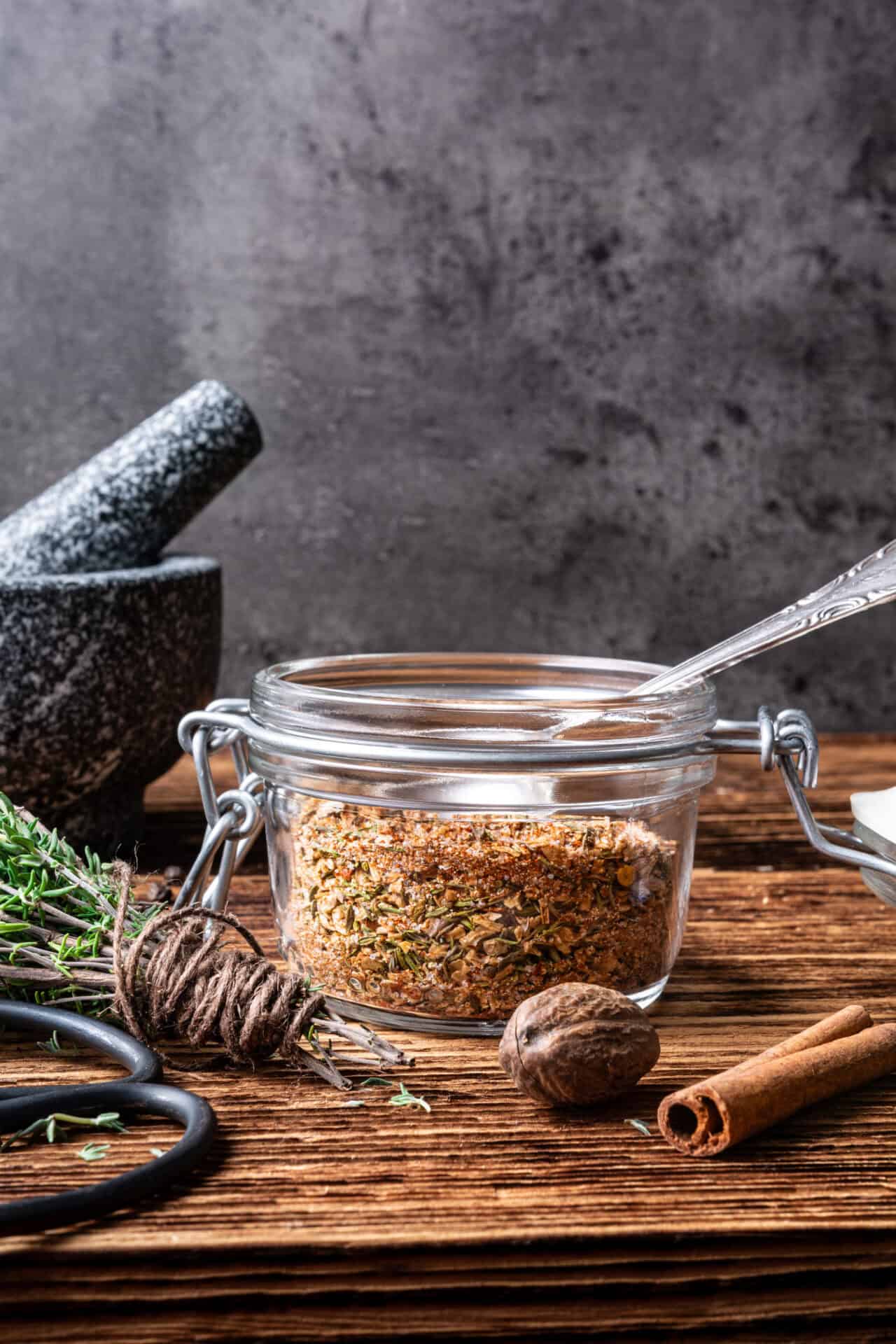
There’s a reason jerk seasoning has been around for centuries: it’s delicious! Stretching back into the Caribbean culture of the 1600s (and possibly earlier), jerk seasoning is the result of various culinary traditions. The native Taíno people cooked their meats on the aromatic wood of the allspice tree, native to Jamaica. This method of slow roasting gave the meat an earthy, smoky flavor. Formerly enslaved Africans who had escaped the clutches of the slave trade mingled this method with their own culinary palette. Scotch bonnet peppers, allspice berries, cinnamon, smoked paprika, and thyme all went into the seasoning mix plastered onto the slow-roasted meat.
Through the centuries, jerk seasoning and cooking methods have continued to be popular and are often associated with Jamaica. However, there are distinct regional variations on jerk seasoning all over the Caribbean, including the Cayman Islands and Barbados. Here in the States, you can buy jerk seasoning already made up at your local supermarket or niche store. These bottled varieties often follow the Jamaican recipe.
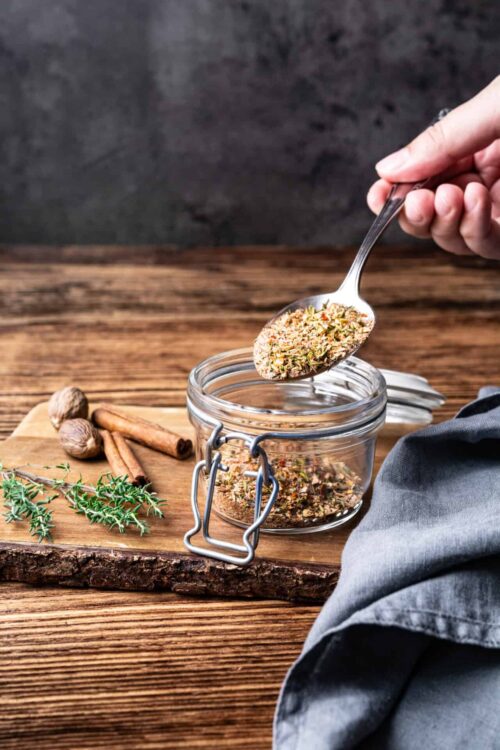
If you want to customize your jerk seasoning and know exactly what goes into it, why not make your own? You will love being able to control (or dial up!) the heat level, and the pantry-friendly staples like ground cinnamon, allspice, and thyme are no-fuss. Seasoning recipes are great because they often take about five minutes to prepare, but you end up with enough for several dishes. Fortunately, the seasoning mix lasts on your shelf for months!
What Is Allspice?
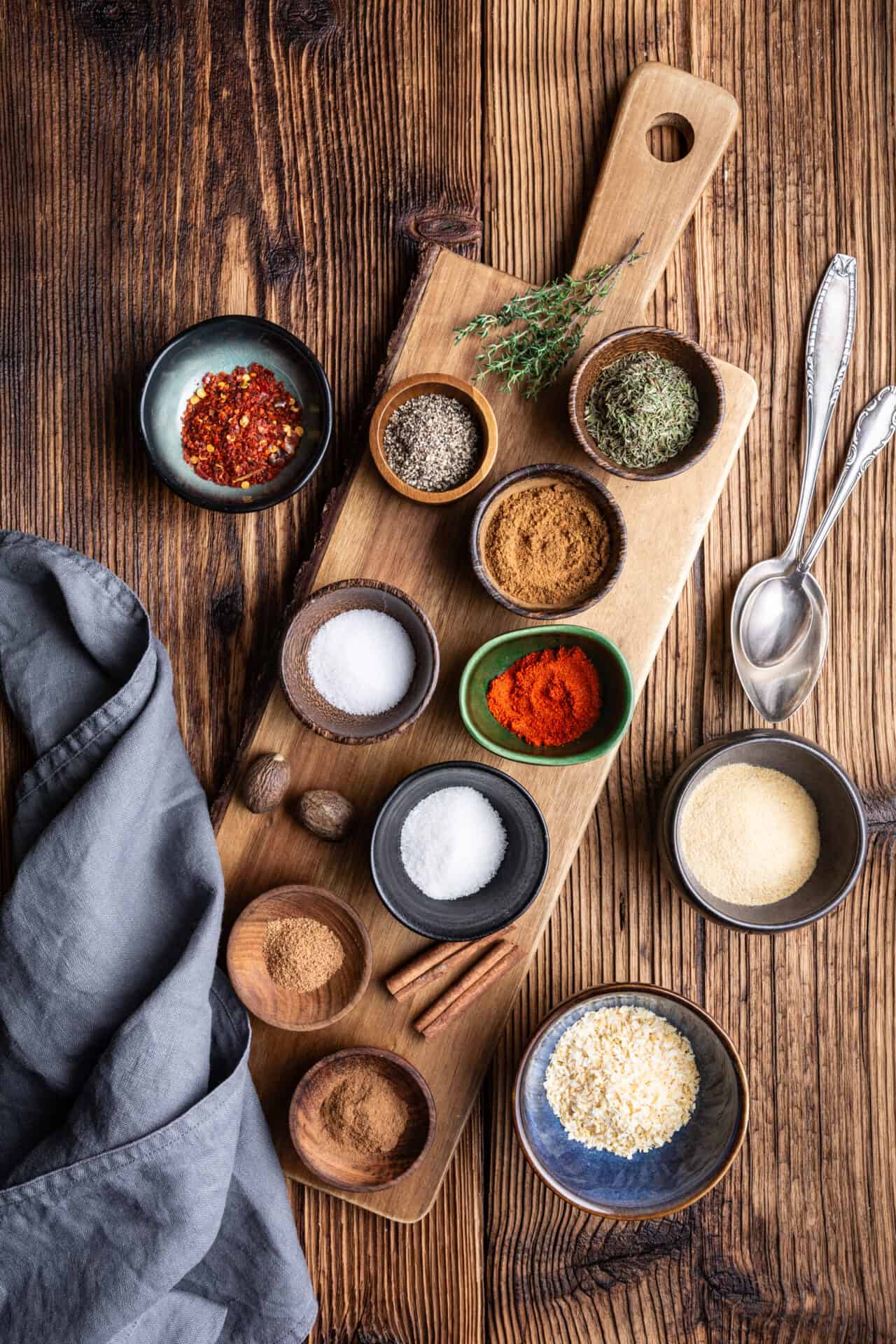
With the native Jamaican allspice tree (Pimenta dioica) being a big part of jerk seasoning’s history, it’s fair to ask: What is allspice? Allspice grows in the Caribbean, Mexico, and other parts of Central America. It’s a shrub-like evergreen tree that can grow up to 60 feet tall. Both the bark and wood are great for imbuing flavor into smoked meat. The nubby “berries” are harvested when green and set out to dry, where they end up looking more like peppercorns. The dried berries can be used either in their whole form or ground. When ground, allspice can flavor savory or sweet dishes. So why the all-purpose name? Caribbean natives call it by the Spanish name “pimento,” but it’s not the same as the pimento pepper. The English invaders called it “allspice” because it smells and tastes like a combination of cloves, cinnamon, nutmeg, and a hint of cherry.
How To Make Ahead And Store
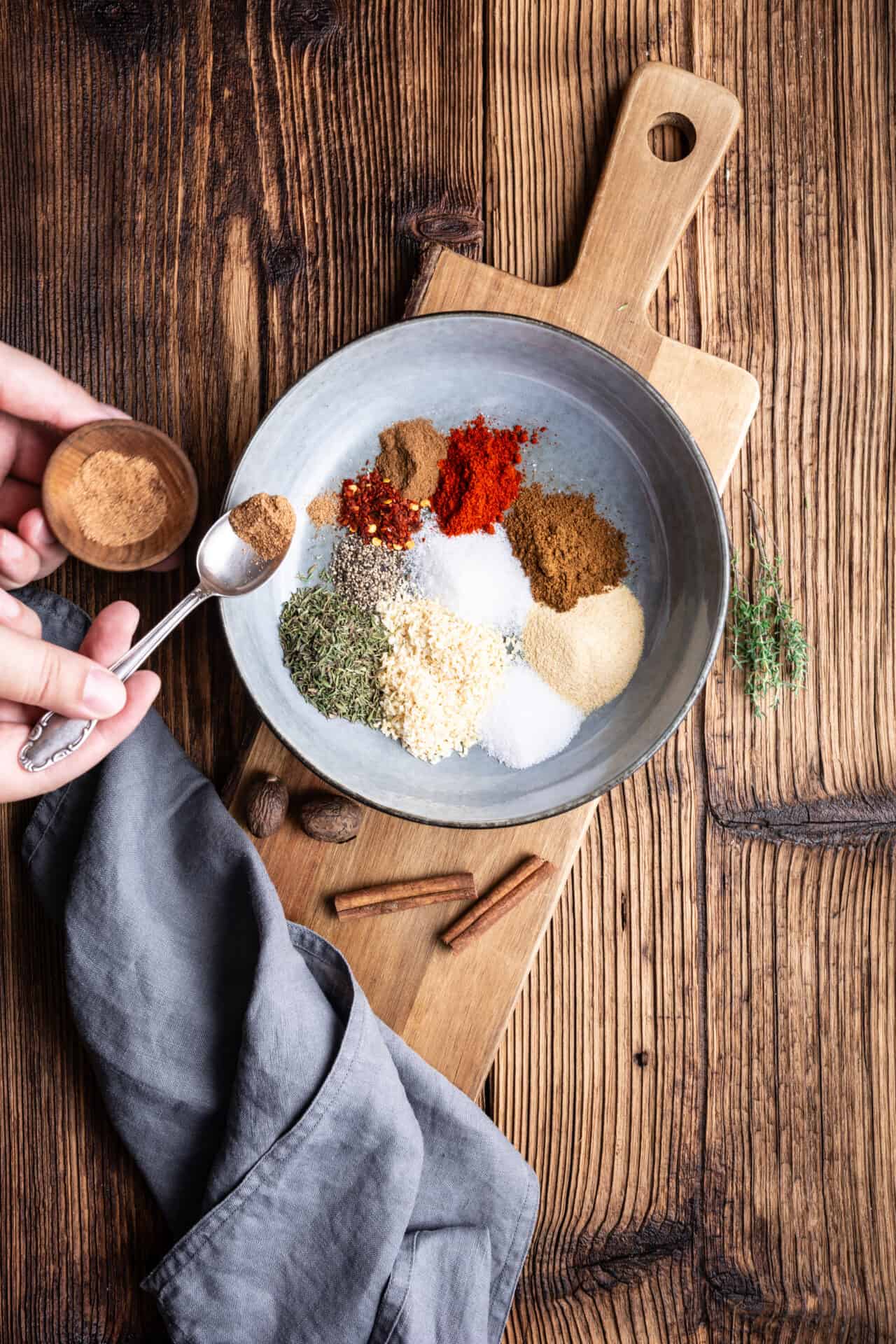
Jerk seasoning is great for making ahead and keeping on hand. Simply make sure you have an airtight container, and it will keep at room temperature for up to 6 months. Keep it away from humidity or moisture. If it starts to change color, it is probably time to use it up or toss it.
Serving Suggestions
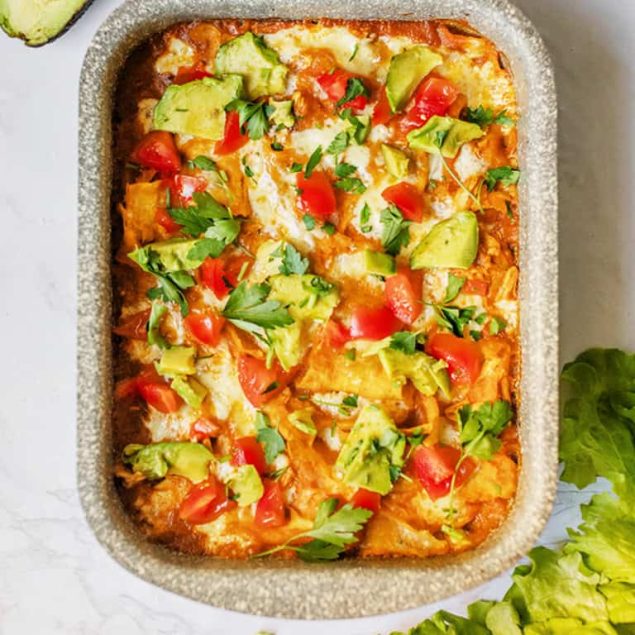
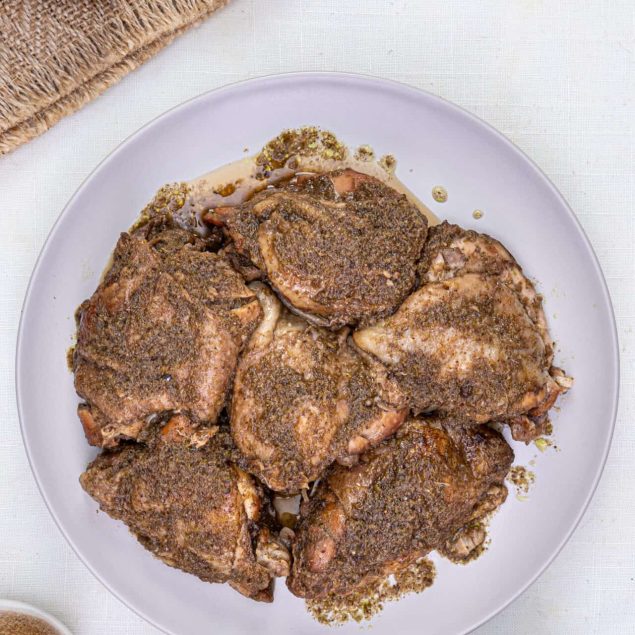
When most people think of jerk seasoning, they think of Jerk Chicken. And there’s nothing wrong with that! The iconic Jamaican dish is juicy, zesty, and irresistible. However, try thinking outside the box and using the seasoning in other recipes as well. Consider Jerk Chicken Tacos for a fusion dish: the Caribbean meets Mexican. Or use jerk seasoning as a rub on shrimp, salmon, or pork chops. Finally, jerk seasoning is even great on side dishes. If you’re a fan of hot and spicy foods, try Jamaican Coleslaw. You won’t regret it.
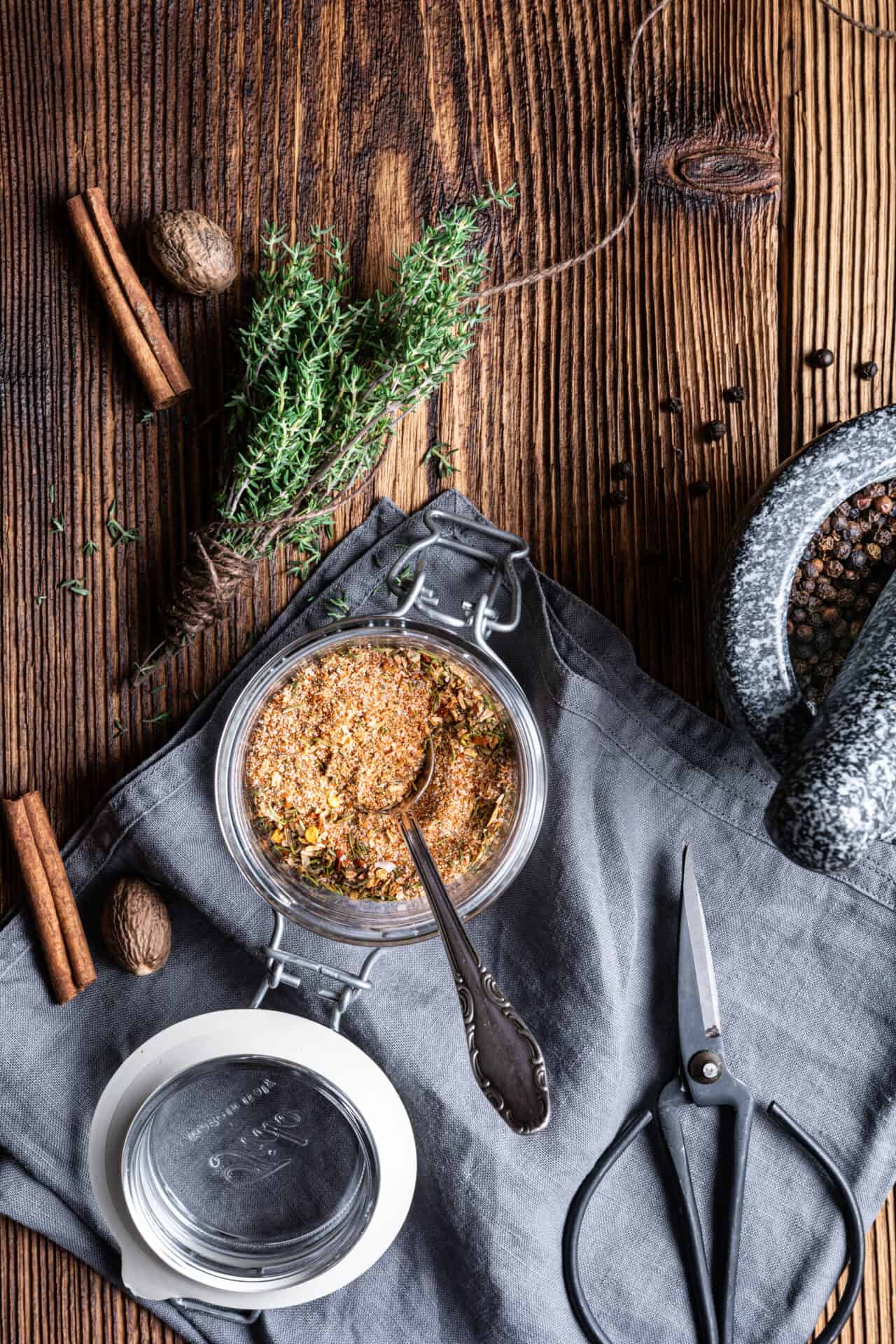
Jerk Seasoning

Ingredients
- 1 tablespoon onion powder
- 1 tablespoon garlic powder
- 2 teaspoons dried thyme
- 2 teaspoons salt
- 2 teaspoons sugar
- 1 teaspoon ground allspice
- 1 teaspoon paprika
- 1/2 teaspoon ground black pepper
- 1/2 teaspoon red pepper flakes
- 1/2 teaspoon ground cinnamon
- 1/2 teaspoon ground nutmeg
Instructions
- Combine all the ingredients in a medium bowl.
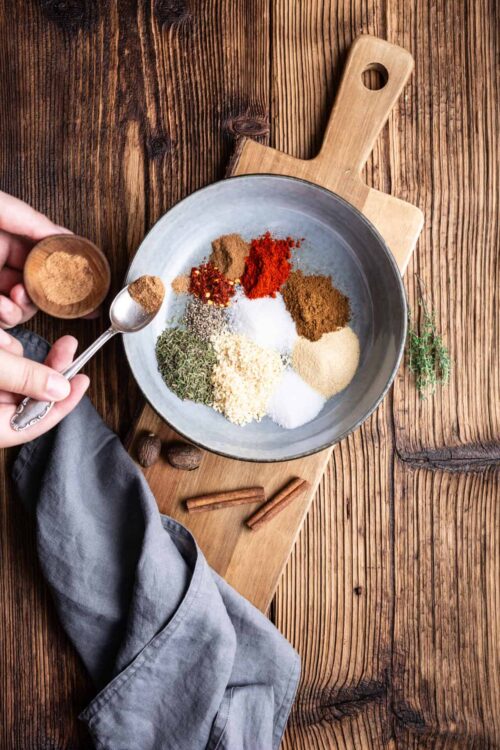
- Mix thoroughly until all spices are well blended.
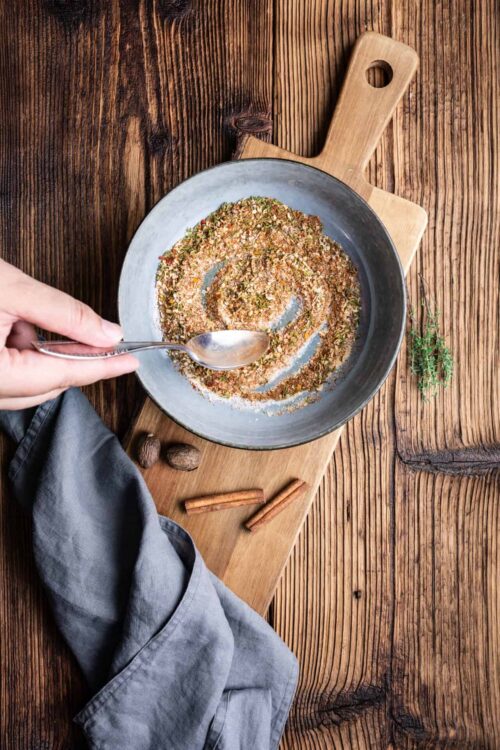
- Transfer the blend to an airtight container and store in a cool, dry place.

Great recipe
Thank you for sharing it
Glad you liked it Marlene!