

Toss together an authentic taste of the Greek Isles with this quick and easy recipe that leans on simple ingredients for big, bold flavors!
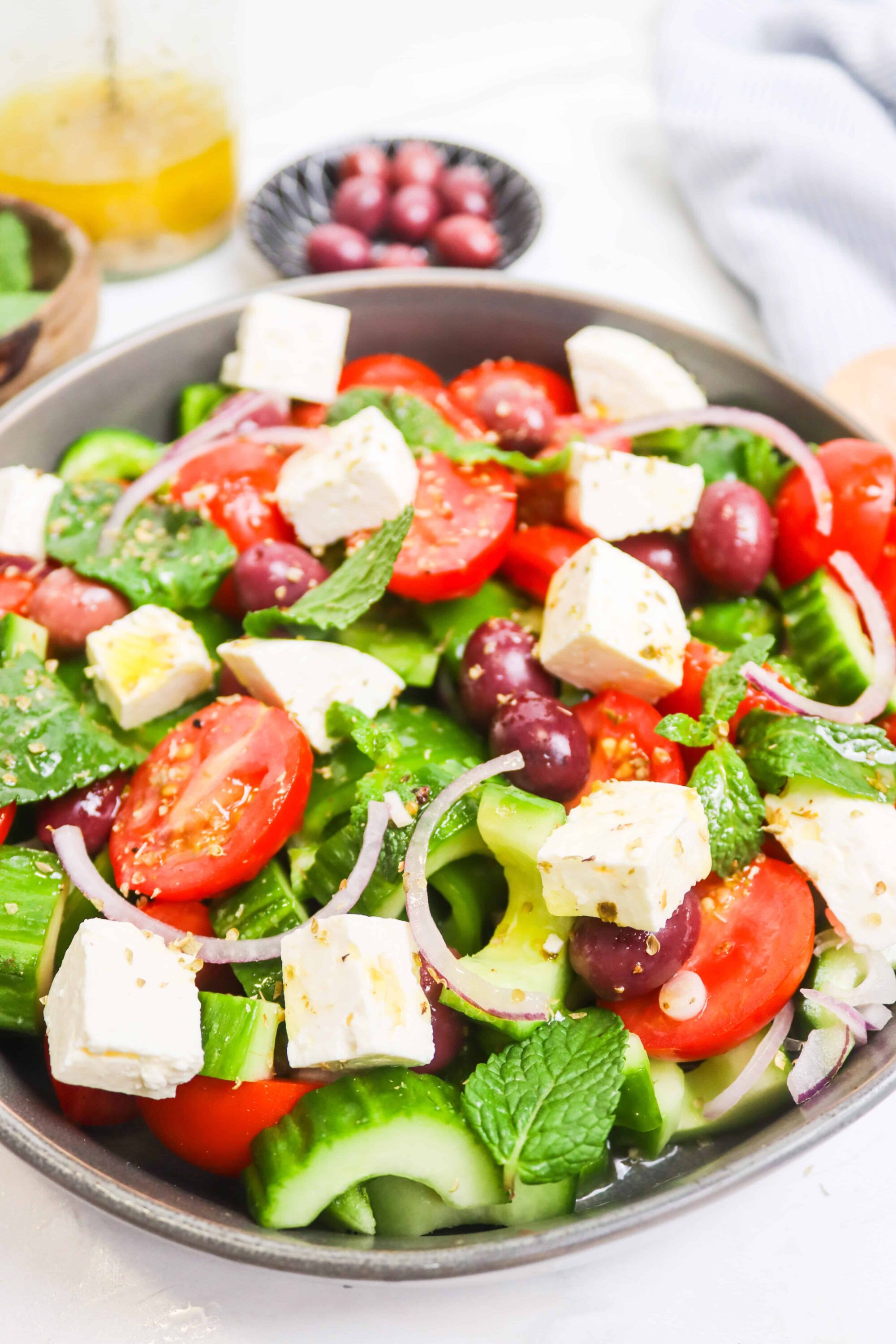
I grew up eating tomato and cucumber salads. We plucked the veggies from my dad’s garden, and my mom doused them in olive oil and vinegar. I just assumed this kind of salad came from my dad’s Hungarian roots. Turns out, it’s more of a Greek thing—which tracks because my dad was obsessed with the soundtrack from the 1964 film Zorba the Greek.
I still love combining tomatoes and cucumbers, sometimes with kalamata olives and feta cheese—which are as much my obsessions as Anthony Quinn’s performance was for my dad. In honor of the memory of both Quinn and Dad, I present to you the best Greek salad recipe (really!). It’s simple, savory, and absolutely bursting with fresh flavors.
The cucumber, red onion, and bell pepper give this dish a pleasing bit of crunch. The feta and olives add briny saltiness, and the tomatoes bring in juicy earthiness. Plus, it takes mere minutes to pull together and requires zero cooking.
Toss this gorgeous salad whenever you’re craving the flavors of summer—or dreaming of the azure waters and gleaming white architecture of the Greek Isles.
Ingredient spotlight: kalamata olives
Kalamata olives hail from the Peloponnese peninsula in southern Greece, specifically the region around the city of Kalamata in Messenia. Their trees thrive in the Mediterranean climate, where hot, sunny summers and mild winters produce plump, deep purple fruits that are picked by hand to preserve their delicate texture.
These olives are always harvested ripe—not green—which gives them their signature dark color and complex flavor profile. They’re traditionally cured in wine vinegar or olive oil for maximum depth and aroma. Kalamatas have a long history in Mediterranean cuisine, prized for both their taste and nutrition, with deep connections to Greek heritage and culture.
Cultivation of kalamata olives has spread worldwide, but they hold Protected Designation of Origin (PDO) status in the European Union. That means only olives grown around Kalamata in Greece can officially bear the name. Olives of the same variety grown elsewhere are sometimes sold as “kalamon olives.”
How do I store leftovers?
Store leftover Greek salad that’s fully assembled and dressed in an airtight container in the fridge for up to 3-4 days. The veggies will soften and release juices over time, so enjoy it as soon as possible for optimal flavors and textures. The best strategy is to store the individual salad components separately, then toss and dress the salad right before serving. The chopped veggies, feta, olives, and herbs will each keep well for up to 4 days in separate airtight containers in the fridge. Do not freeze this salad, as it will not retain its appealing texture.
Serving suggestions
Serve the best Greek salad with the Best Homemade Greek Salad Dressing for the most authentic flavors. Pair it with citrusy Greek Chicken for a themed protein boost or White Bean Soup for a hearty lunch combo.
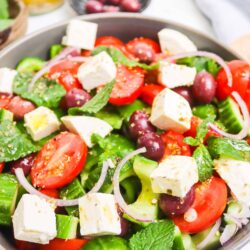
The Best Greek Salad Recipe (Really!)

Ingredients
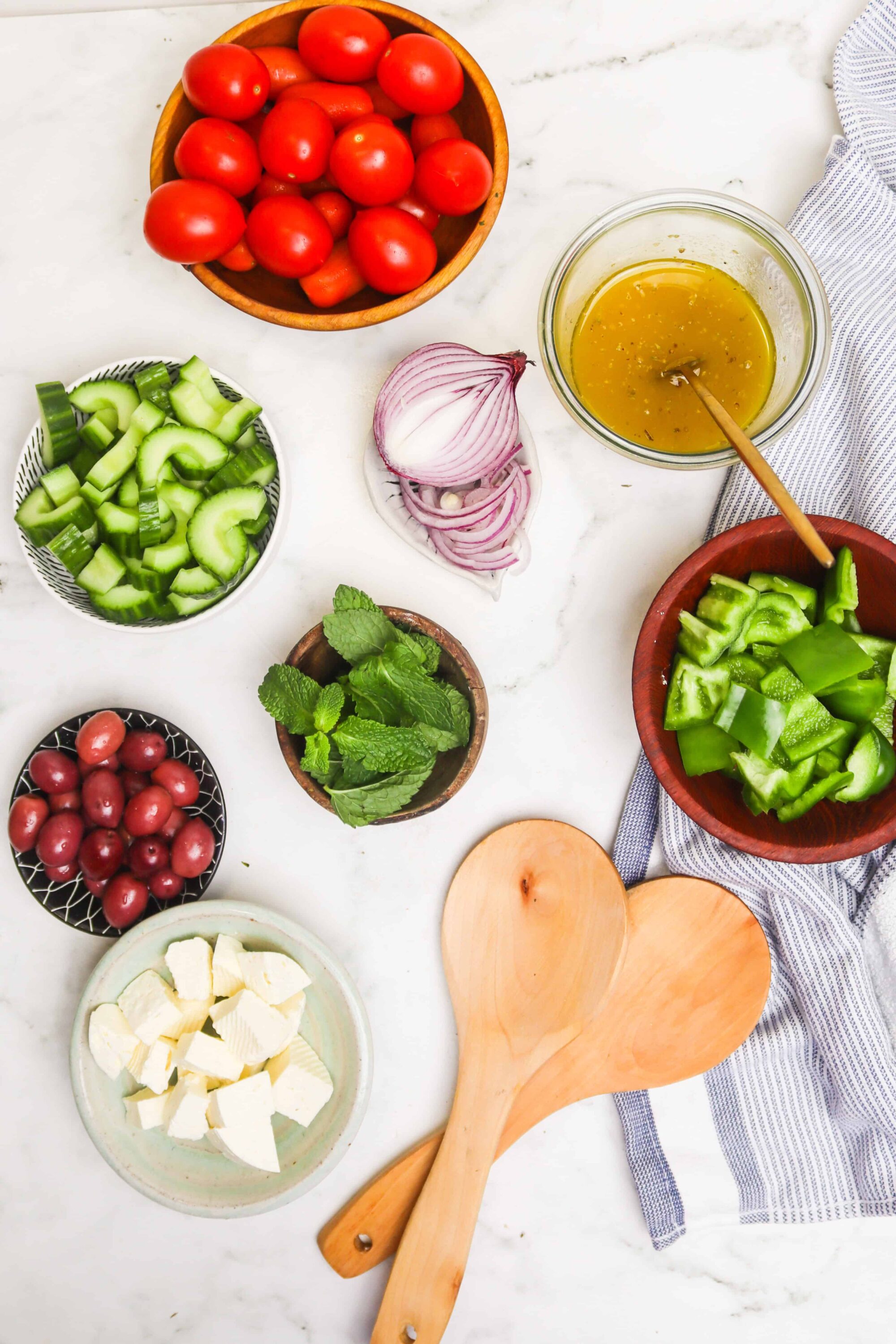
- 1 cucumber cut lengthwise, deseeded, and sliced
- 1 green bell pepper deseeded and chopped into 1-inch pieces
- 2 cups cherry tomatoes halved
- 1/3 cup red onion thinly sliced
- 1/3 cup kalamata olives pitted
- 1/3 cup fresh mint leaves plus more, for optional garnish
- 5 ounces feta cheese crumbled or cut into cubes, plus more for optional garnish
- 1/4 cup Greek salad dressing
- Salt and pepper optional, to taste
Instructions
- Place the prepared cucumber, green bell peppers, cherry tomatoes, red onions, and kalamata olives in a large bowl.
- Add the mint leaves and sprinkle the feta cheese overtop.
- Drizzle the Greek salad dressing over the salad and season to taste with salt and pepper, if desired.
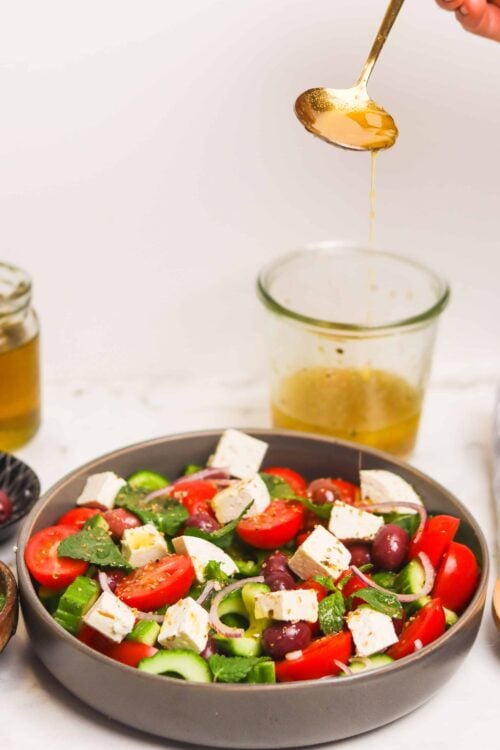
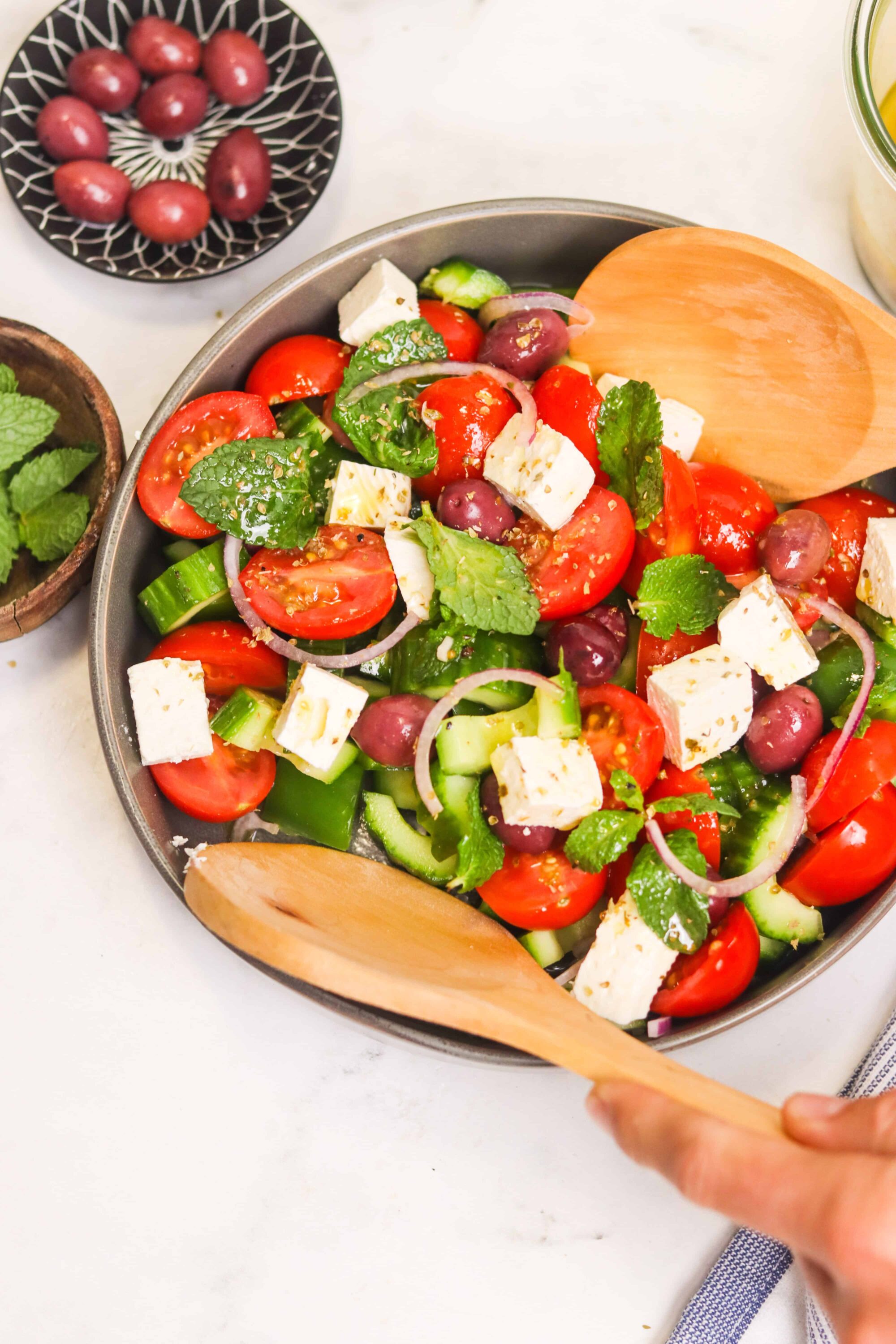
- Using salad spoons, gently toss everything until well combined. Taste and adjust salt, pepper, or dressing.
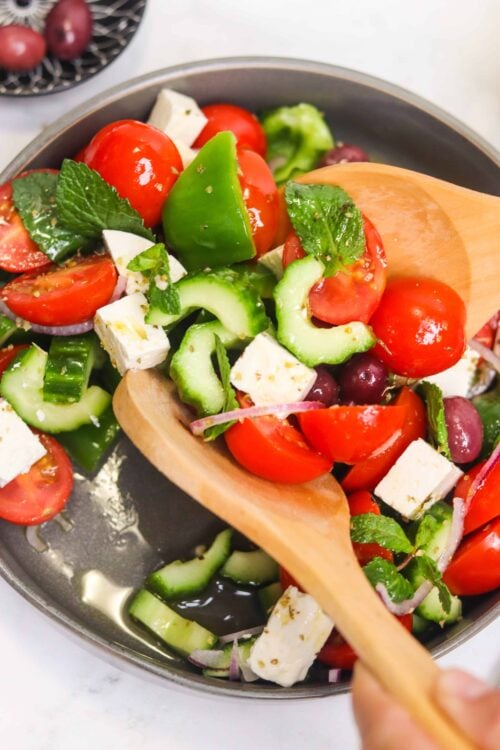
- Garnish with reserved mint leaves and extra feta as desired, then serve immediately.

Leave a Comment