

Take a traditional breakfast fave to the next level with this easy recipe that walks you through a classic culinary technique!
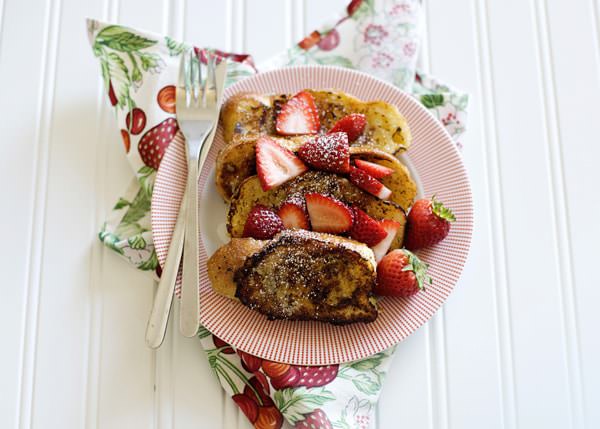
French toast feels like the ultimate breakfast indulgence. I mean, it’s hard to get more decadent than soaking bread in an eggy custard, pan-frying it, then dousing it with powdered sugar and drizzling it with sweet maple syrup. But this recipe for French toast brûlée manages to take it to the next level!
You’re likely familiar with crème brûlée—a gorgeous dessert of cool, rich custard topped with sugar that’s been exposed to intense direct heat until it melts, bubbles, and hardens into a glassy, crackable crust. Yum! This recipe harnesses the magic of the brûlée technique to add extra deliciousness to the fabulousness of a familiar fave.
In French, brûlée literally means “burned” or “scorched,” but in culinary use it refers to foods finished with a thin layer of sugar that’s caramelized, not actually burnt. Traditionally, the heat source was a metal salamander or broiler, but a handheld kitchen torch is the modern-day tool of choice.
If a kitchen torch isn’t among your household equipment, don’t despair! You can achieve that impressive crust on the top rack of your oven’s hot broiler—watching closely to avoid burning—until the sugar sprinkled on your French toast melts and caramelizes.
I particularly love making this dish as breakfast for dinner. Paired with sausage links and a fruit salad, it makes any weeknight feel magnifique!
Is French toast really French?
Maybe by lineage. But it’s a more complicated origin story than the name suggests. Long before the English-language moniker was used, variations on bread soaked in a rich egg mixture then fried appeared in ancient Roman sources as pan dulcis and later in medieval European cookbooks. In France, the dish is better known as pain perdu, or “lost bread,” a nod to the thrifty practice of reviving stale loaves by soaking and frying them instead of throwing them away. The “French toast” name seems to have originated in the U.S. Some popular stories credit an 18th‑century American innkeeper named Joseph French for coining it—though others suggest calling it “French” simply made a humble, homey dish sound more elegant and refined.
How do I store leftovers?
Refrigerate leftover slices of French toast brûlée in an airtight container within 2 hours of cooking. They’ll keep in the fridge for up to 3-4 days. The sugar topping will soften, but you can re-crisp it slightly under the broiler or with a quick pass of the torch before serving. You can also freeze this dish for up to 2 months. Arrange cooled slices in a single layer on a parchment-lined baking sheet, freeze until firm (about 1 hour), then transfer to a freezer-safe bag or container. Thaw overnight in the fridge. Reheat in a lightly buttered skillet over medium heat or on a baking sheet in a 350°F oven until heated through, about 5-10 minutes.
Serving suggestions
Serve your French toast brûlée alongside an array of international breakfast and brunch dishes. Its sweet flavor beautifully complements the savory elements of Spanish Eggs, a Mexican Breakfast Casserole, or an Italian-inspired Frittata. Or keep the Francophile theme by pairing this dish with a French Omelette.
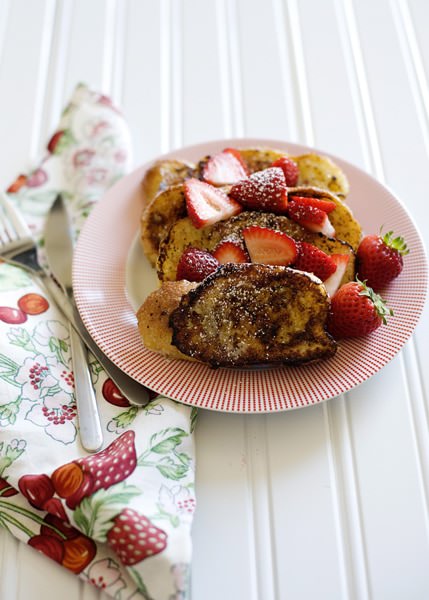

French Toast Brûlée

Ingredients
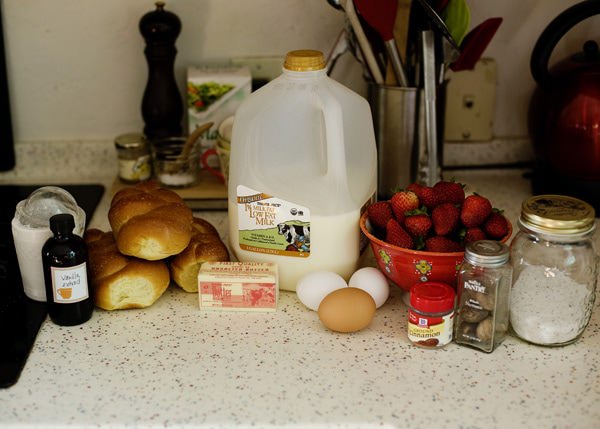
- 3 eggs
- 1/3 cup milk
- 2 tablespoons sugar
- 1/8 teaspoon ground cinnamon
- 1/8 teaspoon freshly grated nutmeg
- 1/2 teaspoon vanilla extract
- 1 loaf challah bread or 1 French baguette
- 2 tablespoons butter
- 2 tablespoons powdered sugar or superfine sugar, for dusting
- 2 cups strawberries sliced, optional, for serving
Instructions
- Preheat the oven to 300°F. Line a rimmed baking sheet with a wire rack and set aside.
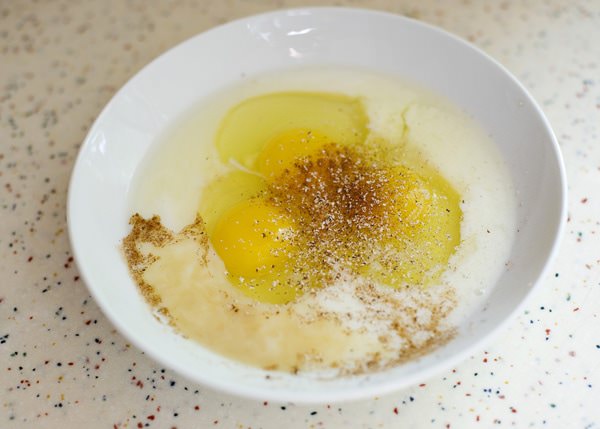
- In a large shallow bowl, whisk the eggs, milk, sugar, cinnamon, nutmeg, and vanilla until well combined.
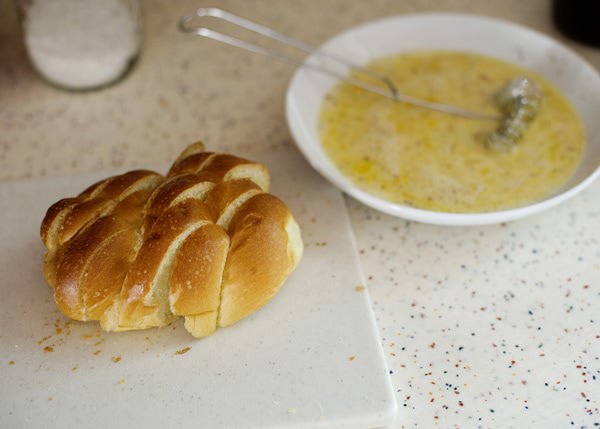
- Using a sharp serrated knife, cut the bread into 1‑ to 1 1/2‑inch slices on a slight diagonal.
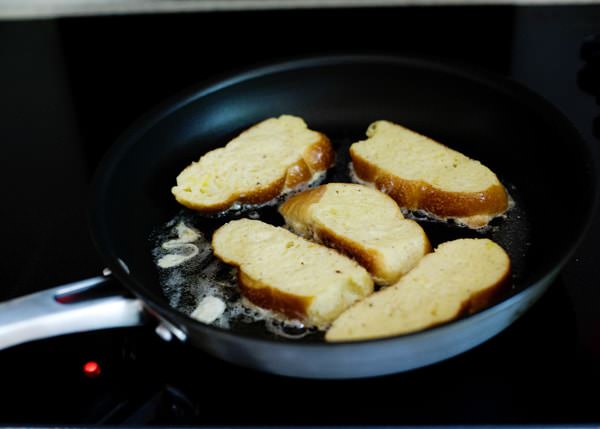
- Melt the butter in a large skillet over medium-high heat.
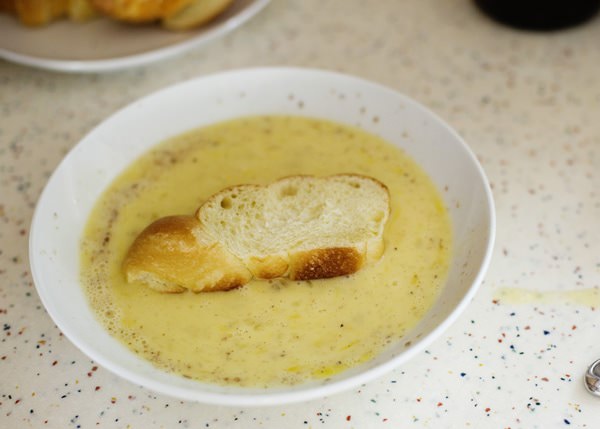
- Dip each side of the bread into the custard mixture, first on one side, then turning to the other side and pressing gently into the custard to fully soak the bread. Let excess custard drip back into the bowl before transferring to the skillet.
- Working in batches of 2 to 4 slices, add the soaked bread pieces to the skillet, being careful not to crowd the pan. Cook until the bottoms are deeply golden, 2 to 3 minutes. Flip and cook until the second side is golden and the centers feel set when pressed, another 1 to 2 minutes.
- Transfer the cooked French toast to the prepared baking sheet and keep warm in the oven while you cook the remaining slices. They should not brown much further in the oven.
- Arrange the French toast slices in a single layer on the baking sheet or on serving plates. Sprinkle the tops evenly with the powdered or superfine sugar, using just enough to lightly cover the surface.
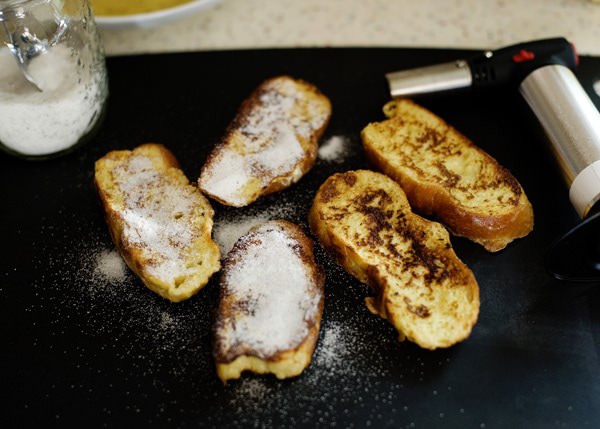
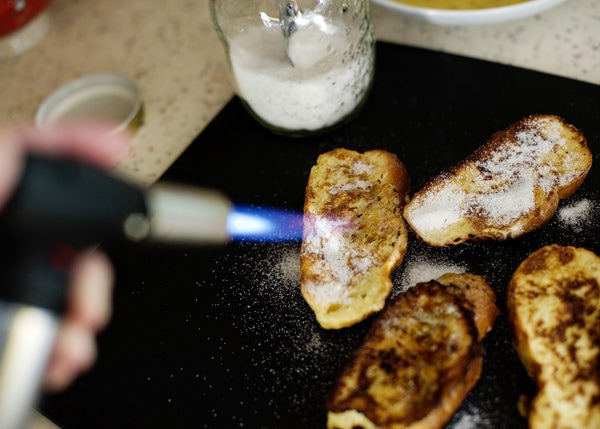
- Using a kitchen torch, move the flame in slow, sweeping motions over the sugared tops until the sugar melts, bubbles, and turns a deep golden brown, 1 to 3 minutes. Hold the tip of the flame a couple of inches from the surface and keep it moving to avoid scorching any one spot.
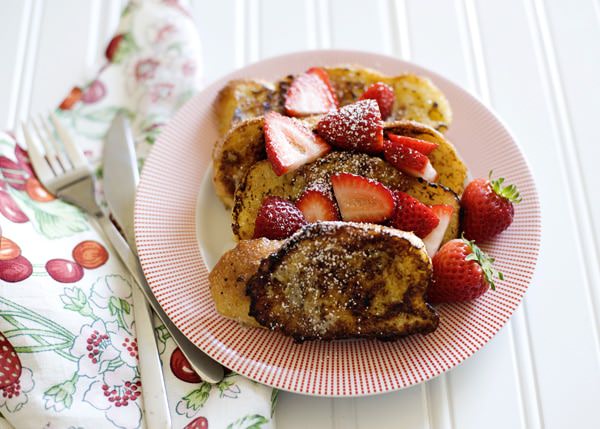
- Serve immediately while the topping is still crisp, with sliced strawberries on the side or scattered over the top, if desired.


Leave a Comment