

Master the culinary technique some chefs rely on to determine a cook’s talent by making this elegant French Omelette.
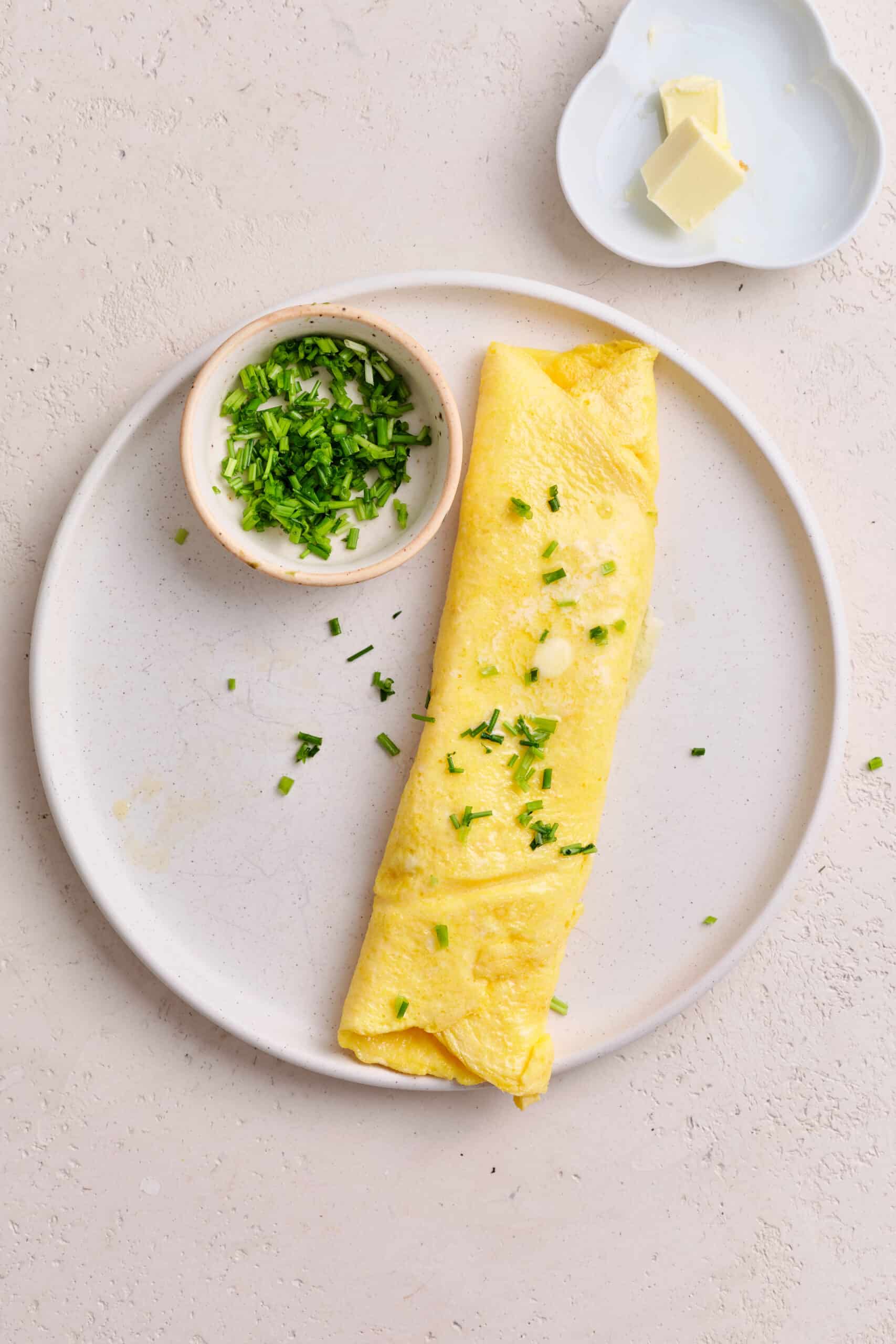
When we think of omelettes, we usually imagine eggs softly scrambled, spread out in the pan, filled with all sorts of things (like cheese), and folded. And, yes, that process will definitely produce a delicious omelette. Just not a French omelette, the elegant and delicate three-ingredient rolled, pale yellow, custard-like marvel.
Famous French chef Jacques Pépin, who came to the U.S. in 1959 after having been the personal chef for three French presidents, including Charles de Gaulle, is renowned for his iconic recipes, cookbooks, award-winning television shows (including one he hosted with Julia Child), being the founding dean of the French Culinary Institute, and being the master of the French omelette. Revered by professional chefs and home cooks alike, Chef Pépin often tells the story of how chefs who trained him in France would use the making of the French omelette as a test of a new cook’s true culinary skill.
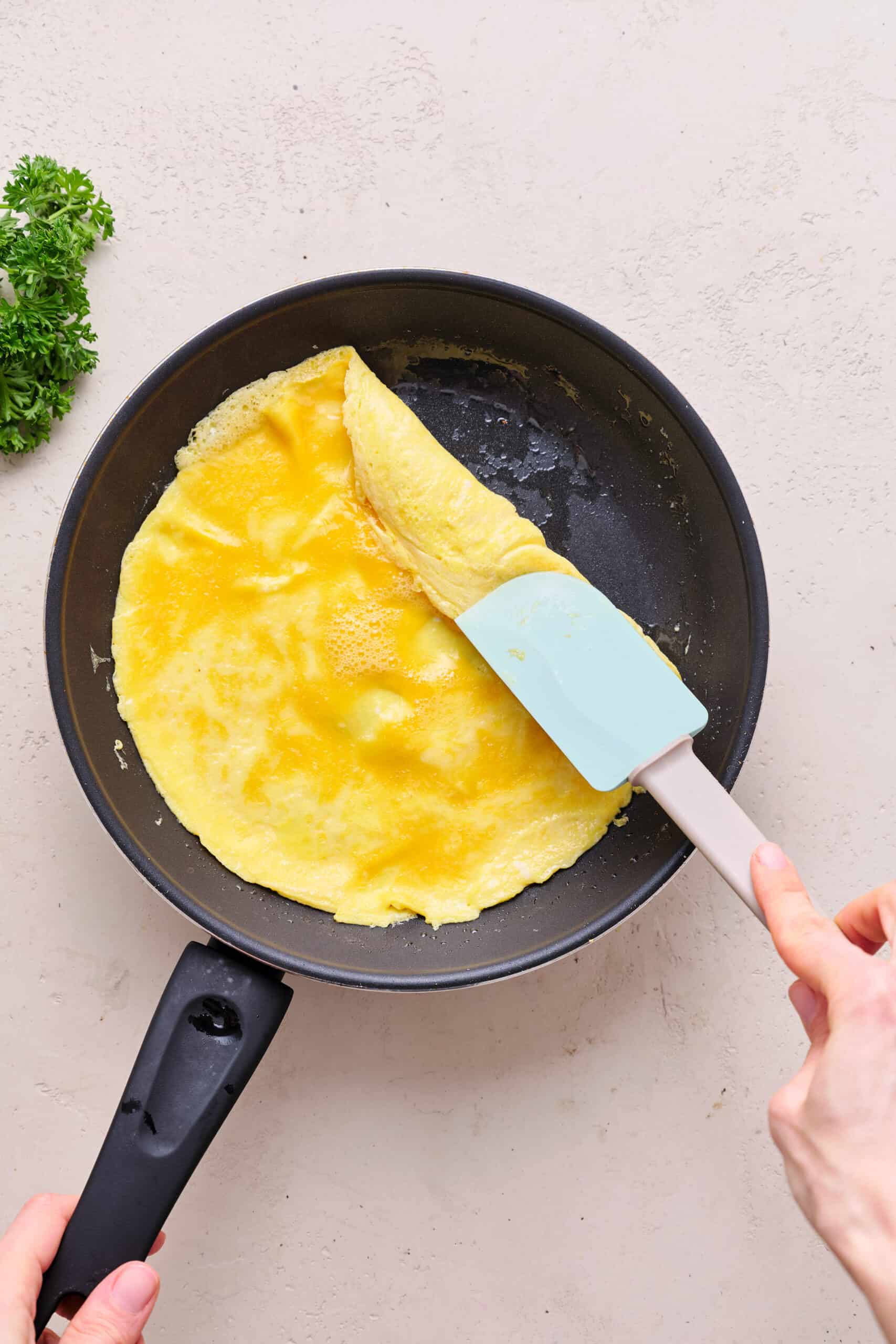
The French omelette is made with only three ingredients (eggs, butter, and salt), but it is the technique that will produce the smooth exterior, the moist and tender interior, and the rich flavor. The eggs, which should be mixed just until the whites disappear, are poured into butter that has been melted in a nonstick skillet. Once the eggs begin to set, you must gently push them away from the pan’s edge and toward its middle, tilting the pan so the egg that has not yet set can do so at the hot pan’s edge. You must be very careful not to get any brown color on your eggs or to overcook them: French omelettes are famous for their light yellow color and for being not quite set in the middle when you roll them into their classic cylindrical shape. It takes some practice to get this technique down perfectly, but at least your mistakes will be delicious.
The French omelette is, truly, culinary perfection—slightly runny, richly eggy, and marvelously buttery. It is just divine.
The Perfect French Omelette
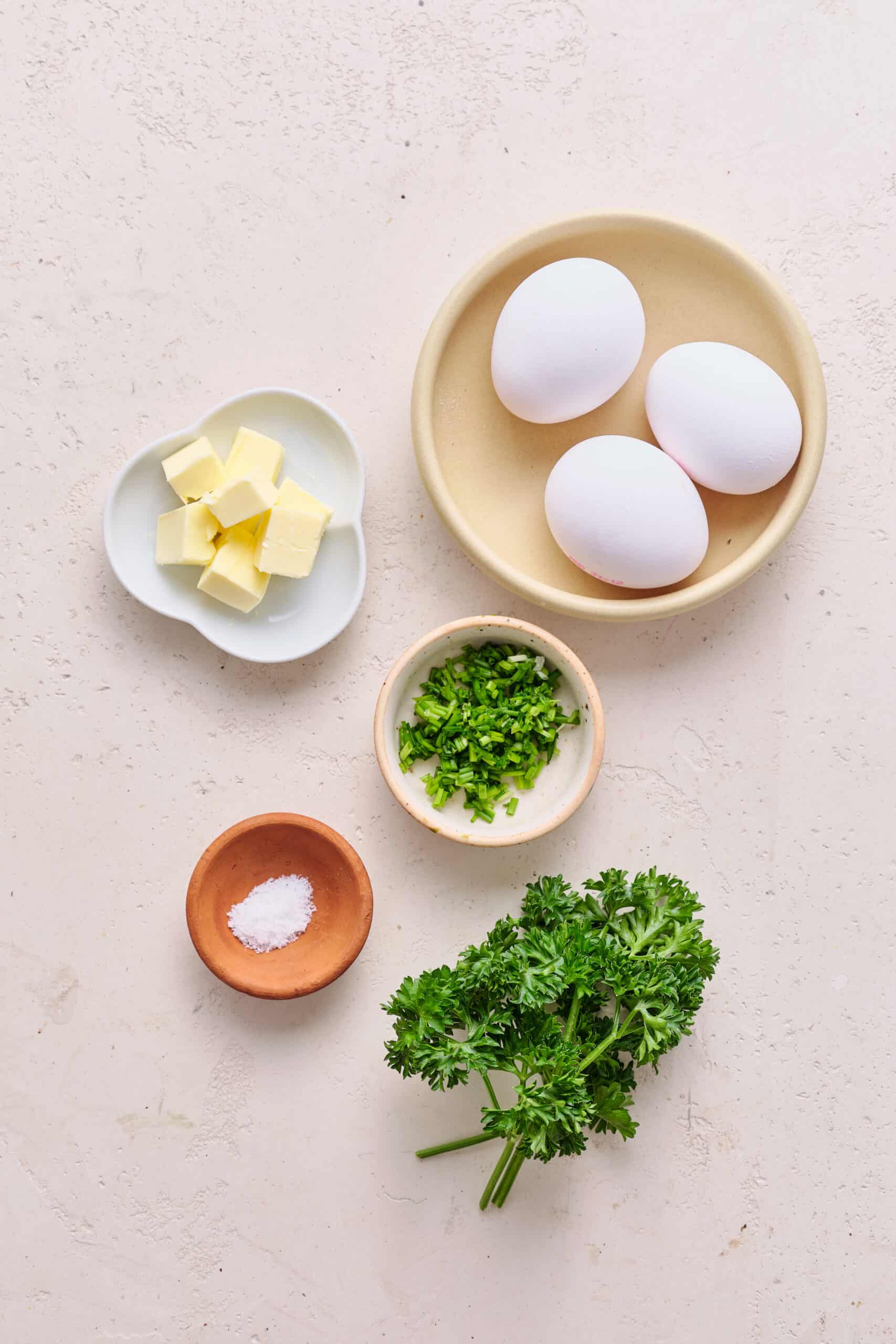
Although precision and efficiency are necessary for the perfect French omelette, you don’t want to indulge in any time-saving tricks. For example, don’t mix the eggs too far ahead of time. They can become watery if they are mixed in advance. Since we are only using three ingredients, make sure they are the very best: the freshest eggs and a high-quality butter (like Plugrà European Style, Kerrygold Pure Irish, or Martha Stewart’s favorite—Vermont Creamery Cultured Unsalted Butter). And while Morton Kosher Salt is perfectly acceptable, many cooks prefer Diamond Crystal Salt’s somewhat lighter flake. If you choose to add the optional herbs for garnish, we recommend fresh parsley and chives, but tarragon and chervil are classic as well.
How Do I Store Leftovers?
Ideally, the French omelette should be eaten as soon as it comes out of the pan. That said, you can wrap the omelette(s) in plastic wrap, and they will keep in the refrigerator for 3 to 4 days. Cover them with a damp paper towel and microwave until warm. We don’t recommend freezing the French omelette.
Serving Suggestions
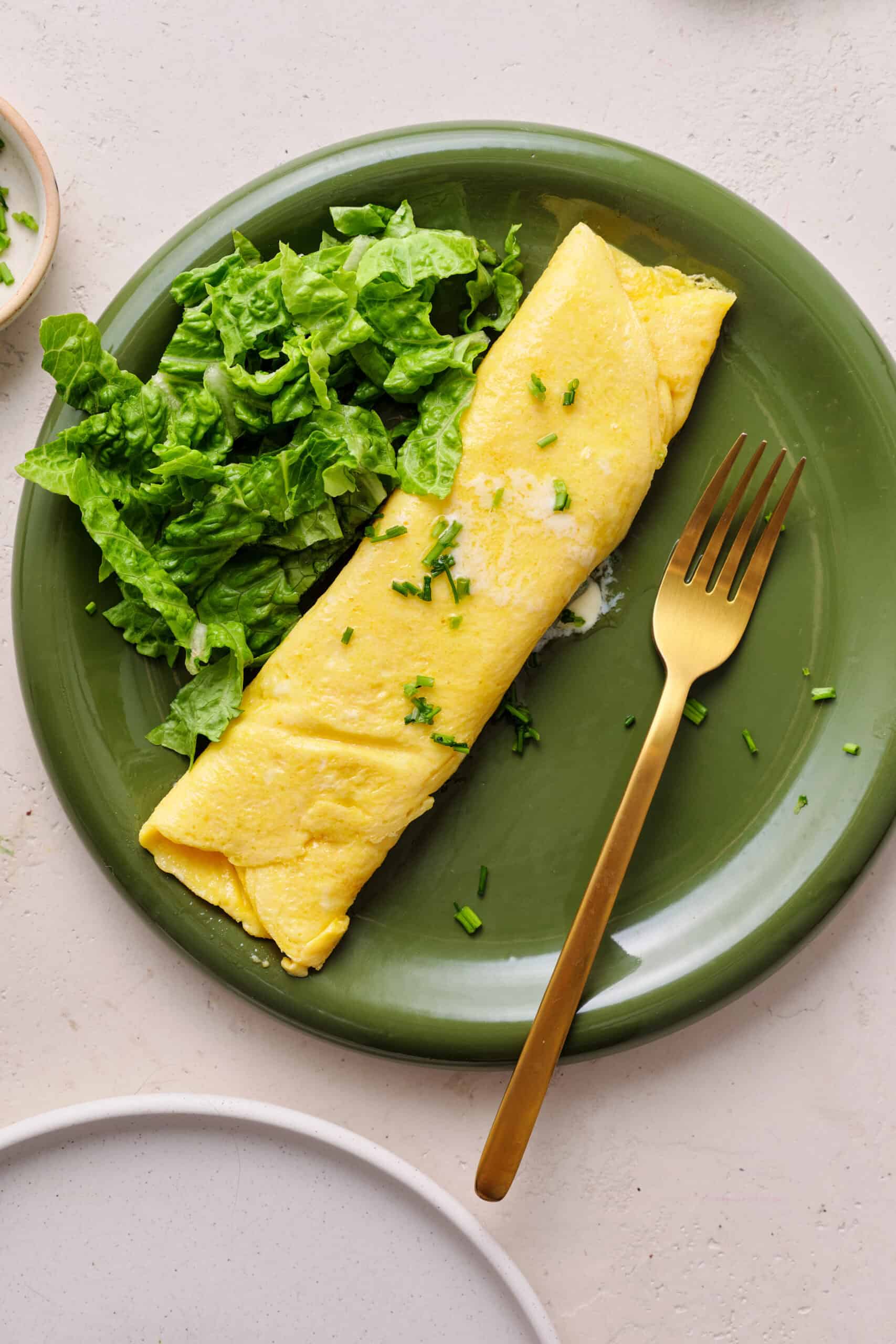
All you need for a perfect breakfast is a French omelette, some Sourdough toast, and perhaps a bit of Orange Marmalade.
French omelettes make an elegant lunch or even dinner. Serve them with a fresh Spinach Salad, this French Fougasse with some Whipped Butter, and a Ginger-Mascarpone Crème Brûlée for dessert. Or for a more elaborate French meal, greet diners with some crackers and Homemade Boursin Cheese. For your next course, serve French Onion Soup and then follow with your French omelette, Ratatouille, and these delicious French Onion Potatoes. Stay with the theme and end this meal with Macarons or Chocolate Profiteroles (or both!).
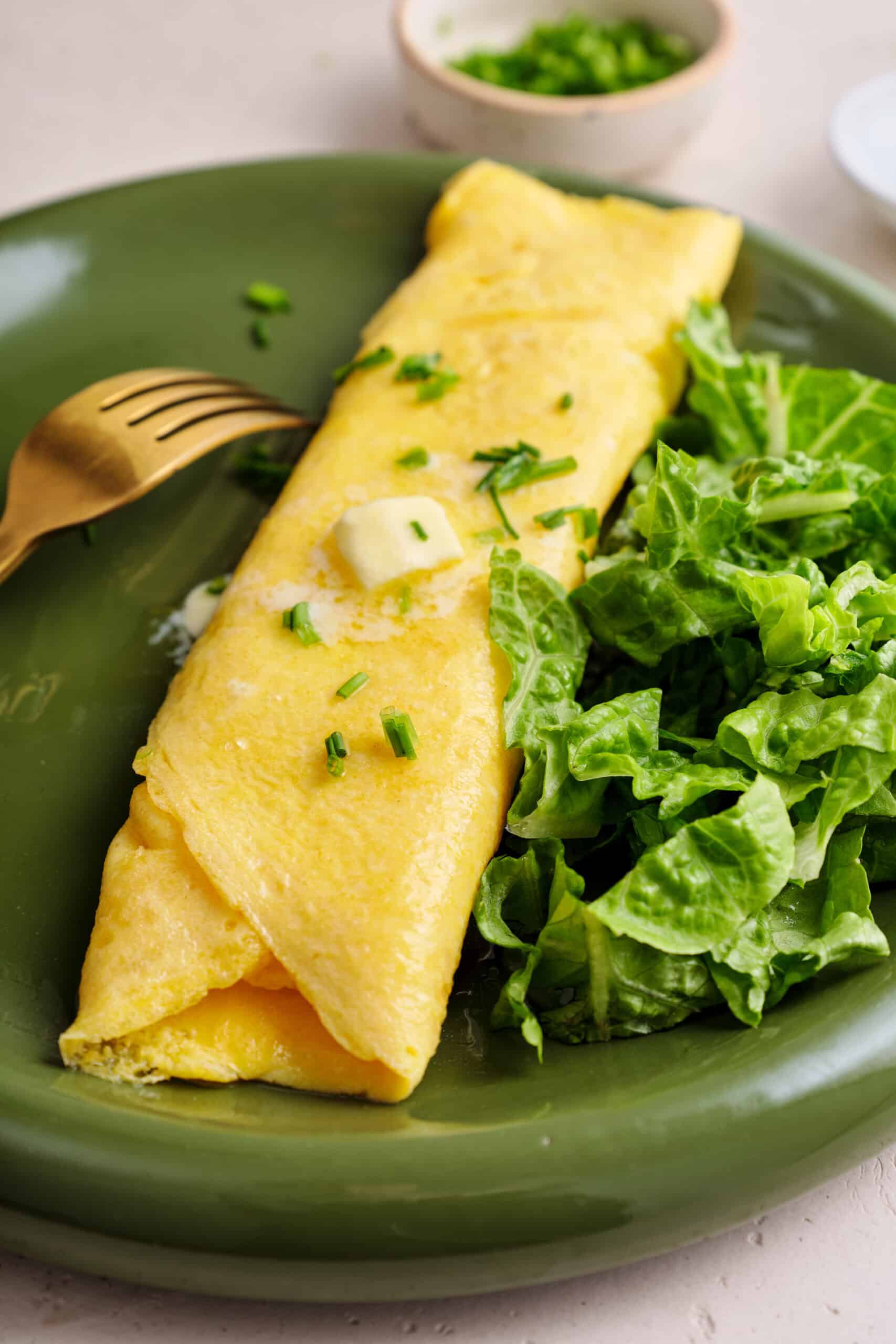

French Omelette

Ingredients
- 3 large eggs
- 1/4 teaspoon kosher salt
- 1 tablespoon unsalted butter plus more for serving
- Fresh herbs for garnish, optional
Instructions
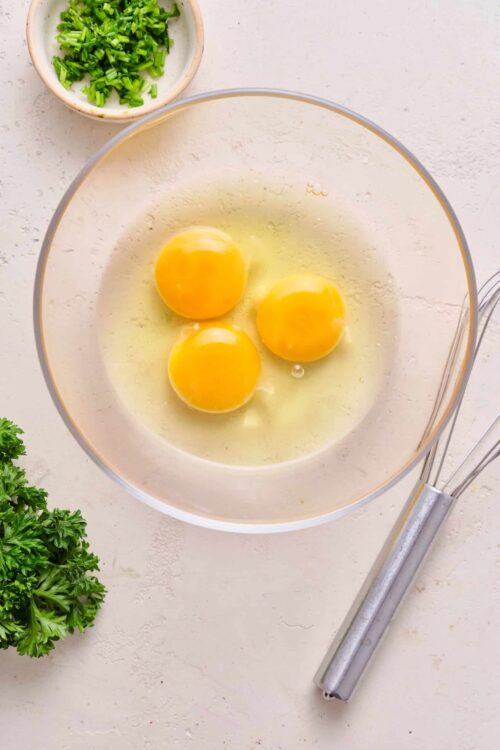
- In a medium bowl, beat the eggs with the salt until well combined.
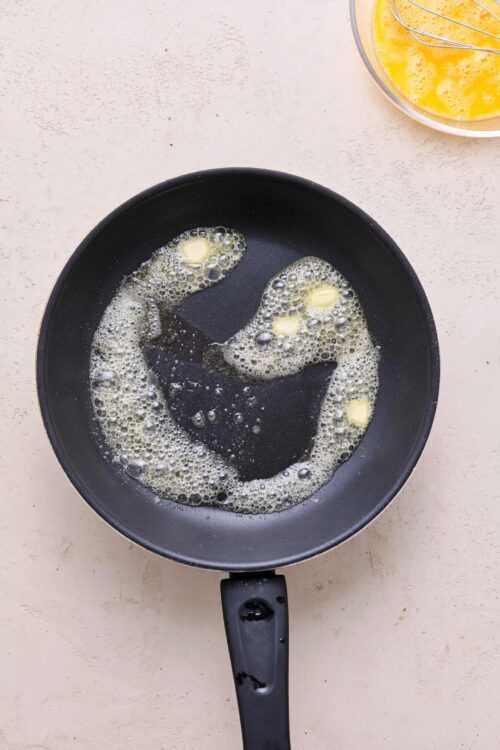
- In an 8-inch nonstick skillet over medium heat, melt the butter.
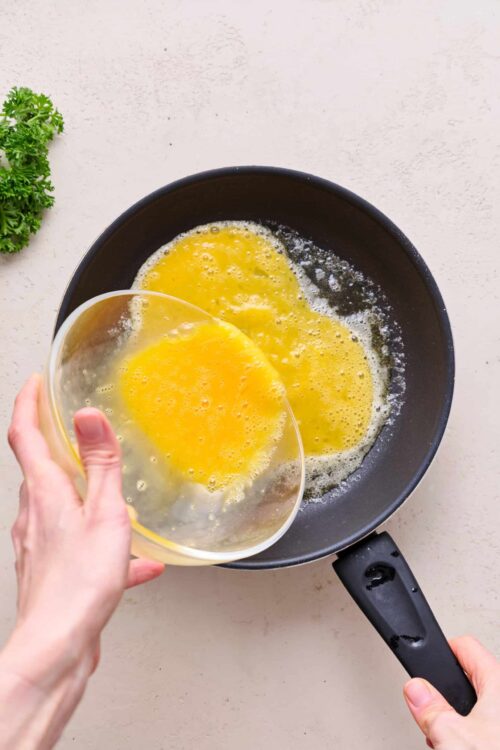
- Pour the beaten eggs into the skillet. Let them sit undisturbed for about 30 seconds until the bottom starts to set.
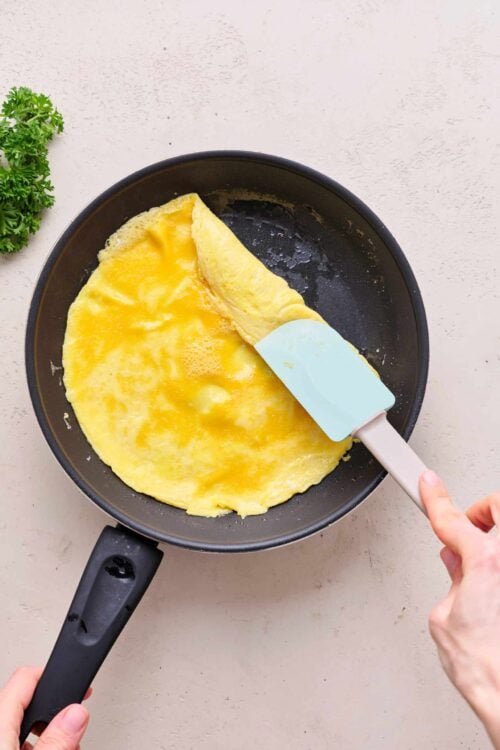
- With a heatproof spatula, gently push the eggs from the edges toward the center, tilting the pan to allow uncooked eggs to flow to the edges. Continue this until the eggs are softly set but still slightly runny in the middle.
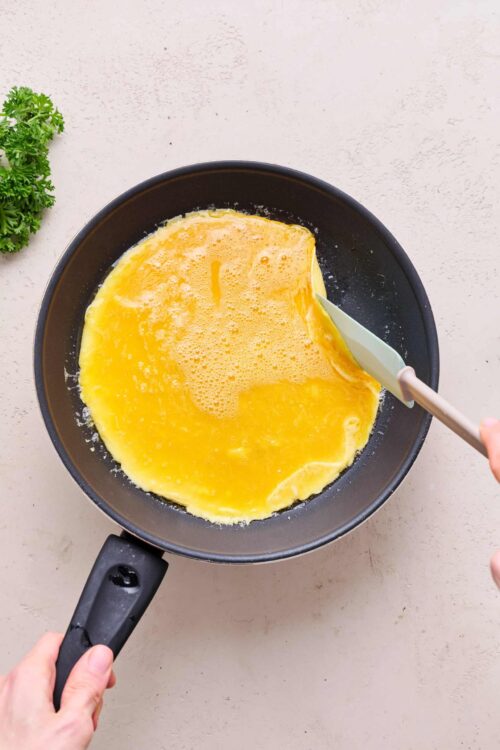
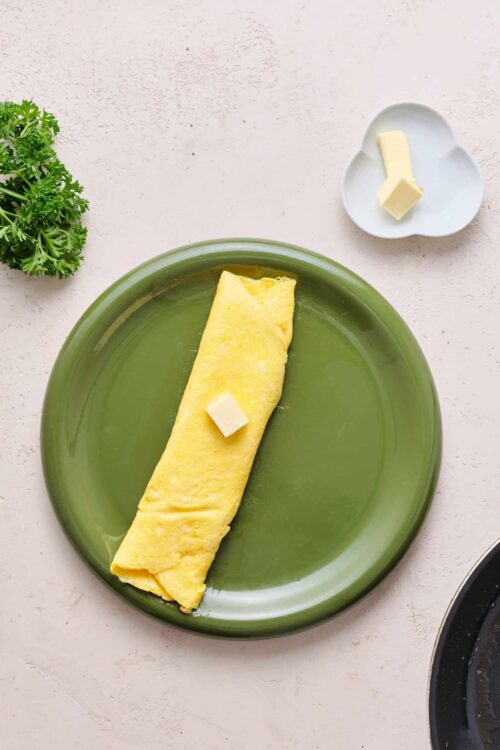
- Remove the pan from heat. Tilt the skillet and use the spatula to roll the omelette into a cylinder. Slide the omelette onto a plate, seam side down.
- Top with additional butter. If you prefer herbs, sprinkle finely chopped chives or parsley on top when serving.

Leave a Comment