

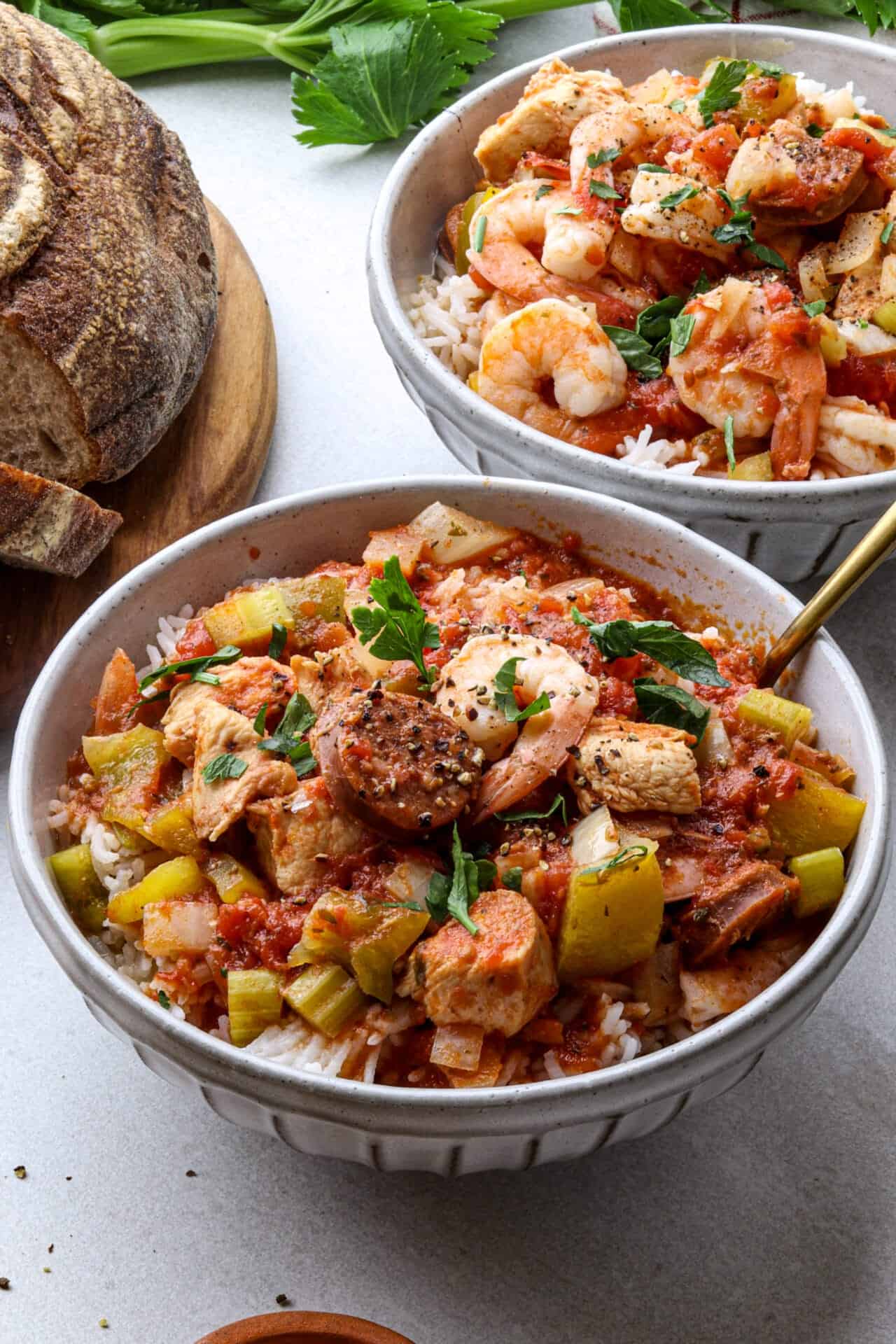
Get the best of Cajun and creole cuisines in this easy recipe that delivers a hearty, crowd-pleasing stew while you work, play, or relax!
I grew up in the suburbs. My cousins, who lived in a deeply rural part of a neighboring state, called me their “city cousin.” The moniker perplexed me until I was old enough to discern the huge differences in our dialects, fashion choices, and food preferences. I never thought either of us was better than the other—we were just different.
This slow-cooker jambalaya recipe is the perfect culinary representation of that relationship. It brings together elements of both Cajun and creole jambalaya—which are related but different and delicious in their own unique ways.
Creole cuisine originated in urban New Orleans with influences from French, Spanish, and Caribbean cultures. Its jambalaya typically includes tomatoes, which give it a reddish color and tangier flavor, and seafood like shrimp or crab. Cajun cuisine developed among Acadian settlers in rural Louisiana bayou communities. The jambalaya they preferred omits tomatoes, giving it more of a brownish hue, and favors land proteins like chicken or pork.
This recipe is a hybrid that combines the tomatoey sauce, vibrant color, and shrimp of a creole version with the meat-forward character, bold seasoning, and slow-cooking method of traditional Cajun cooking. The result is a deeply flavorful dish that unites city and country “cousins” in a one-pot meal.
Toss this together in the morning to have a rich and satisfying dinner ready to go when you get home from work—or take it to your next potluck where it’s sure to be a crowd-pleaser!
Tips for tailored jambalaya
- For more depth of flavor, sear the andouille sausage in a hot skillet for two to three minutes before adding it to the slow cooker. This extra step adds smoky richness.
- To amp up the creole influence, stir in a tablespoon of tomato paste or a splash of Worcestershire sauce for tangier tomato flavor.
- To lean into Cajun-style simplicity, skip the tomatoes and use extra broth for a drier, spicier, more rustic version.
- Add a sprinkle of chopped green onions or parsley before serving to add color and freshness.
How do I store leftovers?
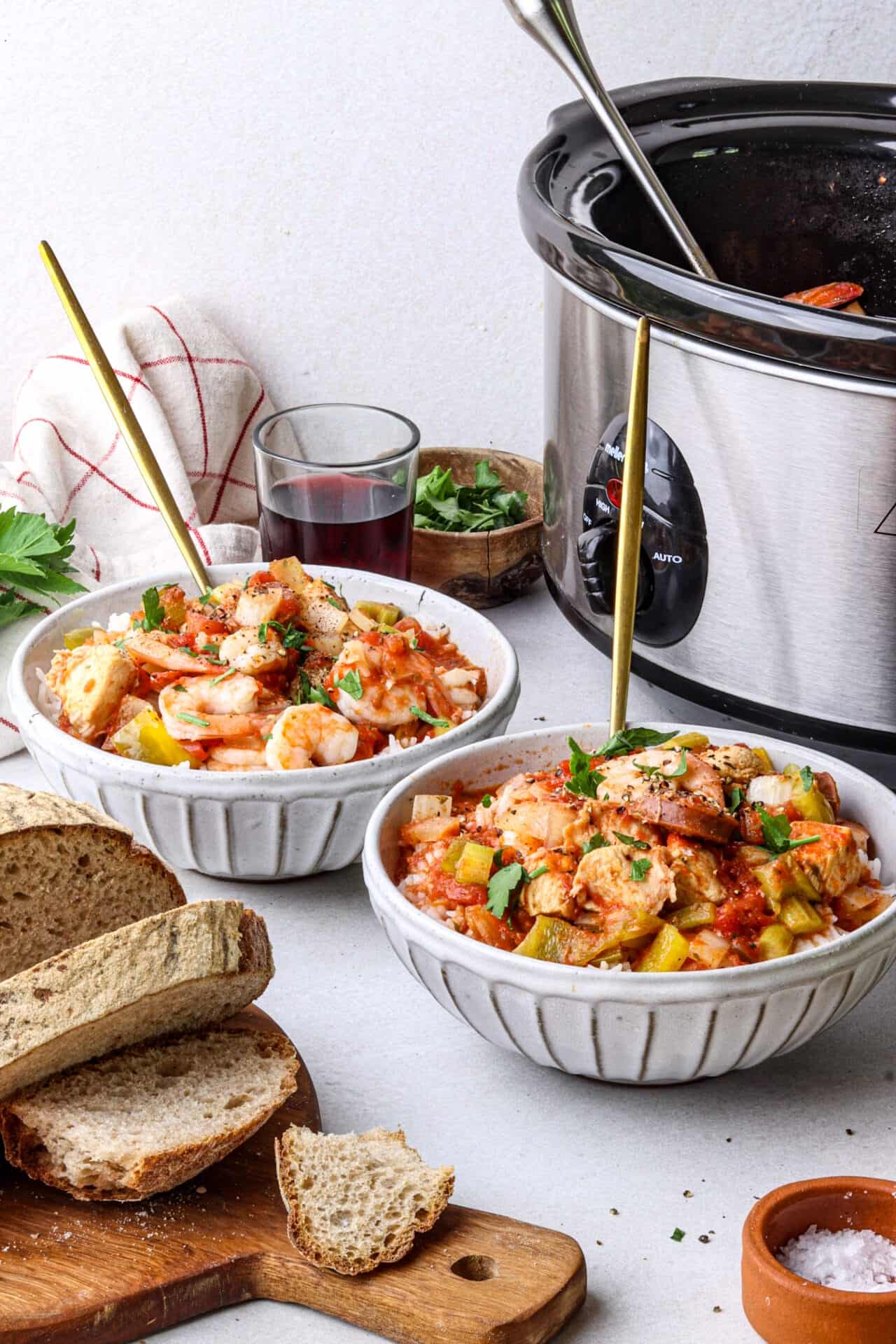
Let your jambalaya cool completely before storing it, but don’t leave it at room temp for more than 2 hours. Store leftovers in an airtight container in the fridge for up to 4 days. You can also freeze this dish for up to 3 months in freezer-safe containers or resealable bags. Thaw overnight in the fridge. Reheat on the stovetop over medium-low heat or in the microwave in short bursts, stirring frequently, until piping hot throughout.
Serving suggestions
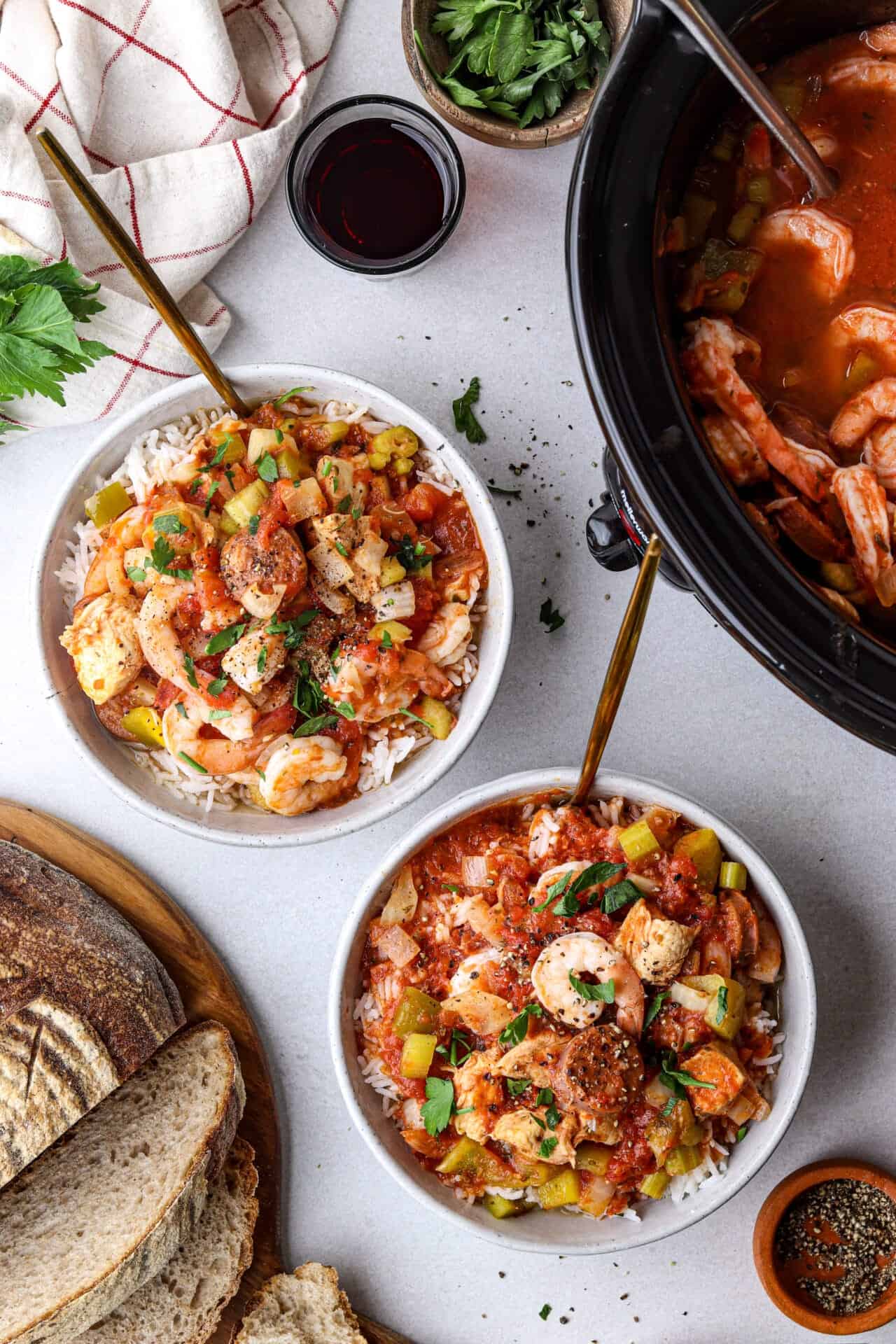
Serve slow-cooker jambalaya alongside dishes that speak to its multicultural heritage. A side of this Buttermilk Cornbread Recipe gives Cajun-inspired vibes, while Garlic Bread is perfect for sopping up all that creole-inspired tomato-rich sauce. If you’re looking for middle ground, learn How To Cook Swiss Chard for a pairing that links bayou comfort and NOLA flair.
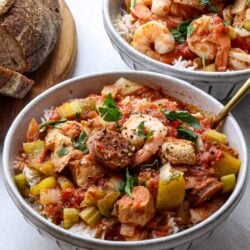
Slow-Cooker Jambalaya

Ingredients
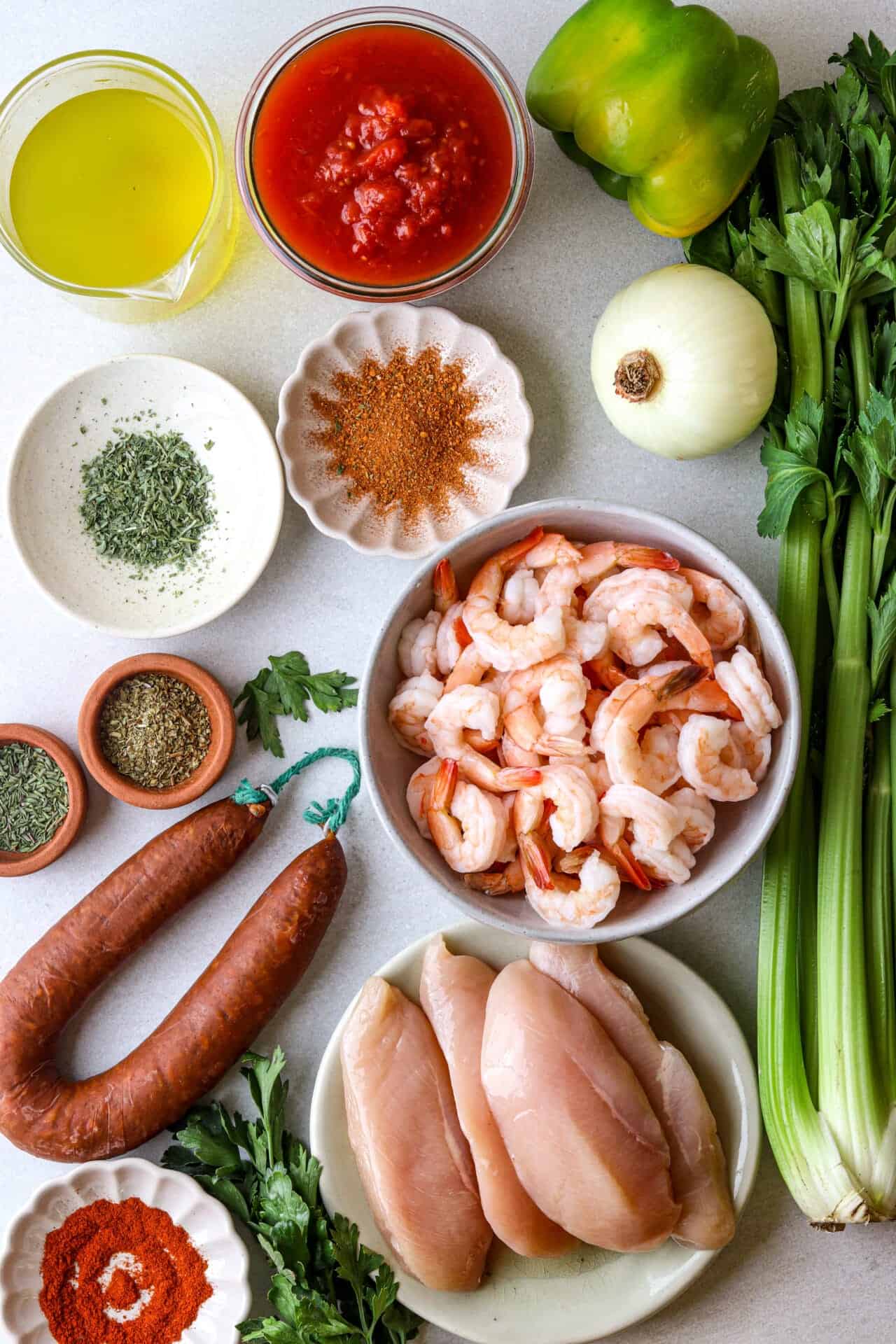
- 1 28-ounce can diced tomatoes with juice
- 1 pound chicken breasts skinless, boneless, and cut into 1-inch cubes
- 1 pound andouille sausage sliced
- 1 large onion chopped
- 1 large green bell pepper chopped
- 1 cup celery chopped
- 1 cup chicken broth
- 2 teaspoons dried oregano
- 2 teaspoons dried parsley
- 2 teaspoons Cajun seasoning
- 1 teaspoon cayenne pepper
- 1/2 teaspoon dried thyme
- 1 pound frozen cooked shrimp tails removed if preferred
Instructions
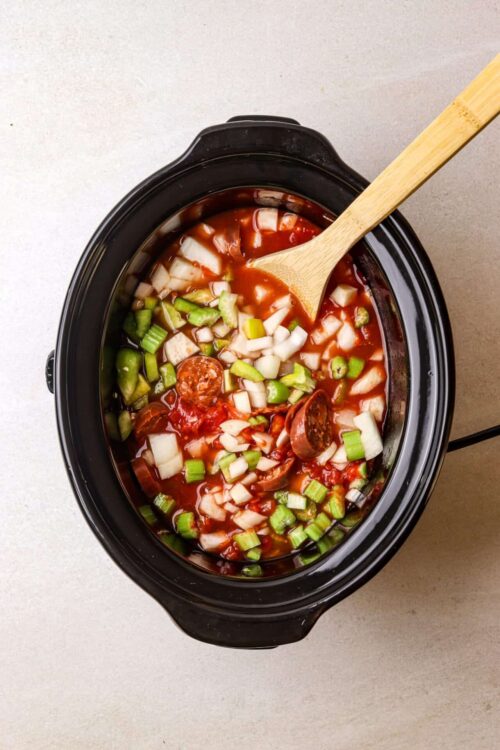
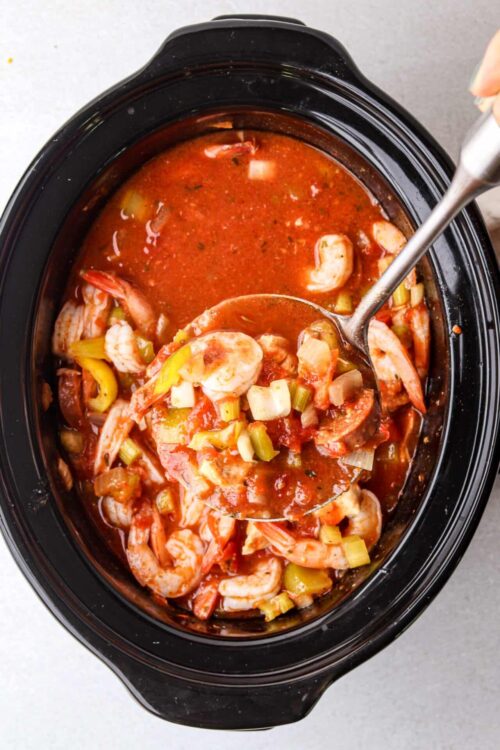
- Add the diced tomatoes with juice, chicken, sausage, chopped vegetables, and chicken broth to the slow cooker. Stir well to distribute ingredients evenly.
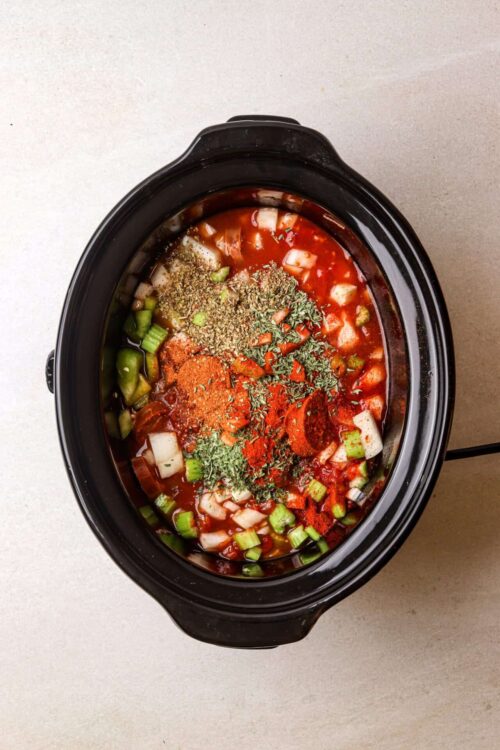
- Sprinkle in the oregano, parsley, Cajun seasoning, cayenne pepper, and thyme. Stir again to ensure the spices are evenly incorporated.
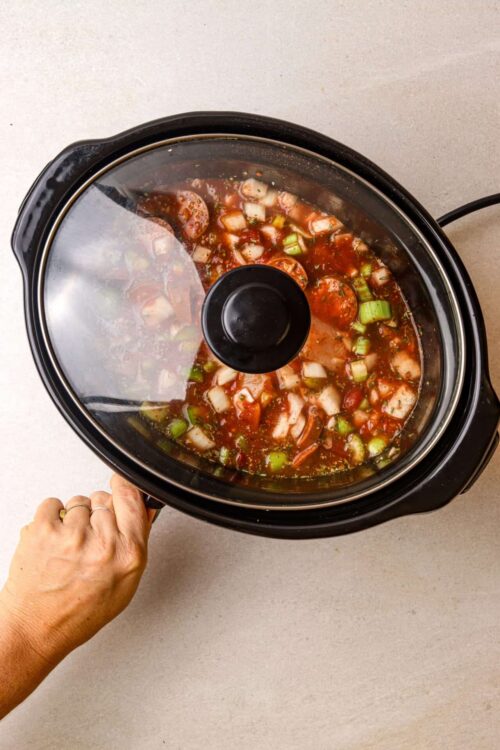
- Cover and cook on low for 7–8 hours or high for 3–4 hours, until the chicken is tender and the vegetables have softened.
- About 30 minutes before the end of cooking, stir in the frozen cooked shrimp. Recover and continue cooking just until the shrimp are heated through.
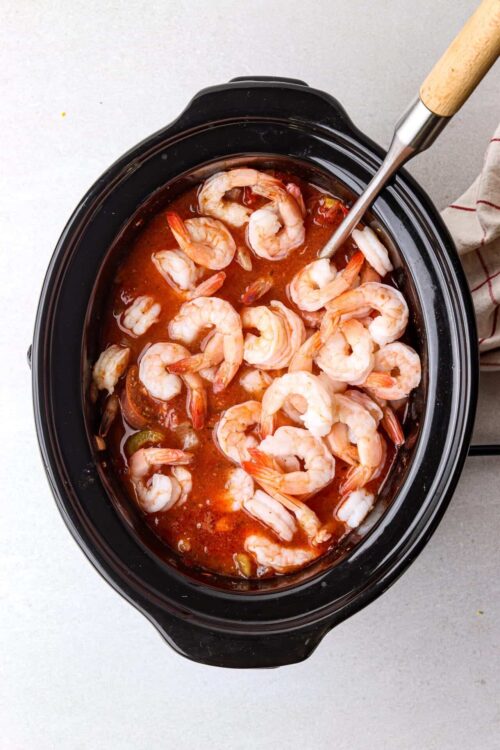
- Taste and adjust seasoning—add more Cajun seasoning or a dash of hot sauce if you’d like extra spice. Serve the jambalaya hot over cooked rice, or stir 2–3 cups of cooked rice directly into the mixture for a one-pot presentation.

Leave a Comment