

Switch up your leafy greens with this guide for making a tasty, nutritious, kid-friendly side dish that’s plate-ready in 15 minutes flat!
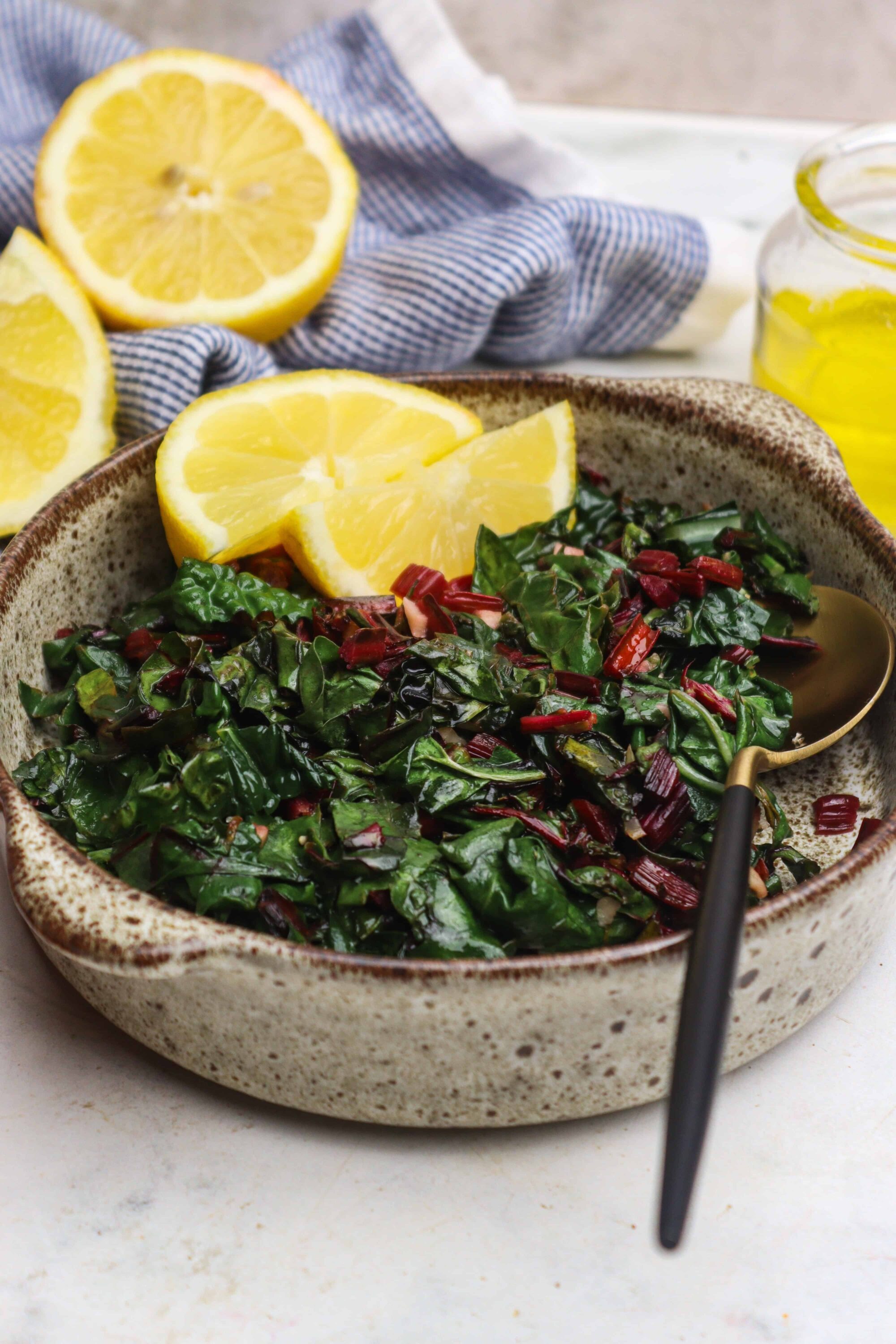
Let’s face it: We could all use more leafy greens in our everyday routines. But it can be a little scary to branch out from the standard lettuce, kale, and spinach. What if you try a new vegetable and hate it—or don’t know how to cook it properly? This guide for how to cook Swiss chard is your safe space! It’ll help you feel more comfortable adding a lesser-known type of green to your family’s meals in a way that’s quick, easy, and deeply delicious.
Sometimes called “leaf beet” or “silverbeet,” Swiss chard is more closely related to beets than other leafy greens. They both belong to the Beta vulgaris species, but their main difference is that chard is prized for its tender leaves and crunchy stems, while beets are grown for their edible roots. I’m a huge fan of beets, so this connection made trying Swiss chard feel more natural for me. The flavor of the stems reminds me of the way beets taste—pleasantly earthy and a little sweet. The leaves have some bitter notes, but they’re milder than spinach, which could make them more appealing to kids.
Any variety will work well in this recipe, but I tend to prefer rainbow chard—a combo of vivid red, yellow, and orange stems that makes the dish attractively colorful. The green- and white-stemmed varieties taste just as yummy, though.
The best part of this recipe is how fast it comes together. Tap it whenever you need a last-minute side dish that looks beautiful, packs in the nutrition, tastes amazing, and is plate-ready in 15 minutes flat!
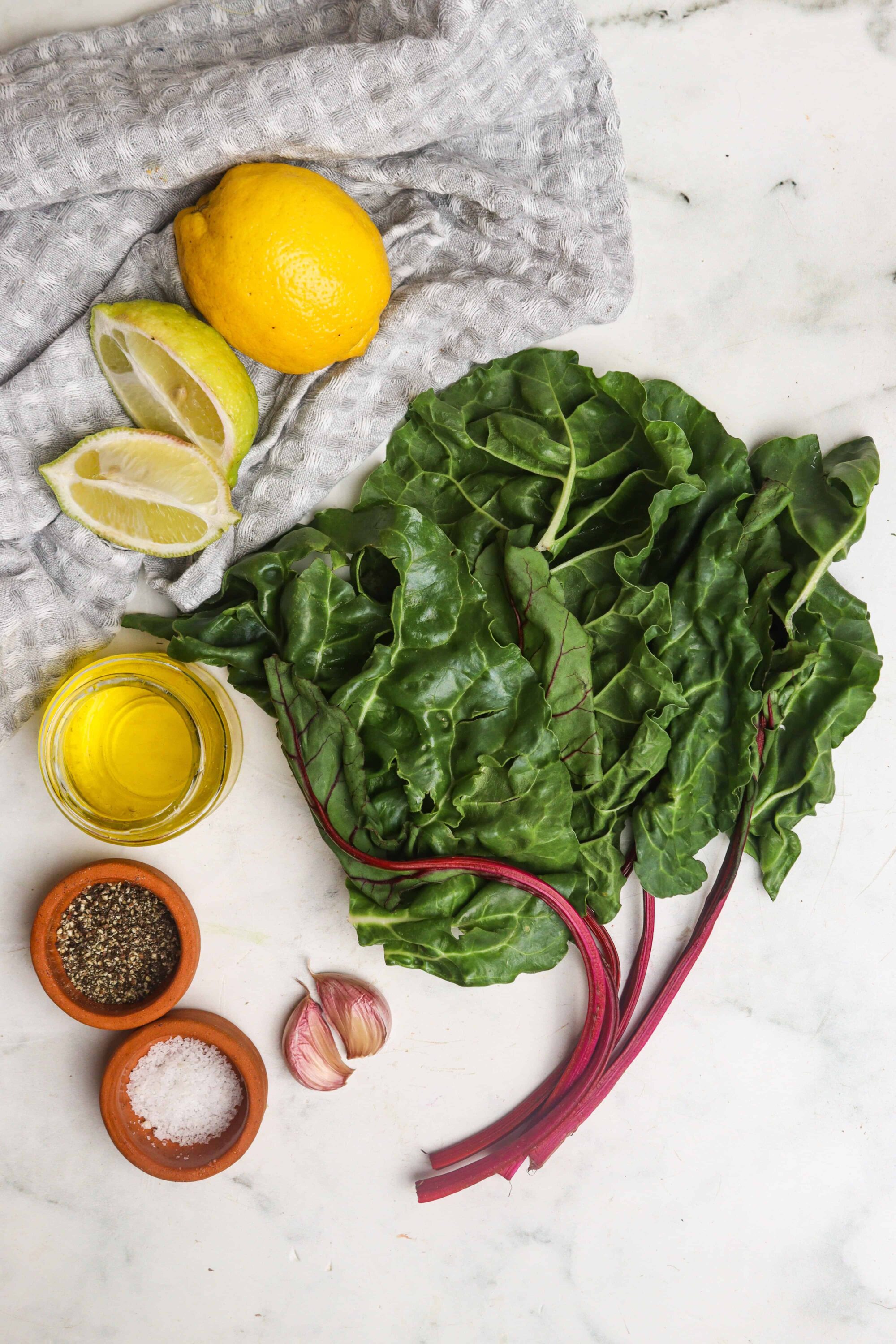
How to choose the best fresh chard
Look for bunches with perky, lively leaves and crisp, unblemished stems. The leaves should be richly colored—bright green or deep burgundy for red types—with no yellowing or wilting. The stems should feel firm and satisfyingly snappy when you gently bend them. Avoid bunches with limp, slimy, or wilted leaves, as these indicate age and decreased freshness. For best results in this recipe, choose smaller, younger chard leaves for tenderness and a more delicate taste, though mature leaves are also excellent when cooked down a little more. Store fresh, raw chard in the fridge, wrapped loosely in a damp paper towel inside a breathable produce bag, and use it within a few days for optimal flavor and nutrition.
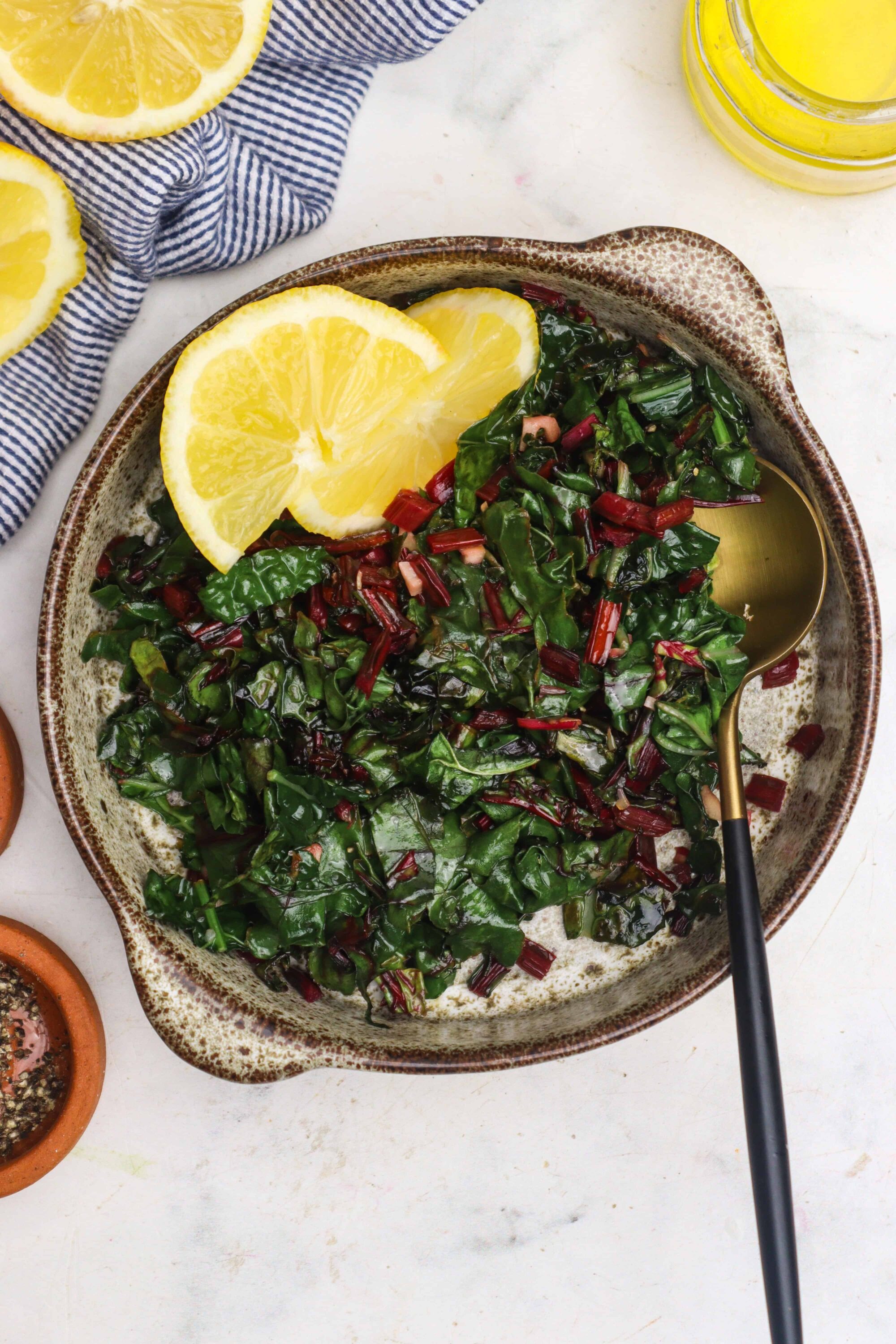
How do I store leftovers?
Store completely cooled Swiss chard in an airtight container in the fridge for up to 4 days. You can also freeze this dish for up to 3 months in freezer-safe containers or bags—its texture will become softer and slightly mushy, but the flavor should remain vibrant. Thaw overnight in the fridge. Reheat gently in a skillet over low heat.
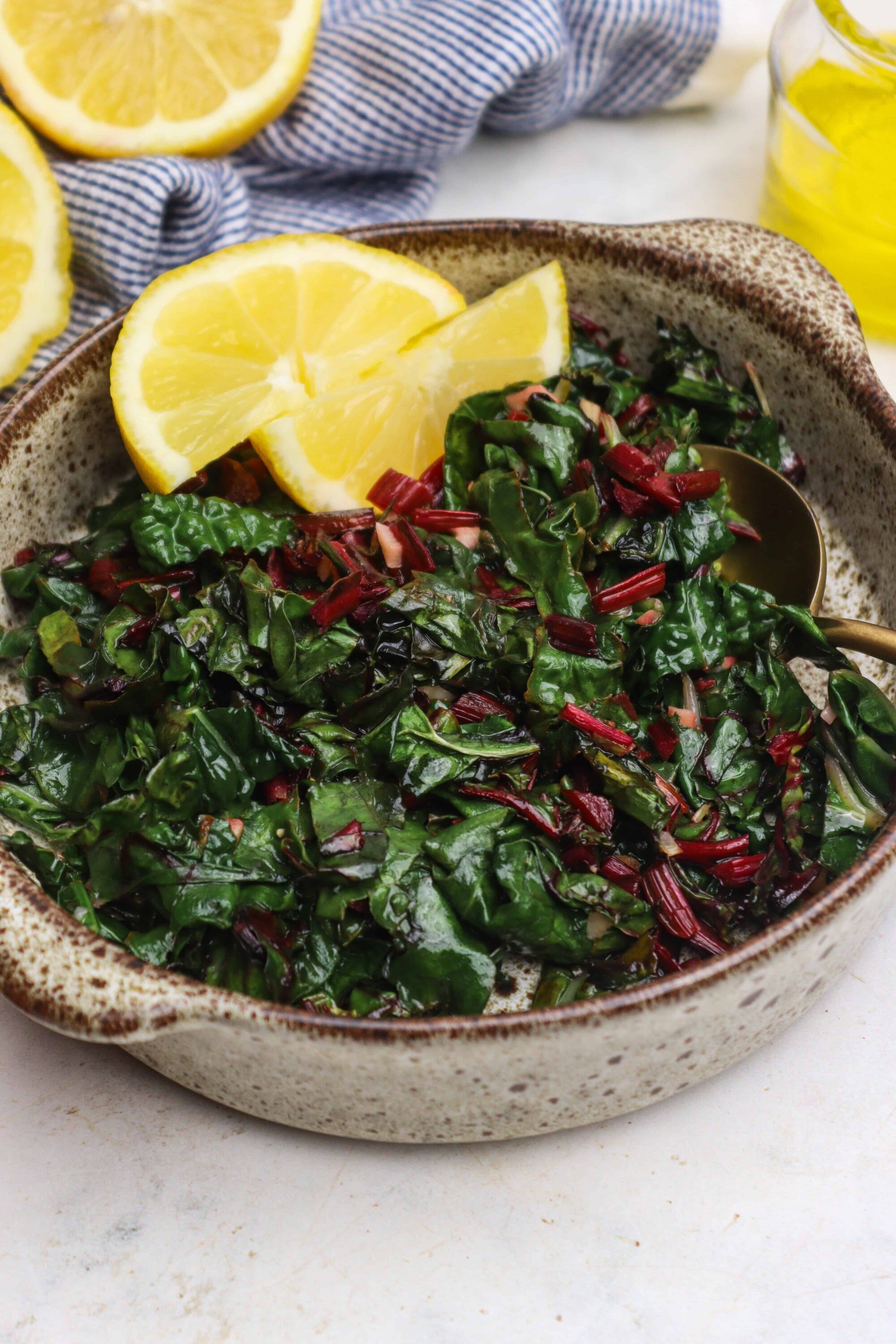
Serving suggestions
Serve sautéed Swiss chard alongside a wide variety of mains. Get the kids excited about dinner by pairing this dish with a homemade Fish Sticks Recipe. For more grown-up palates, pair it with Crock-Pot Lemon Chicken or Instant-Pot Beef Bourguignon. It’s also a great lunch companion for a Ham And Cheese Omelet or Tuna Egg Sandwich.
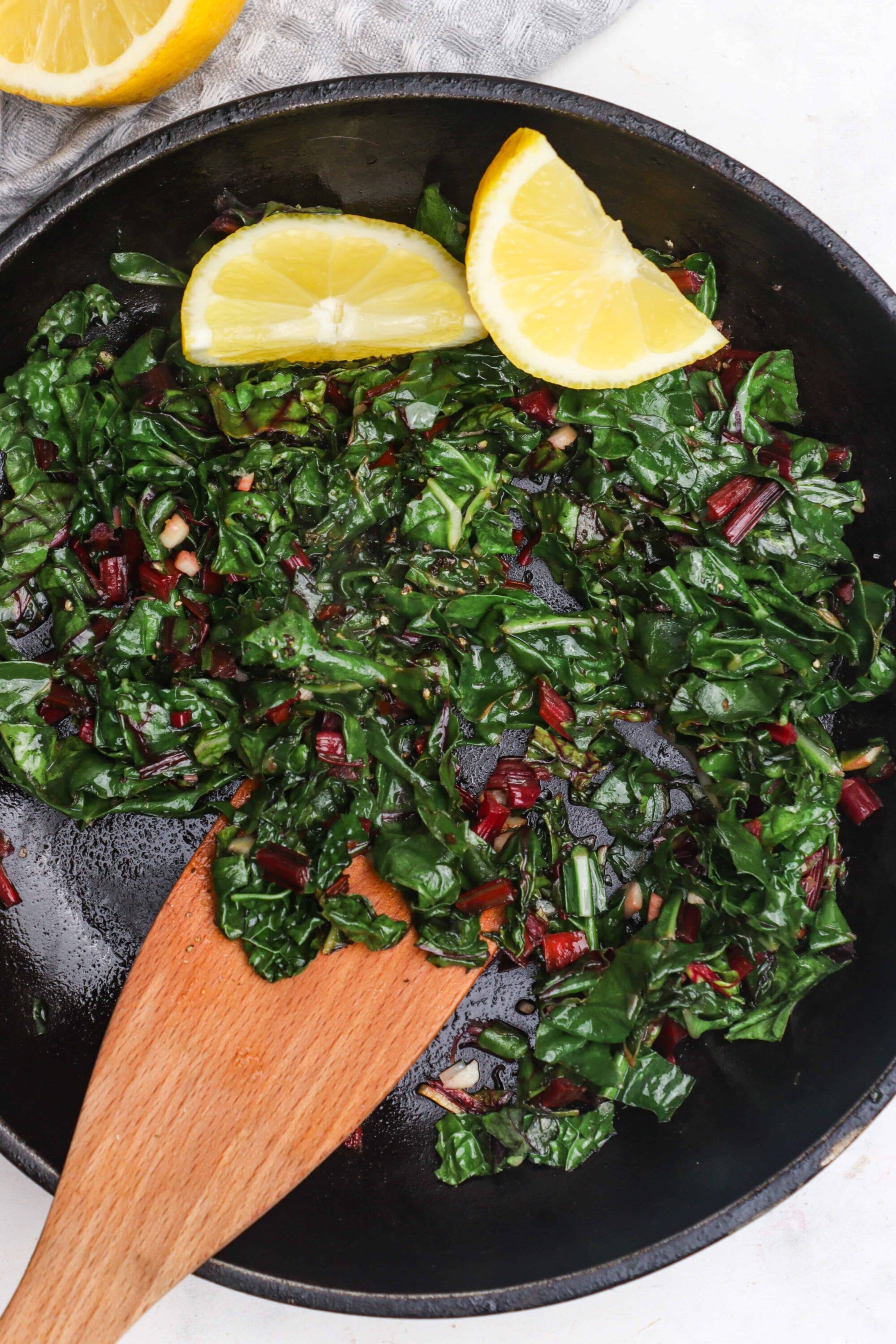

How To Cook Swiss Chard

Ingredients
- 2 bunches Swiss chard rinsed
- 2 tablespoons olive oil
- 2 cloves garlic crushed
- Half a lemon
- Salt and pepper to taste
Instructions
- Use a sharp knife to separate the stems from the leaves of the Swiss chard. Chop the stems into 1/4-inch pieces and roughly chop the leaves.
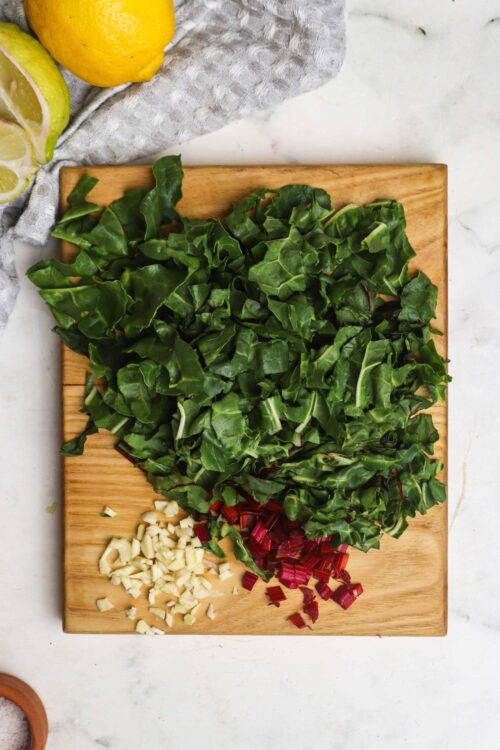
- Heat the olive oil in a nonstick skillet over medium heat. Add the crushed garlic and sauté until fragrant, about 30 seconds.
- Add the chopped stems and cook for 3–4 minutes, stirring occasionally, until they begin to soften.
- Add the chopped leaves and continue to sauté, stirring frequently, until wilted and tender, 2–4 minutes.
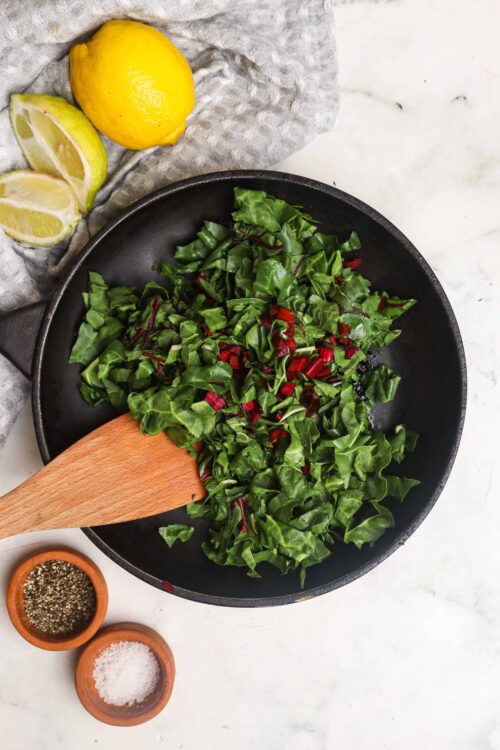
- Squeeze half a lemon over the Swiss chard, season with salt and pepper to taste, and sauté for 1 more minute to combine.
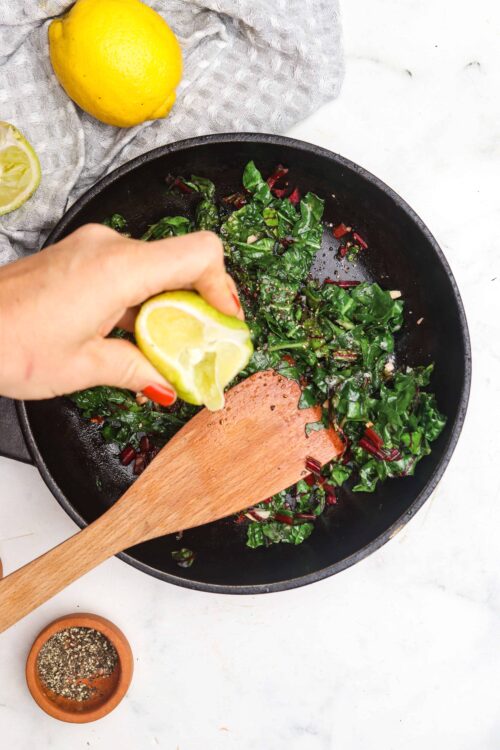
- Serve immediately.

Leave a Comment