

You’ll be delighted by this simple recipe for classic homemade Chicken Stock.
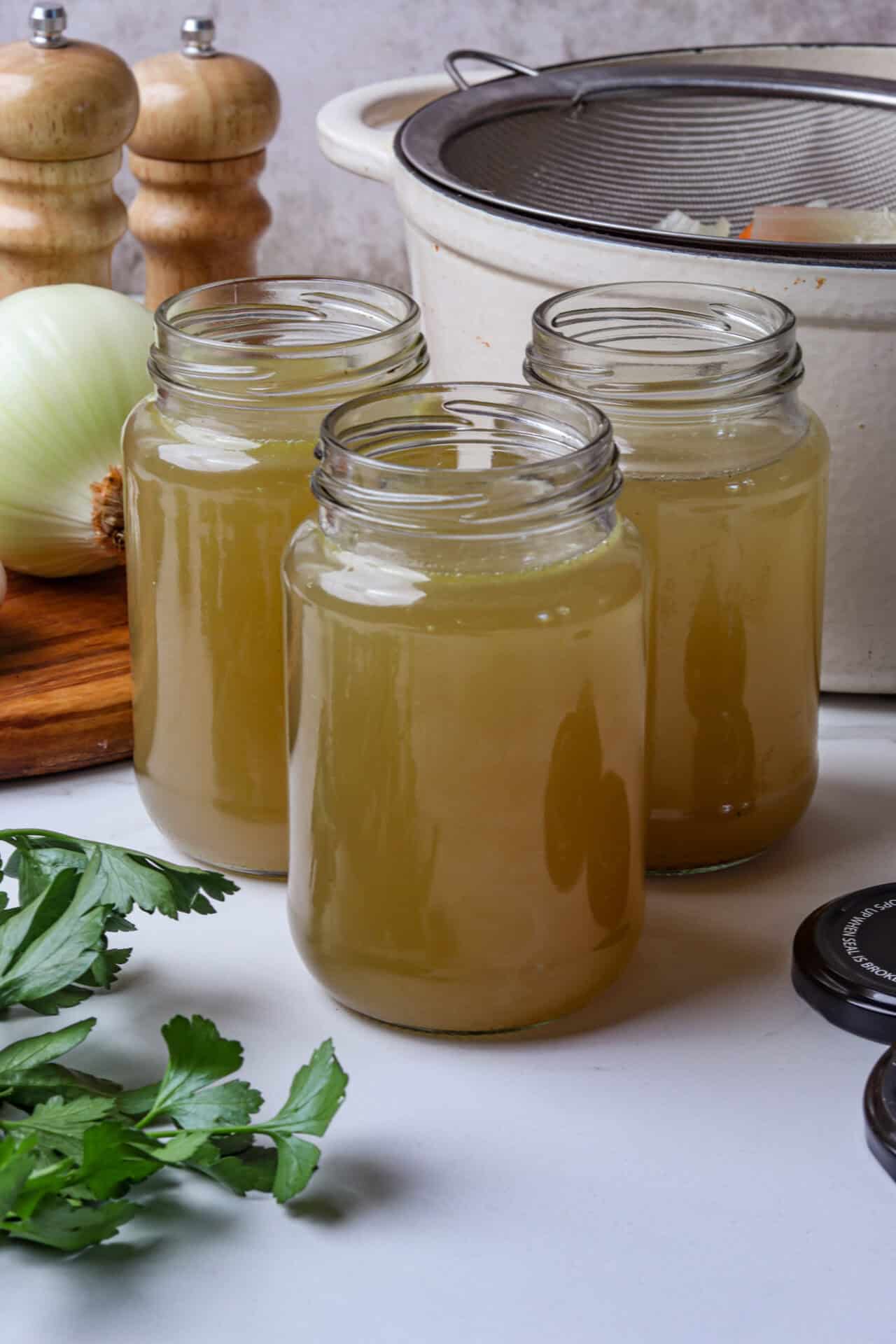
The next time you serve a roast chicken or buy a rotisserie chicken and have used up all the meat, pull out your big stockpot and toss that carcass in there: you’re going to make homemade chicken stock! Yes, there are lots of store-bought brands of chicken stock that are high quality but like a lot of things you make at home that you could purchase instead, this chicken stock cannot be beat for its depth of flavor: even the most high-end brands can’t compare. And making chicken stock at home comes with the added benefit of your kitchen being enveloped in the most intoxicating aroma while it simmers away.
For so many people, chicken soup is considered a go-to healing food. In addition to its warm, rich, comforting taste, which definitely contributes to our feeling better when we’re sick. But here’s the thing: while both broth and stock are good for us, some chicken broth recipes call only for the meat and vegetables, whereas recipes for chicken stock always call for the skin and bones and it is there where a great deal of the health benefits reside. Plus, chicken stock cooks longer than broth does, which allows more of the nutrients to be released into the water (more on this in a minute!).
The key to producing the health benefits, not to mention the deep delicious flavor, is the simmering. While you will bring the contents to a boil initially, right after the stock reaches that point, you’ll turn it down and let it gently simmer for the next 6 hours. Although boiling and simmering both produce bubbles, boiling is roiling (and it rhymes!), while simmering means gentle bubbles are just breaking at the surface. The simmering process produces a clear stock, whereas boiling will usually yield a cloudy, sometimes even greasy, one.
There are so many recipes that call for chicken stock and you will not believe how much flavor this homemade version will add to your dishes. Part of the reason this stock is so flavorful is because you’re using an already cooked carcass – the roasting of the skin and the bones just deepens the taste they’ll bring to the stock. Try making this stock with the carcass from Rotisserie Chicken or from this Roast Chicken and see what I mean!
What’s the difference between stock, broth, and bone broth?
This a great question with a kind of complicated answer. There are differences in the cooking methods and times between the three, as well as in the results. There are also similarities which is why lots of people, myself included sometimes, use all three interchangeably in recipes. It’s totally fine to do that, but understanding the differences between them might make us all a bit more discerning!
Let’s start with stock, since that’s what we’re making here! Stock is made by simmering bones (often with the skin), vegetables, and herbs together for a long time; it is typically thicker and richer than broth because of the gelatin/collagen that comes from the bones.
Unlike stock, broth can be made just by simmering meat and aromatics in water; there are some recipes for chicken broth that do not call for the skin or the bones at all. You can make chicken broth by using skinless and boneless breasts and/or thighs, but you can also make it by using a whole raw chicken, or a cut-up one, or even a package or two of chicken wings. Obviously, if you use chicken with the skin and bones, you’ll get a richer broth. But a key difference between broth and stock is that broth has a shorter cooking time, which will produce a lighter color and less depth than stock.
Now let’s add some confusion to the mix: bone broth may be called “broth” but it is closer to stock because its primary ingredients are the animal bones, and it is cooked for longer; in fact, bone broth is usually cooked longer than stock (anywhere between 8-24 hours) to get the maximum nutrients from the bones.
How to Make Ahead and Store?
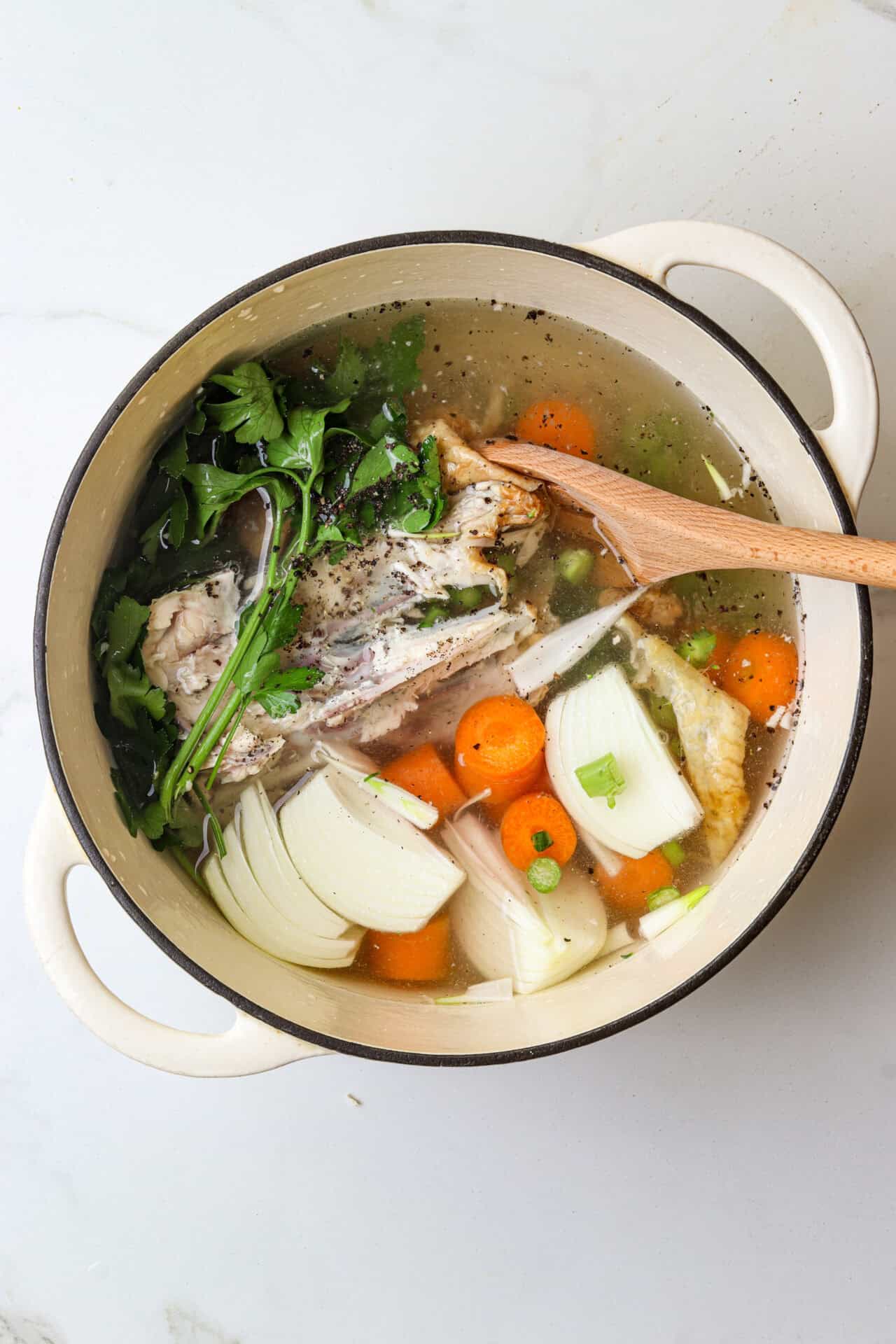
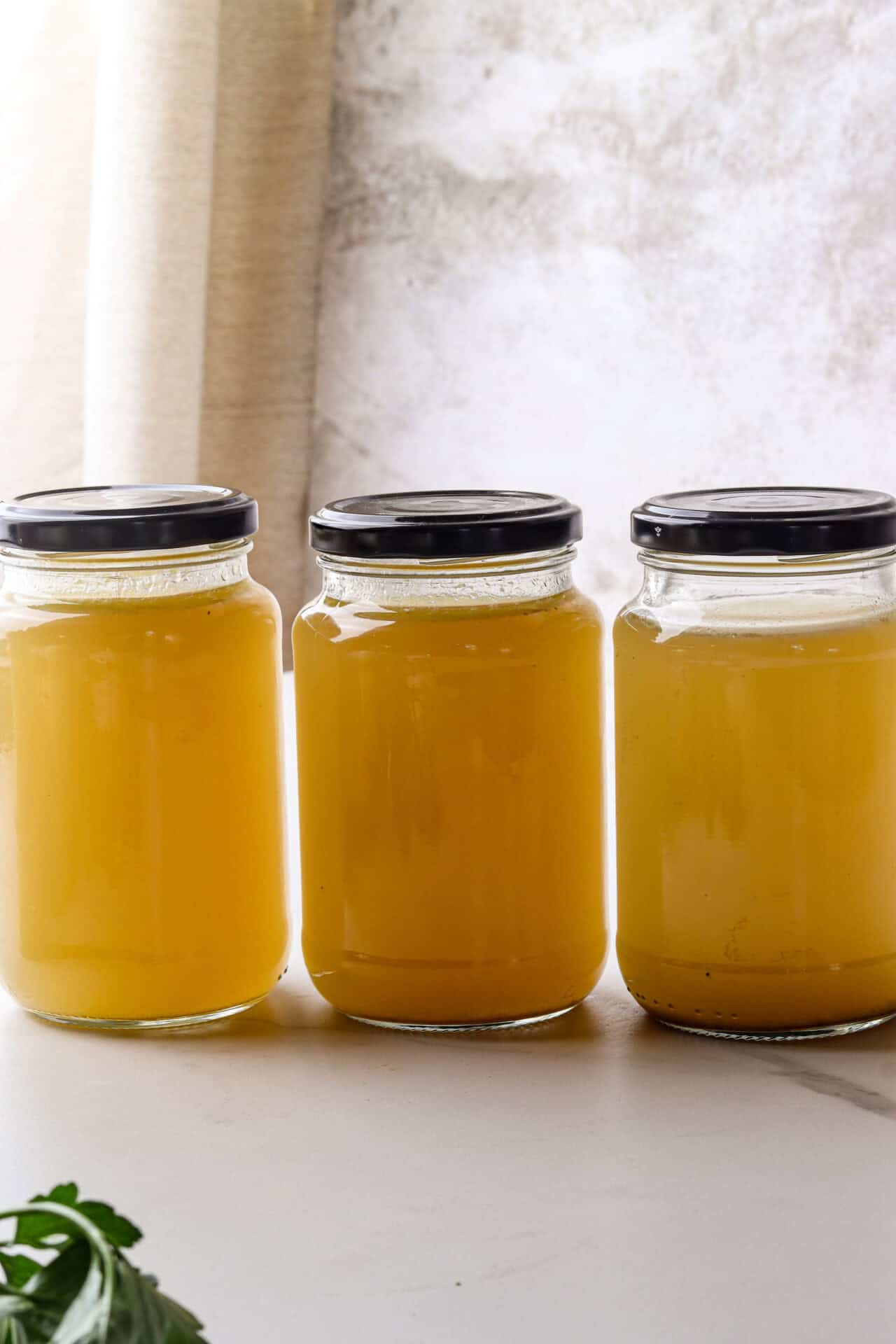
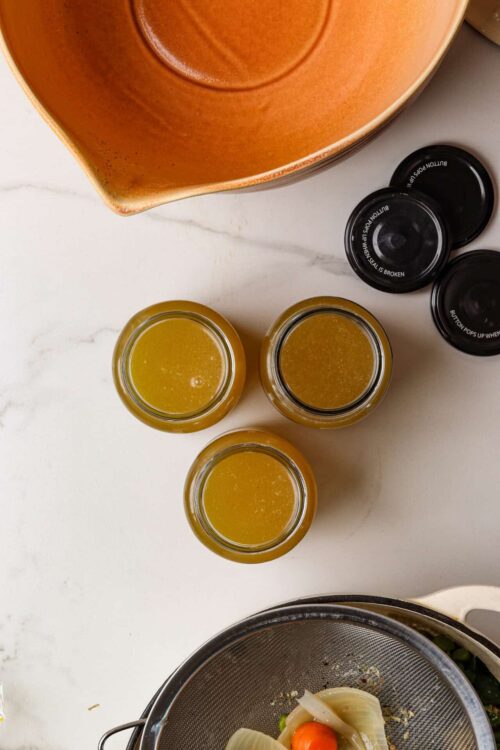
As we say in Step 9 of the recipe, you can store chicken stock in airtight containers in the refrigerator for up to 3 days or in the freezer for up to 6 months. Another great thing you can do is store some of the stock in ice cube trays for the times when your recipes just call for small portions of stock, like sauces or gravies.
Serving Suggestions
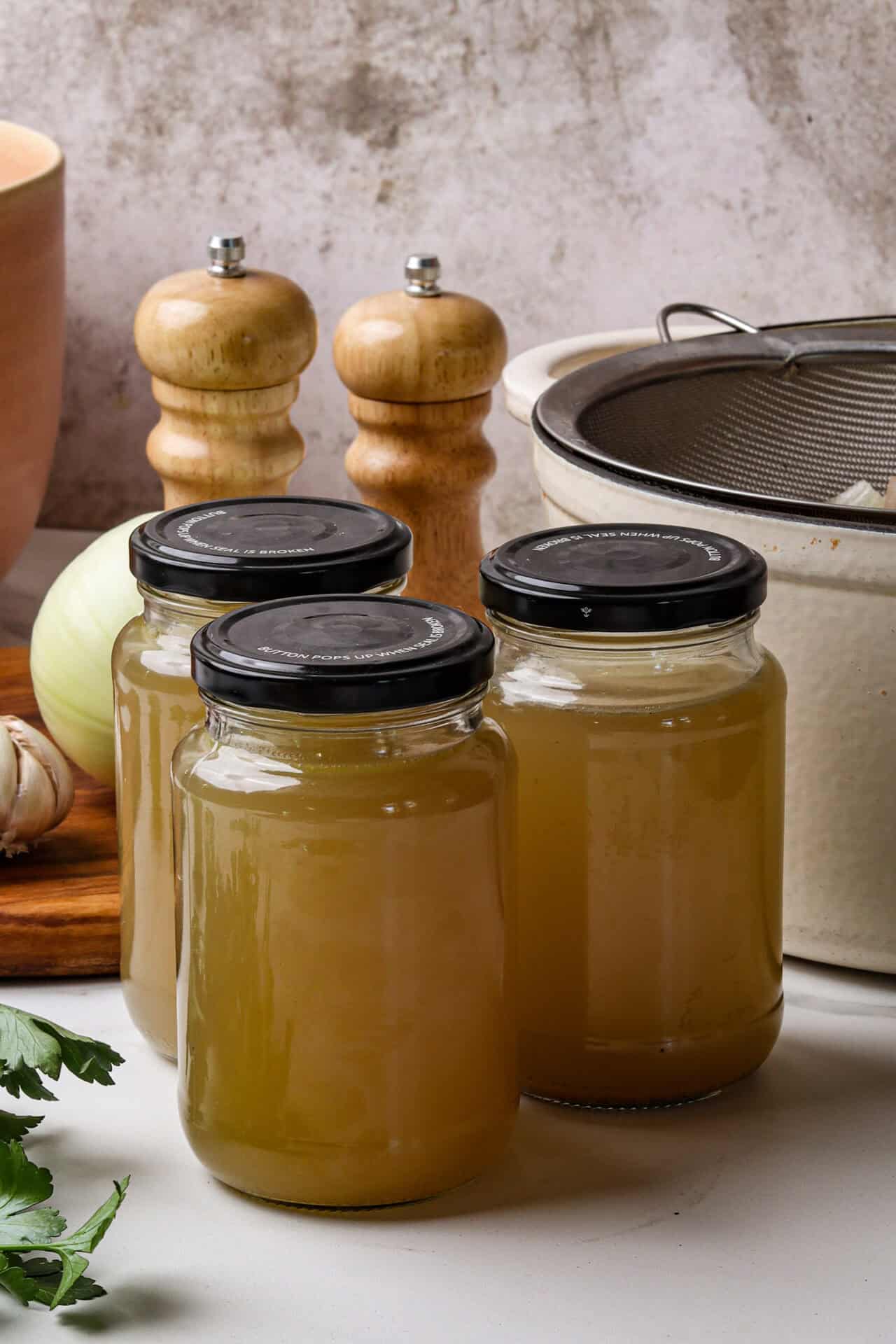
There are so many things that you can do with homemade chicken stock, but let’s start with soup: any recipe that calls for chicken stock or chicken broth will be made heartier with this homemade stock. I’ve used it in place of the store-bought version in Zuppa Toscana, Creamy Chicken Tortilla Soup, Broccoli Cheddar Soup, Minestrone and so many more and each time, the result is a richer, more deeply flavored dish. The same is true for sauce or gravy recipes that rely on chicken broth or stock, like this No Drippings Gravy.
Also try it when making Baked Rice. And if you want to lighten up some traditionally rich dishes, like Garlic Mashed Potatoes, you can replace the heavy cream with this homemade chicken stock. And here is one of my favorite things to make that features chicken stock. I use it as the main ingredient in this amazing Egg Drop Soup, to which I add chopped up Bok Choy and some Shredded Chicken.
Chicken Stock

Ingredients
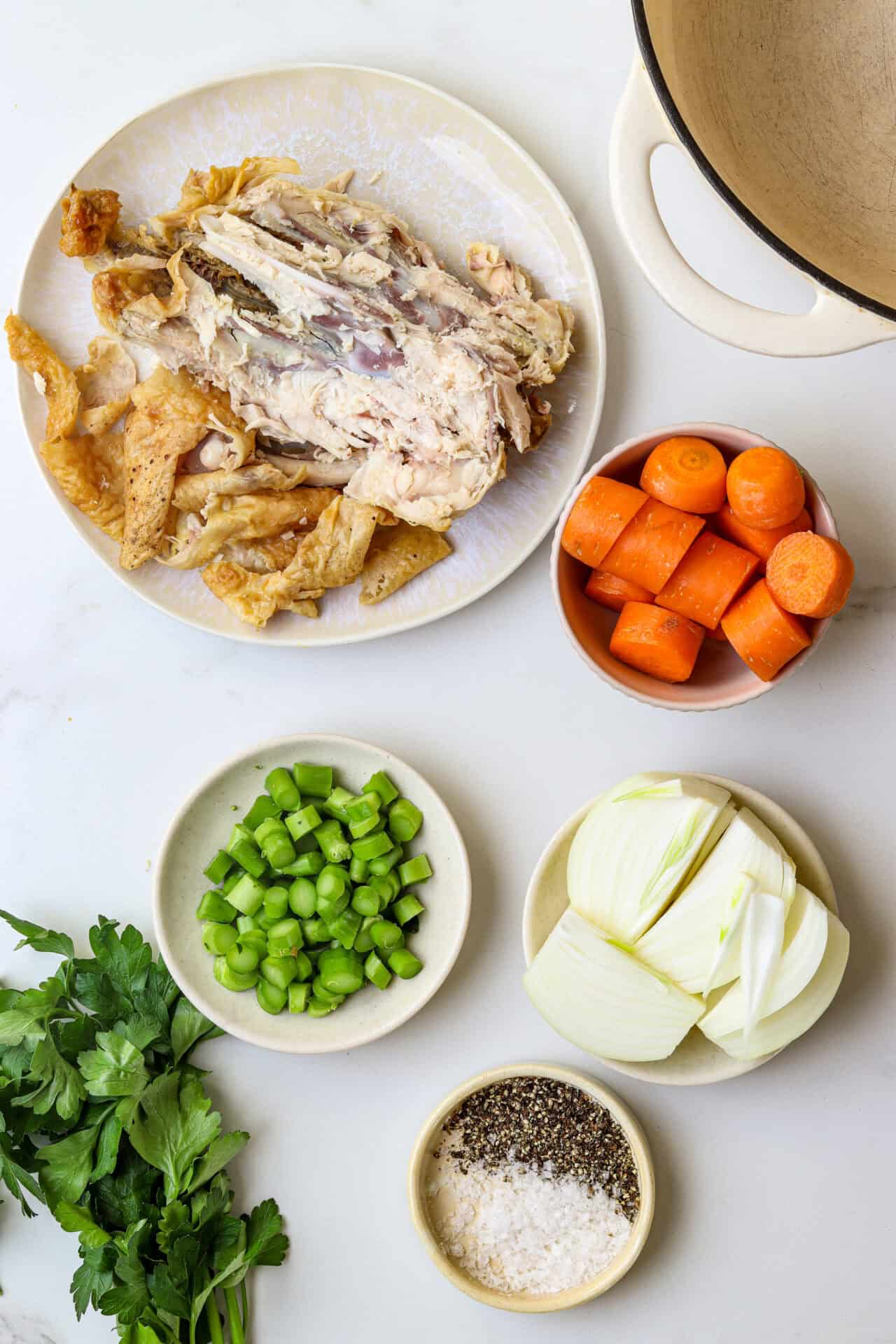
- Bones and skin from 1 large chicken carcass
- 1 large onion quartered
- 1 large carrot cut into 2-inch segments
- 1 large celery rib cut into 2-inch segments
- 1 bunch fresh parsley
- 1 teaspoon salt
- 1/2 teaspoon black pepper
Instructions
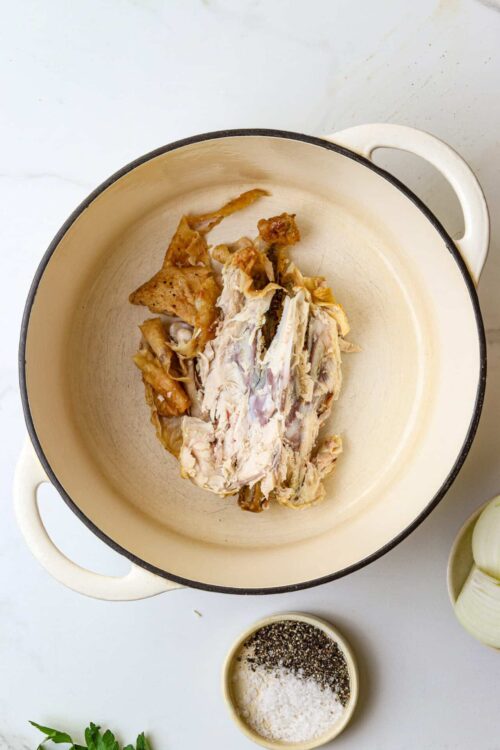
- Place the chicken bones and skin in a large stockpot.
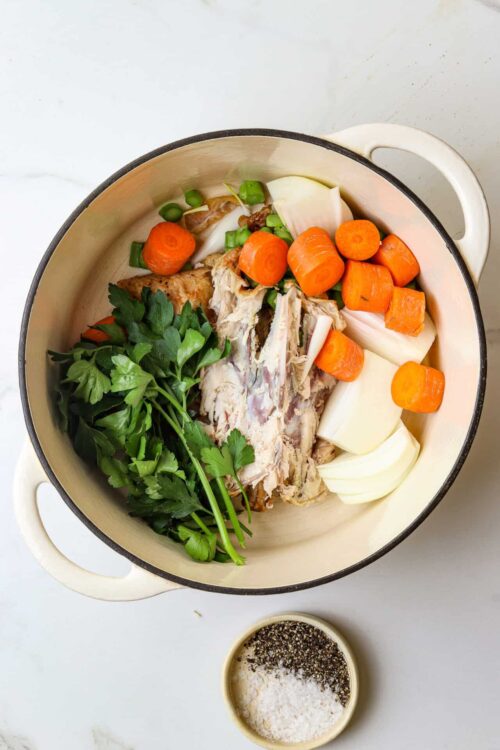
- Add the quartered onion, carrot segments, celery rib, and fresh parsley to the pot.
- Fill the pot with enough water to cover the ingredients by 2 inches.
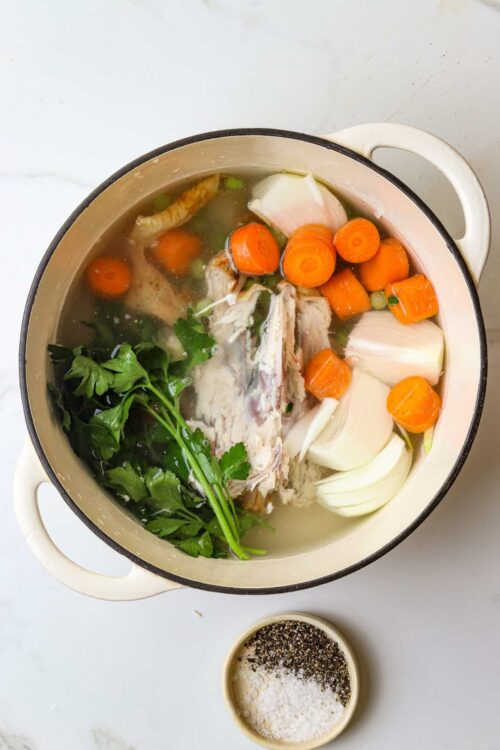
- Stir in the salt and black pepper.
- Bring the mixture to a gentle boil over medium-high heat.
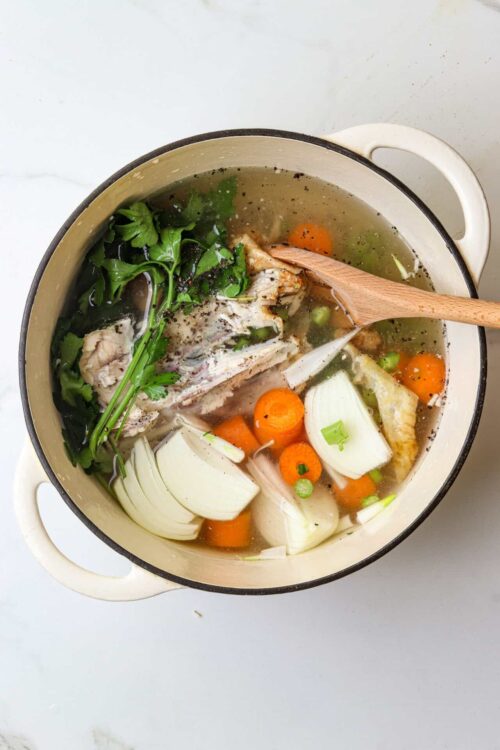
- Reduce the heat to low and simmer, uncovered, for 6 hours. Skim off any foam or fat that rises to the surface.
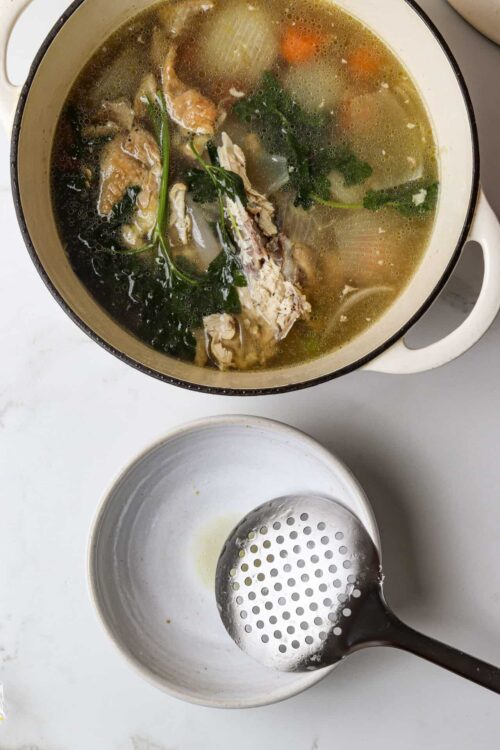
- Strain the stock through a fine-mesh sieve into a large bowl, discarding the solids.
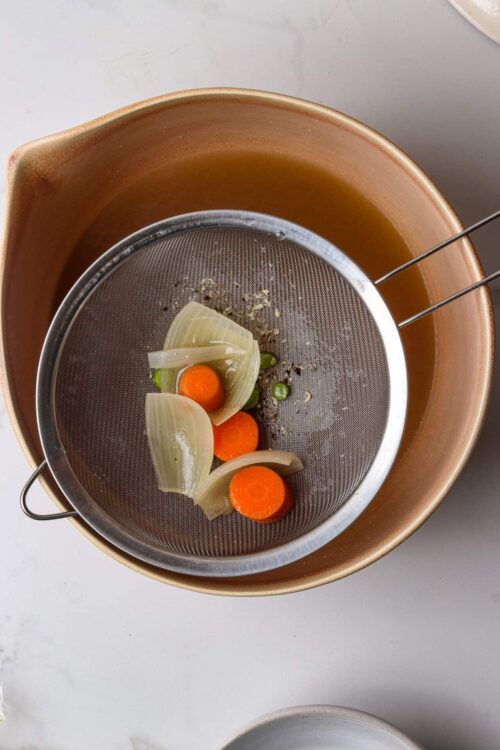
- Allow the stock to cool completely before transferring it to storage containers.
- Refrigerate for up to 3 days or freeze for up to 6 months.

Leave a Comment