

Deepen the flavors of everything from soups to stews to rice and risotto dishes with this easy recipe for versatile homemade liquid gold!
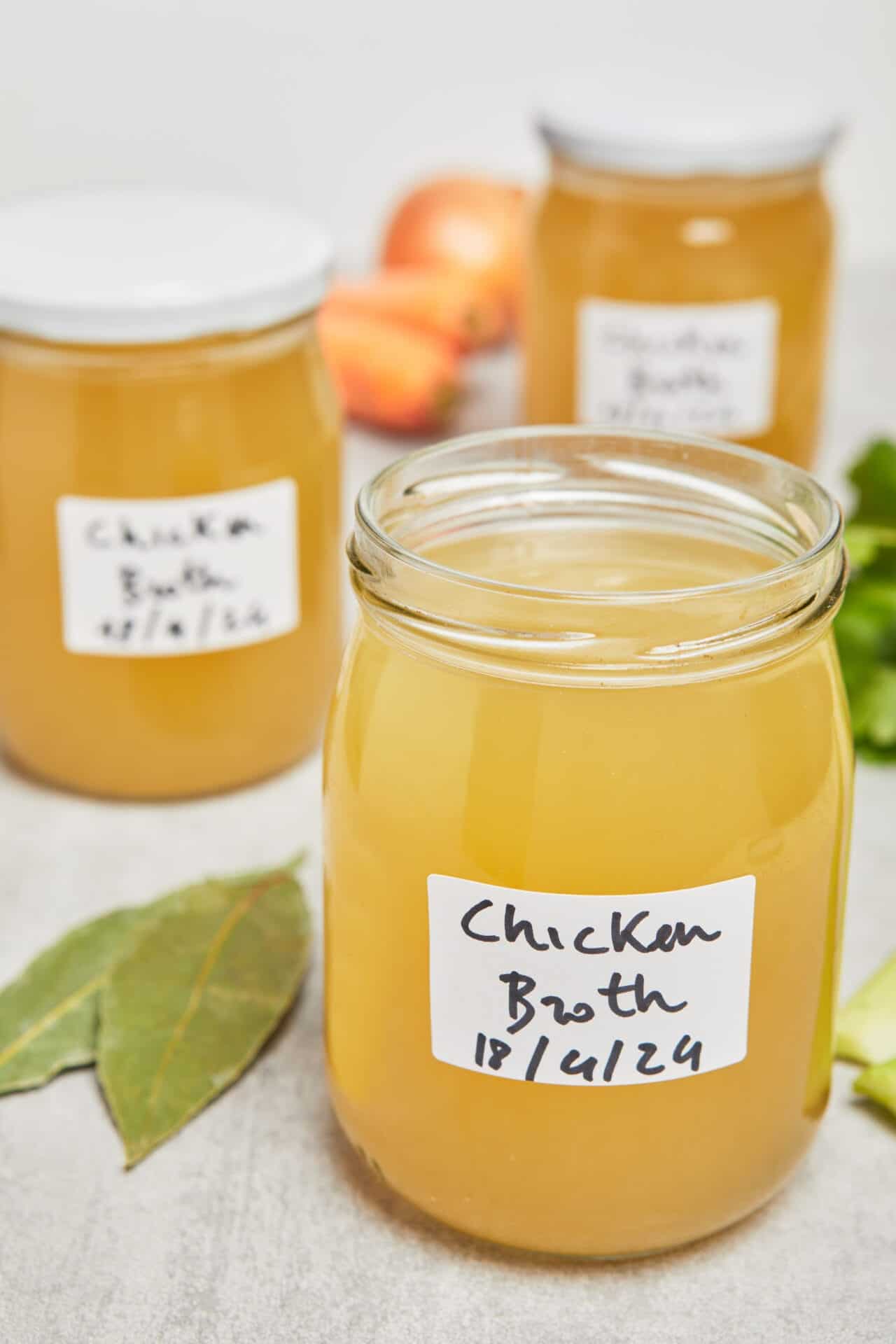
One of my earliest memories includes homemade chicken broth. I was home sick with the chicken pox—feverish, achy, covered in itchy red bumps, and furious that I was missing the final month of kindergarten. My mom brought me mugfuls of steaming broth, cradling my weak frame in her cool, strong arms as I sipped. Whenever I feel scared or sick or lonely, I return to that memory. The combination of tender loving care and rich, savory broth restores my sense of hope.
It’s not an exaggeration to call homemade chicken broth “liquid gold.” It’s been a food staple around the world for millennia, serving as the foundation for countless dishes. It is both sustenance and comfort.
Whether you’re looking to reduce food waste or avoid additives in store-bought versions, this chicken broth recipe demystifies the process for you. And the versatility of your end product extends far beyond soup! Use it instead of water to cook rice or grains, add a splash to your sauté pan to deglaze those delicious browned bits, or make it the base for gravies and sauces.
This recipe is almost as versatile as the chicken broth, itself. First of all, it yields both a pot of broth and a pile of cooked chicken meat that’s perfect for casseroles, salads, or sandwiches. Plus, you can toss in vegetable scraps, like celery leaves, onion peels, or carrot ends that’ll get strained out at the end—helping stretch your food budget.
You can also tweak the ingredients for an even deeper flavor profile. Roasting the chicken pieces and vegetables until golden before adding them to the pot caramelizes sugars, which can contribute complexity and extra savoriness. Tossing in mushroom stems, a chunk of parmesan rind, or a splash of soy sauce during the last stages of simmering also boosts umami without overpowering the classic chicken flavor.
Tips for next-level homemade broth
First off, make sure the water you add to the pot with your chicken and vegetables is cold. This helps proteins and impurities rise gradually to the surface as the temperature increases, making it easier to skim off any foam for a clearer broth.
Add a tablespoon of apple cider vinegar or white vinegar to the pot before simmering. This small addition is believed to help pull extra collagen and minerals from the chicken bones, enhancing both nutrition and body in the finished broth.
A pinch of turmeric or a slice of fresh ginger also makes a great addition, not only for golden color but also to infuse your broth with subtle warmth and depth.
Then, as the broth comes to a simmer, use a ladle to remove any grayish foam or impurities floating on top. Vigorous boiling can break up solids and cause cloudiness—so keep the heat low for a gentle simmer that produces a clear, golden liquid.
Finally, strain the finished broth through a cheesecloth-lined strainer or a coffee filter for restaurant-quality results. This step removes even fine particulates, leaving you with a crystal-clear broth that’s ideal for sipping or elevating fine soups.
How do I store leftovers?
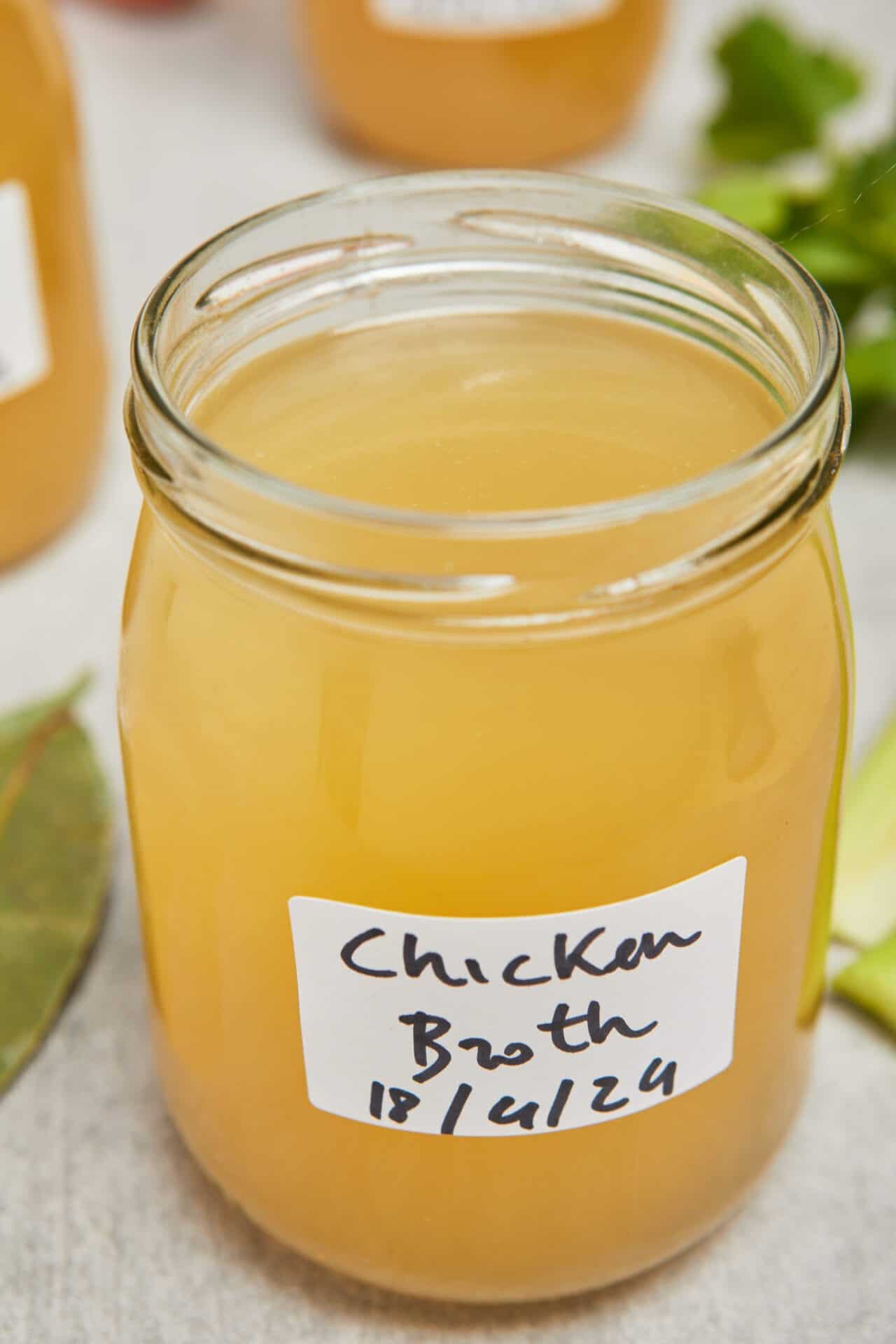
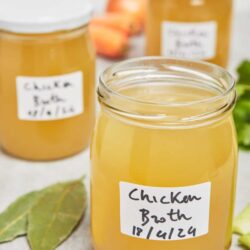
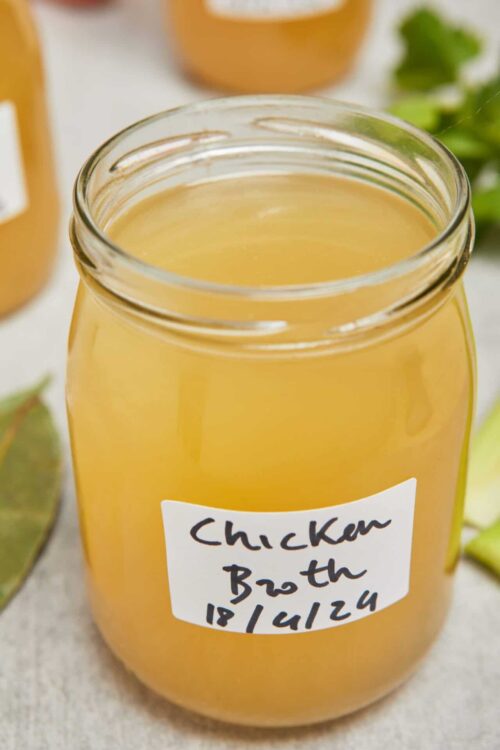
Let your chicken broth cool completely before storing, but don’t leave it at room temp for more than 2 hours. Store it in an airtight container or glass jar in the fridge for up to 1 week. Skim off any solidified fat from the surface before using. You can also freeze homemade chicken broth for up to 3 months in freezer-safe containers with a little room for expansion—or in ice cube trays for easy portioning. Thaw overnight in the fridge for use in recipes that don’t require a full boil. Or use it straight from frozen in hot dishes, like soups, stews, or cooking rice or grains.
Serving suggestions
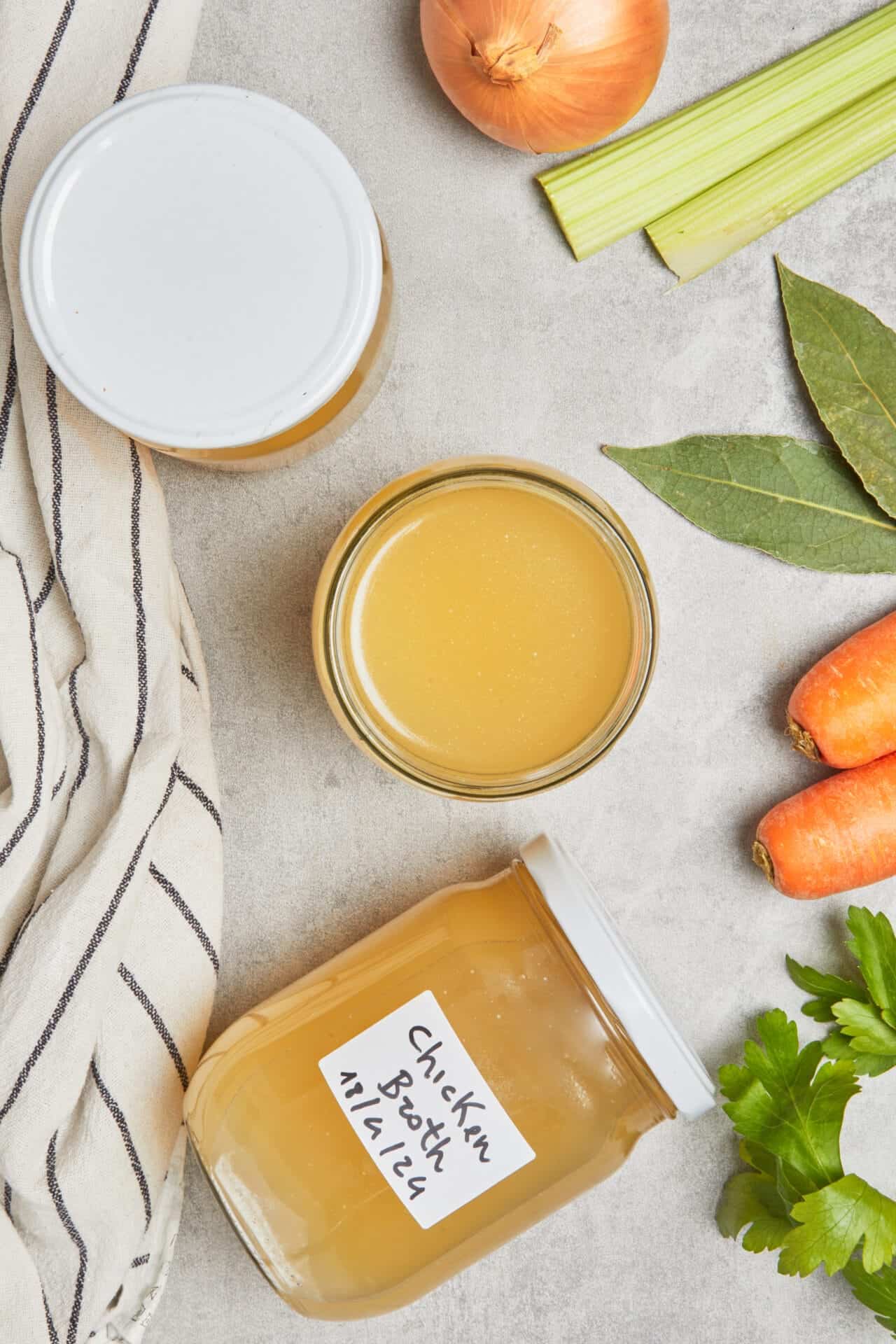
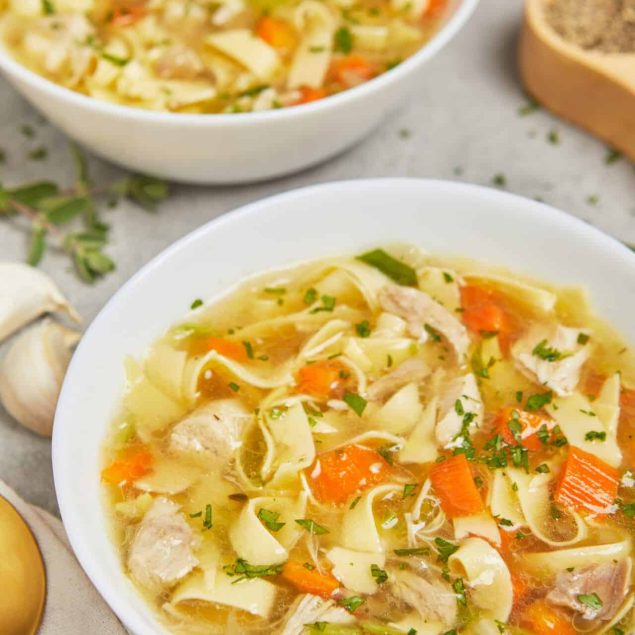
Serve your homemade chicken broth on its own for a soothing sip. Or use it as a foundational ingredient in everything from Panera Chicken Noodle Soup to Pea And Lemon Risotto to Jerk Chicken And Rice or this Chicken Gloria Recipe.
Chicken Broth

Ingredients
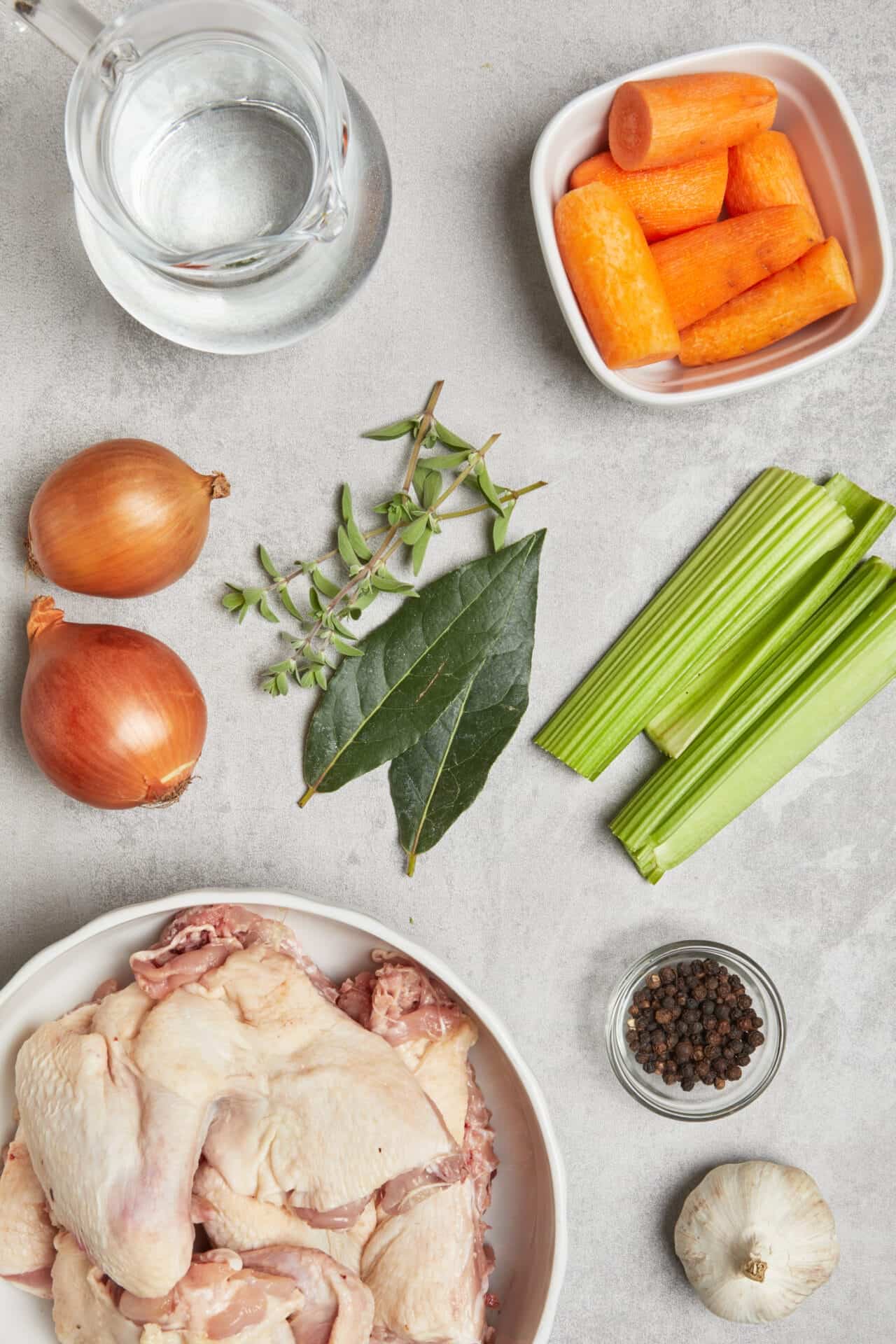
- 1 whole chicken about 3-4 pounds
- 4 carrots peeled and halved
- 2 ribs celery halved
- 2 onions quartered
- 1 head garlic halved crosswise
- 1 teaspoon black peppercorns
- 2 bay leaves
- 3 sprigs fresh thyme
- 12 cups water
Instructions
- Remove any giblets from the chicken and place it in a large stockpot (at least 8 quarts).
- Add the carrots, celery, onions, garlic, peppercorns, bay leaves, and thyme to the pot with the chicken.
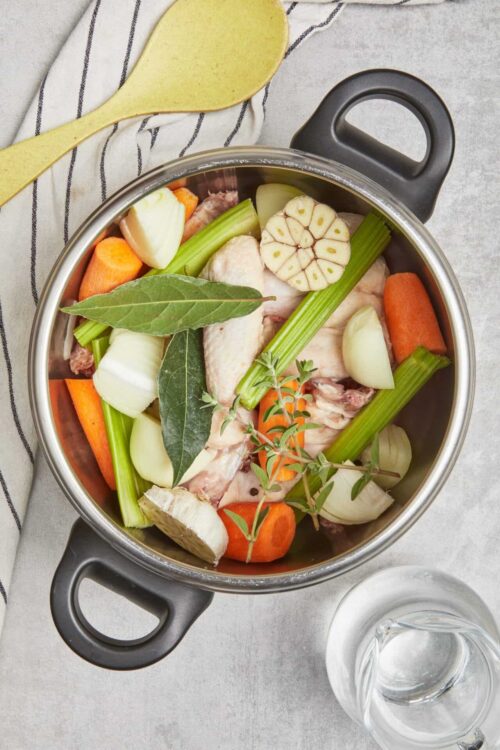
- Pour in about 12 cups of cold water, or enough to fully cover the chicken and vegetables by 1 to 2 inches.
- Set the pot over medium-high heat and slowly bring it to a gentle boil. This typically takes 20-25 minutes. As the broth begins to heat, skim off and discard any foam or impurities that rise to the surface.
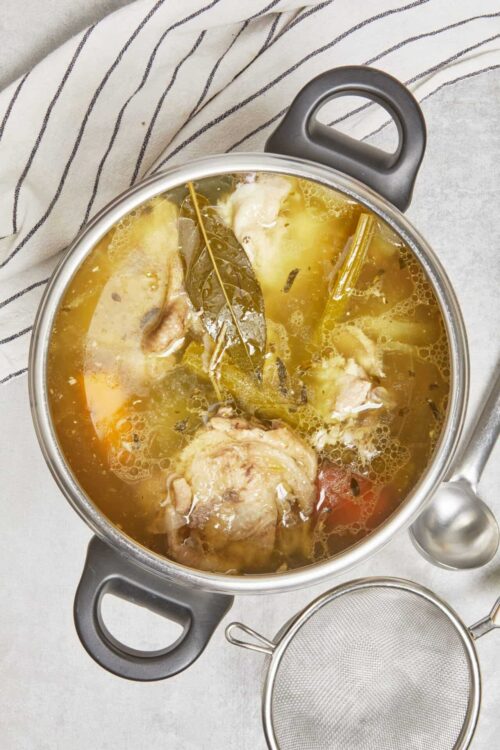
- Once boiling, reduce the heat to low so the liquid simmers gently. Cover partially with a lid and cook for 1 to 1 1/2 hours, or until the chicken is tender and cooked through to an internal temperature of 165°F.
- Using tongs, carefully transfer the chicken to a large bowl or platter to cool slightly.
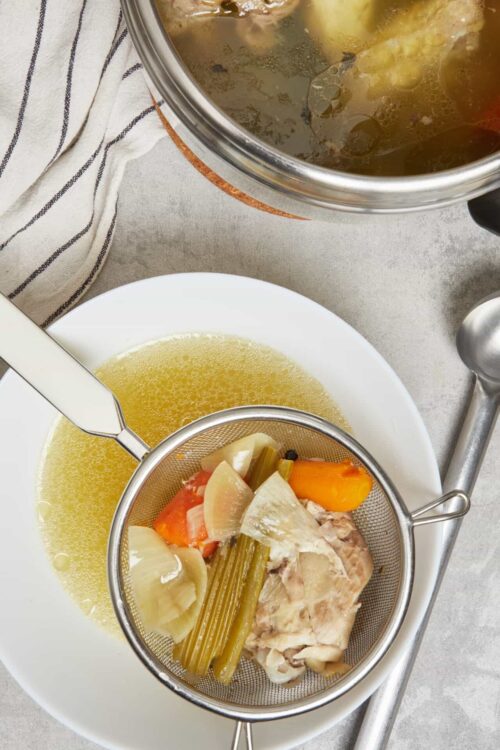
- Strain the broth through a fine-mesh sieve or cheesecloth-lined colander into another large pot or heatproof bowl. Discard the cooked vegetables, herbs, and peppercorns.
- Once the chicken is cool enough to handle, remove and discard the skin and bones. Shred the cooked chicken meat and refrigerate it for another use, such as soups, casseroles, or salads.
- Use the broth immediately, or let it cool to room temp before refrigerating.


Leave a Comment