

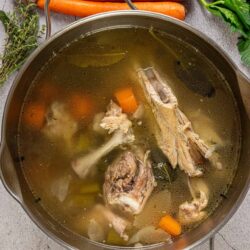
Nothing compares to homemade, including this delicious and nutritious Turkey Stock.
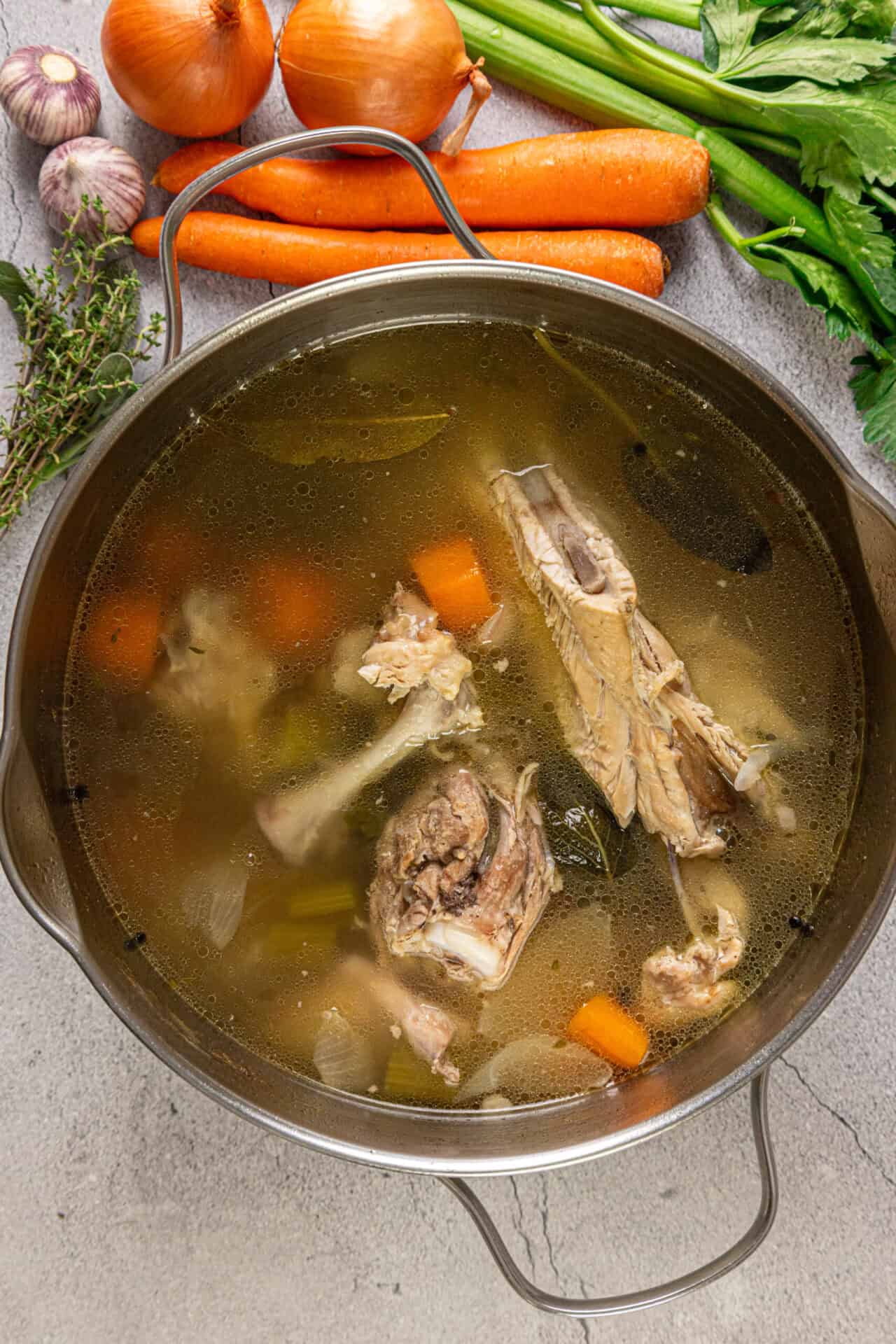
Every fall, usually before Halloween, I am delighted to see turkey stock in the grocery store; unlike other stocks—chicken, beef, vegetable—turkey stock is a seasonal item and seems to disappear shortly after Thanksgiving. And I lament this because I love its rich flavor and feel like chicken stock never quite achieves the same depth.
But then it occurred to me: Why don’t I just make my own turkey stock? I had the same revelation about roasted turkey some years back. My family loves it so much that I started making it way more often than just at Thanksgiving. So why didn’t I just make stock from the carcass every time I roasted a bird? I don’t know! But I certainly make it every time now.
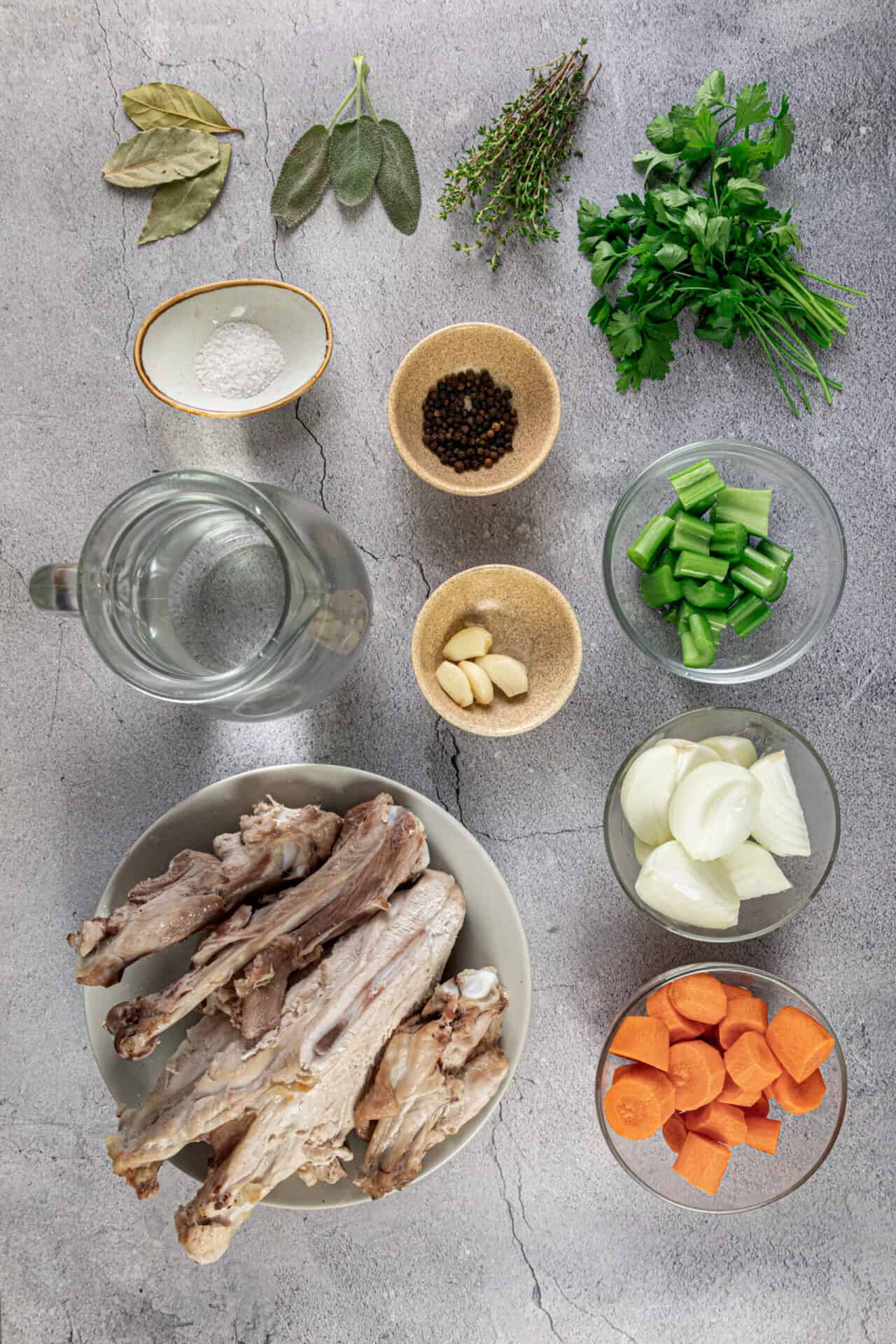
Although it’s hard to explain, there is definitely a difference between turkey and chicken in terms of flavor, and the same is true for the two stocks. I prefer turkey stock because it is more robust and yet not as bold as beef stock, which I reserve for dishes that feature beef. In this recipe for turkey stock, which includes the usual veggies and aromatics—onion, carrot, celery, garlic, and parsley—we add sage and thyme, herbs that famously pair with turkey. In the several hours that it takes the stock to simmer, your whole house will smell like Thanksgiving, even when it’s not.
If you’ve cooked a whole Roasted Turkey, you’ve got your carcass for this stock.
Tips For Perfect Turkey Stock
Even though you’re using the remains of a roasted turkey, to get even more depth of flavor into your stock, roast the carcass at 350° F for about 35 minutes. You can also brown the onions, carrots, celery stalks, and smashed garlic cloves in olive oil—or butter, if you’re feeling decadent—and your stock will be even richer (by the way, no need to peel your vegetables for stock).
Although it doesn’t appear in our ingredient list, once I have everything in the pot, I always add a splash of vinegar (red wine or apple cider) because it balances the flavors. Once your stock begins to boil, reduce it to a simmer. You don’t want the stock to boil furiously because simmering results in clearer stock and better flavor. When your stock is cooled, store it overnight in the fridge so you can skim the fat off the next day before serving, using, or storing in the fridge or freezer.
How Do I Store Leftovers?
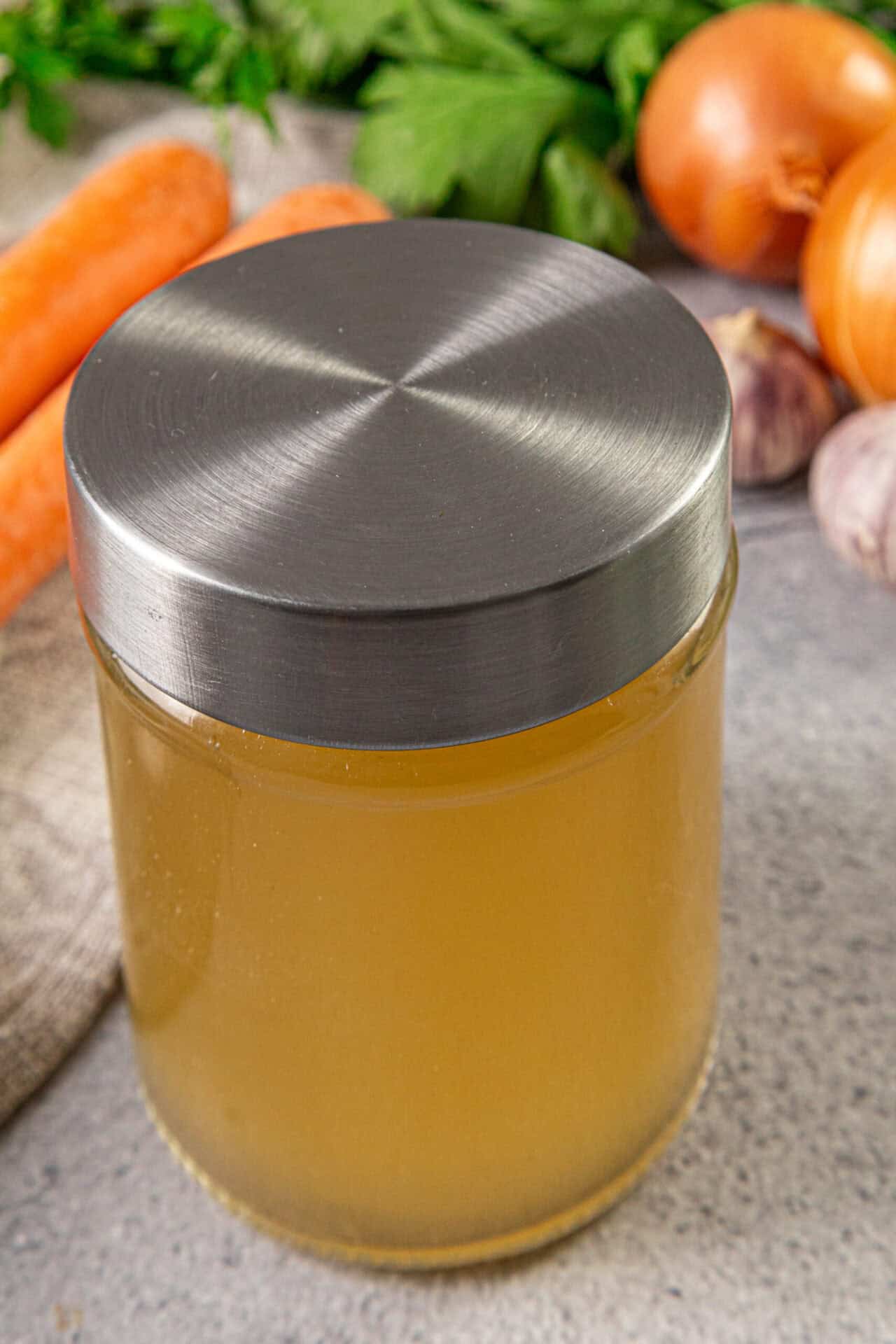
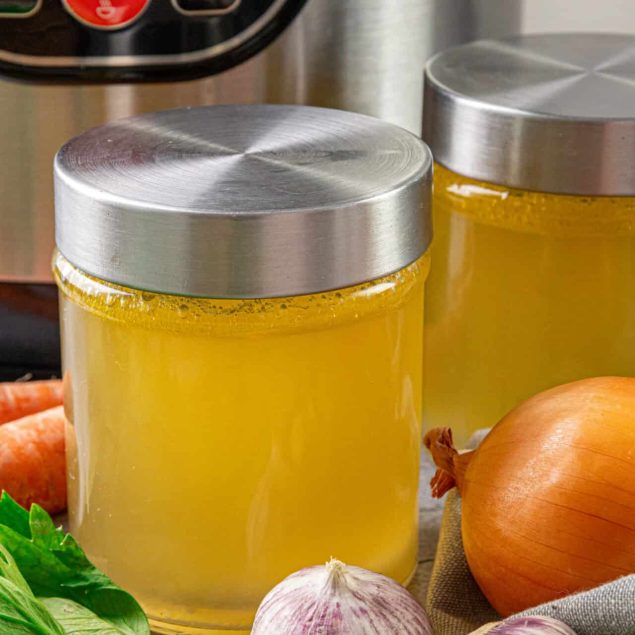
Once your turkey stock has cooled, you can store it in airtight containers, and it will last in the refrigerator for up to 1 week, or in the freezer for up to 6 months. Store some in ice cube trays, too, so you’ll have the perfect amount for sauces and gravies whenever you need it.
Serving Suggestions
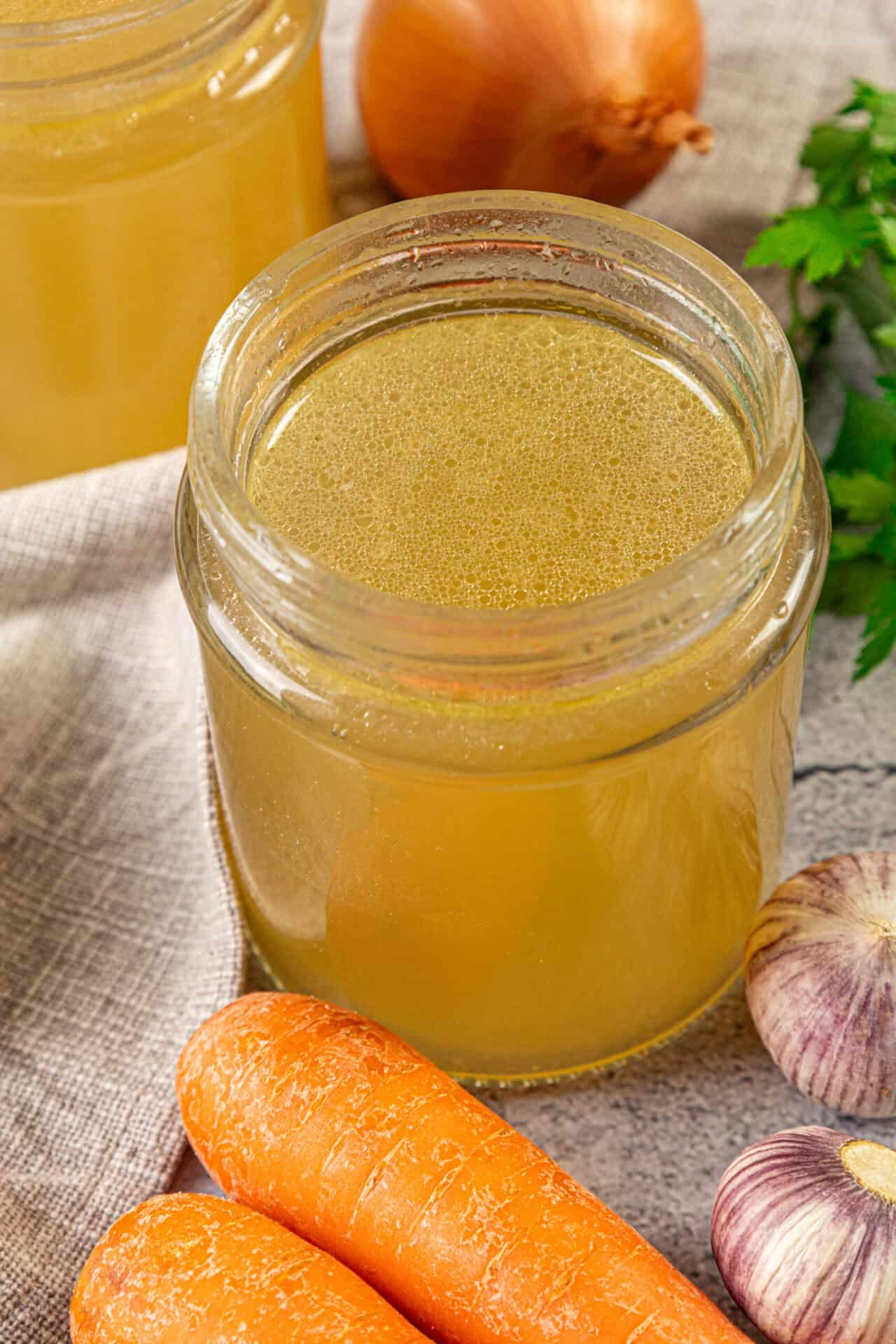
You can use turkey stock in any recipe that calls for chicken stock, from main courses like Chicken Pot Pie or Chicken Curry to sides such as Baked Rice or Pea And Lemon Risotto. It also deepens the flavor of things like No-Drippings Gravy and saucy dishes like Mushroom Bourguignon (if you don’t have to keep it vegetarian).
But when you are making things where turkey is the star, you are going to be thrilled to have homemade turkey stock available to really bring the very best flavor to these dishes. I use the turkey stock when I’m making these Slow-Cooker Turkey Dip Sandwiches and this Turkey Gumbo With Andouille Sausage. I also cook my rice in the turkey stock when I am making Ground Turkey Stuffed Peppers.
Turkey Stock

Ingredients
- 1 turkey carcass leftover from roasted turkey
- 2 large onions quartered
- 3 large carrots chopped
- 3 celery stalks chopped
- 4 cloves garlic smashed
- 1 tablespoon black peppercorns
- 3 bay leaves
- 1 bunch fresh parsley
- 3 sage leaves with stems
- 1 bunch fresh thyme
- Water enough to cover the carcass
- 3/4 teaspoon kosher salt optional
Instructions
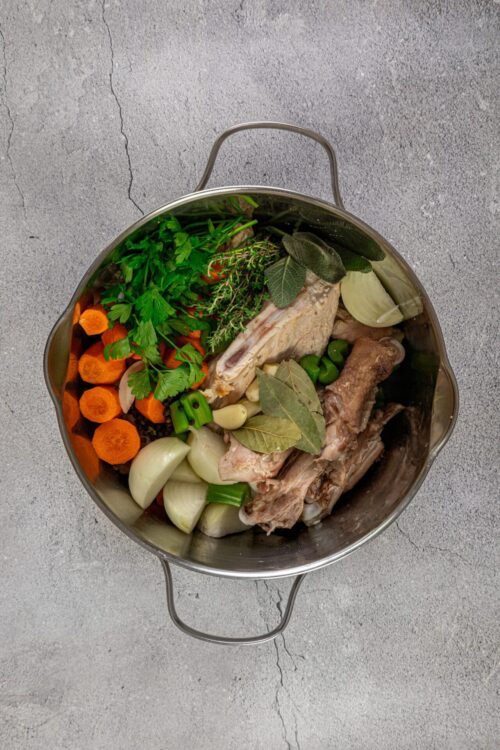
- In a large stockpot, place the turkey carcass, onions, carrots, celery, garlic, peppercorns, bay leaves, parsley, sage, and thyme. Fill the pot with enough water to cover all the ingredients.
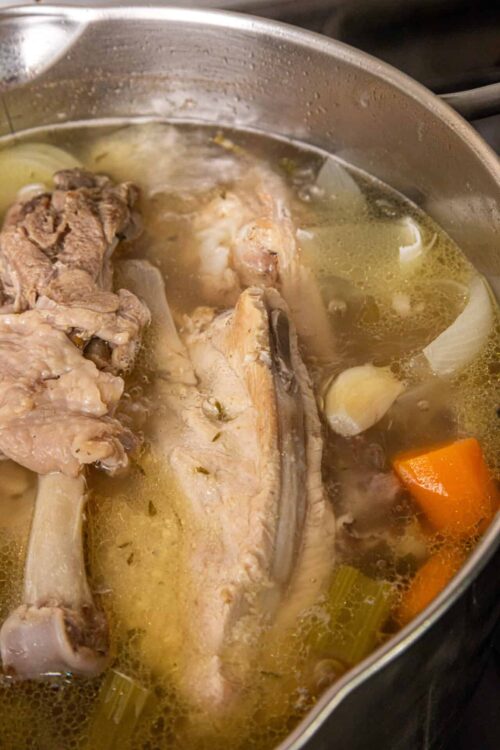
- Bring the pot to a boil over high heat, then reduce the heat to low and let it simmer gently for about 2-4 hours. Skim off any foam that forms on the surface.
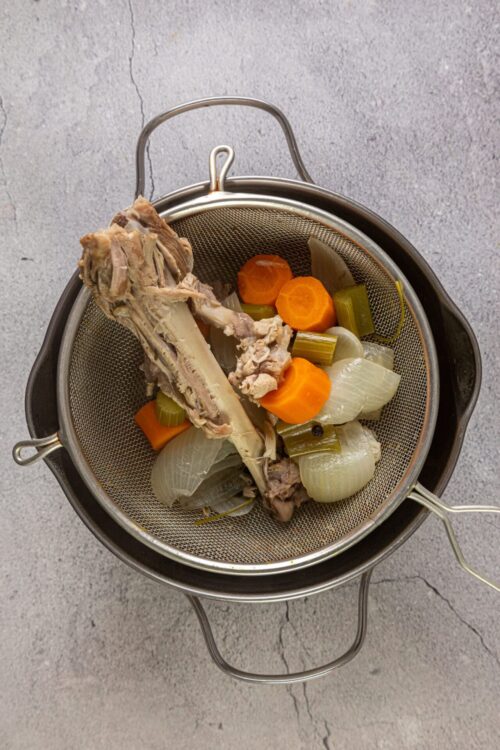
- After cooking, add salt if using. Then, remove the pot from heat. Strain the stock through a fine mesh sieve into a large bowl or another pot to remove solids.
- Allow the stock to cool, then transfer it to storage containers. Refrigerate or freeze as needed.



Leave a Comment