

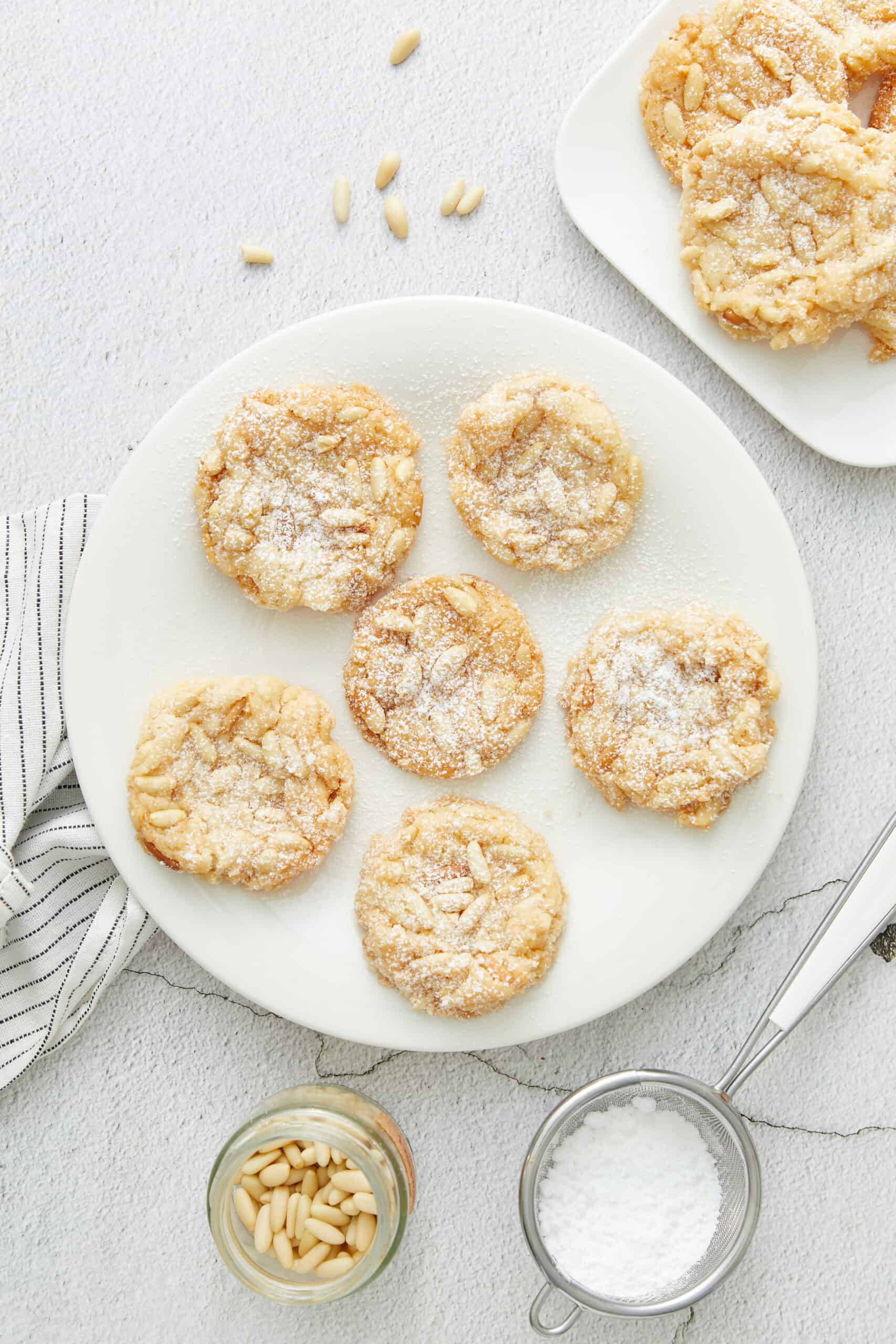
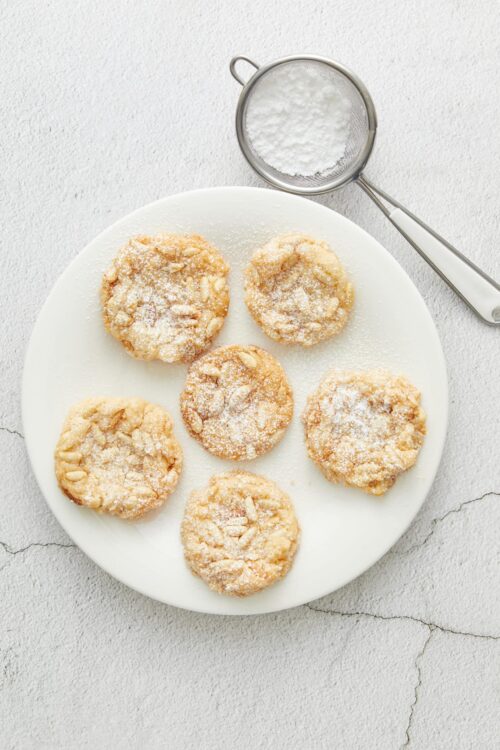
Light and chewy, sweet and nutty, Pignoli Cookies are a delicious Italian treat.
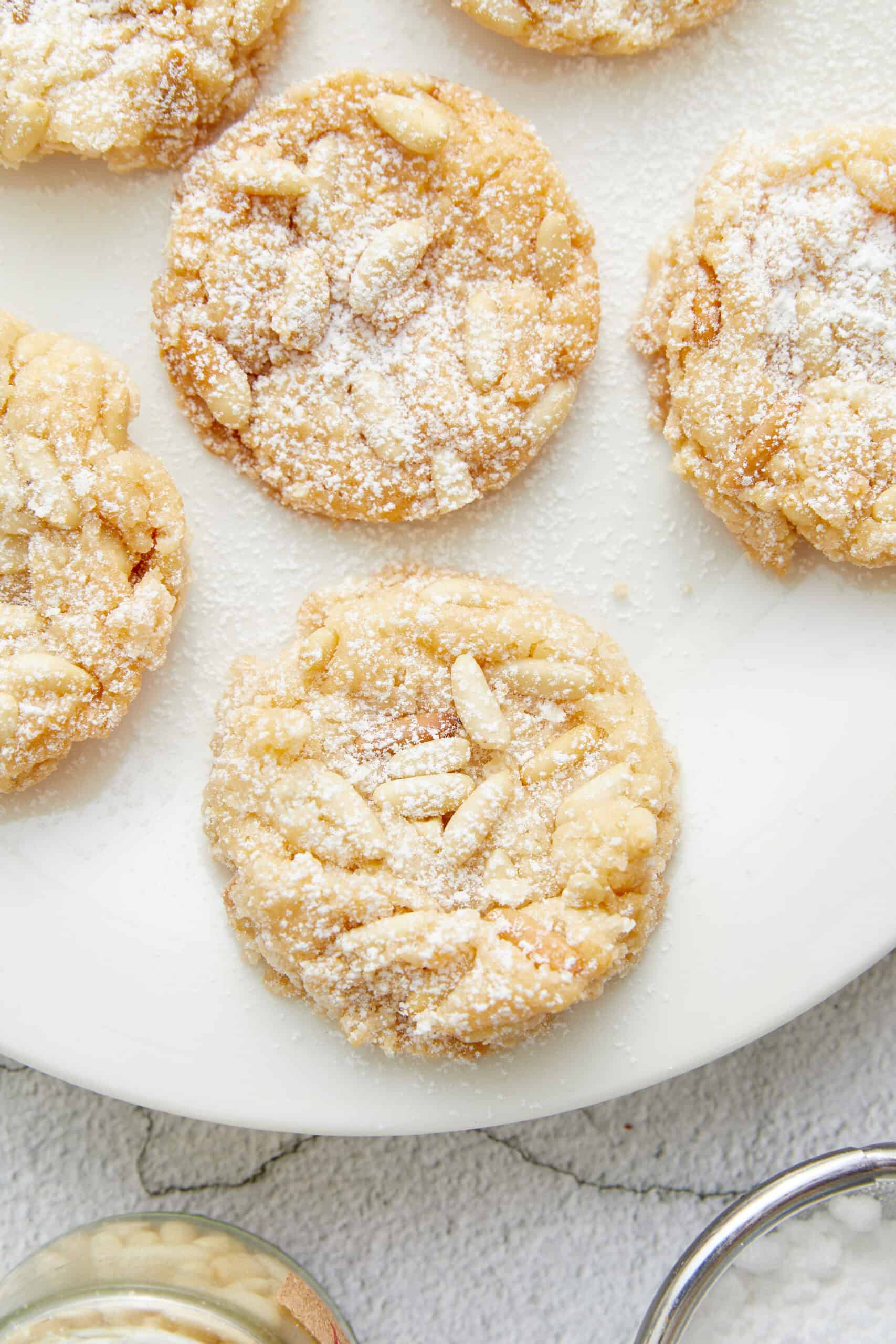
Nearly every culture has more than one type of cookie that is a key part of its sweet culinary landscape. What immediately comes to mind for me are French macarons, Latin American dulce de leche-filled alfajores, and the beloved chocolate chip cookie in the good old USA. In Italy, it’s often hard to pick just one kind of treasured cookie because there are so many, but my favorite one to make and to eat is the pignoli cookie.
Originating in Sicily and other parts of southern Italy, pignoli cookies have a crispy exterior and a moist, chewy interior. They have an intense almond flavor and are studded with pignoli, otherwise known as pine nuts. While pignoli cookies are a staple of Italian bakeries everywhere and usually available year-round, they are often considered a luxury. Why? Because some of the ingredients are expensive. Almond paste can be costly, as can pine nuts, which are the edible seeds of certain kinds of pine trees, found in the pine cones, and difficult to harvest. Because the cost can be prohibitive, pignoli cookies are often reserved for special holidays, particularly Christmas.
Often described as Italian macaroons, pignoli cookies get their wonderful chew from the combination of almond paste, sugar, and egg whites, and their crispy outside from the pine nuts the dough balls are rolled in. In addition to including almond extract, our recipe also calls for vanilla, which adds depth and richness to the flavor profile. And as you have probably guessed from the list of ingredients, pignoli cookies are gluten- and dairy-free, so everyone can enjoy them.
The difference between almond paste and marzipan
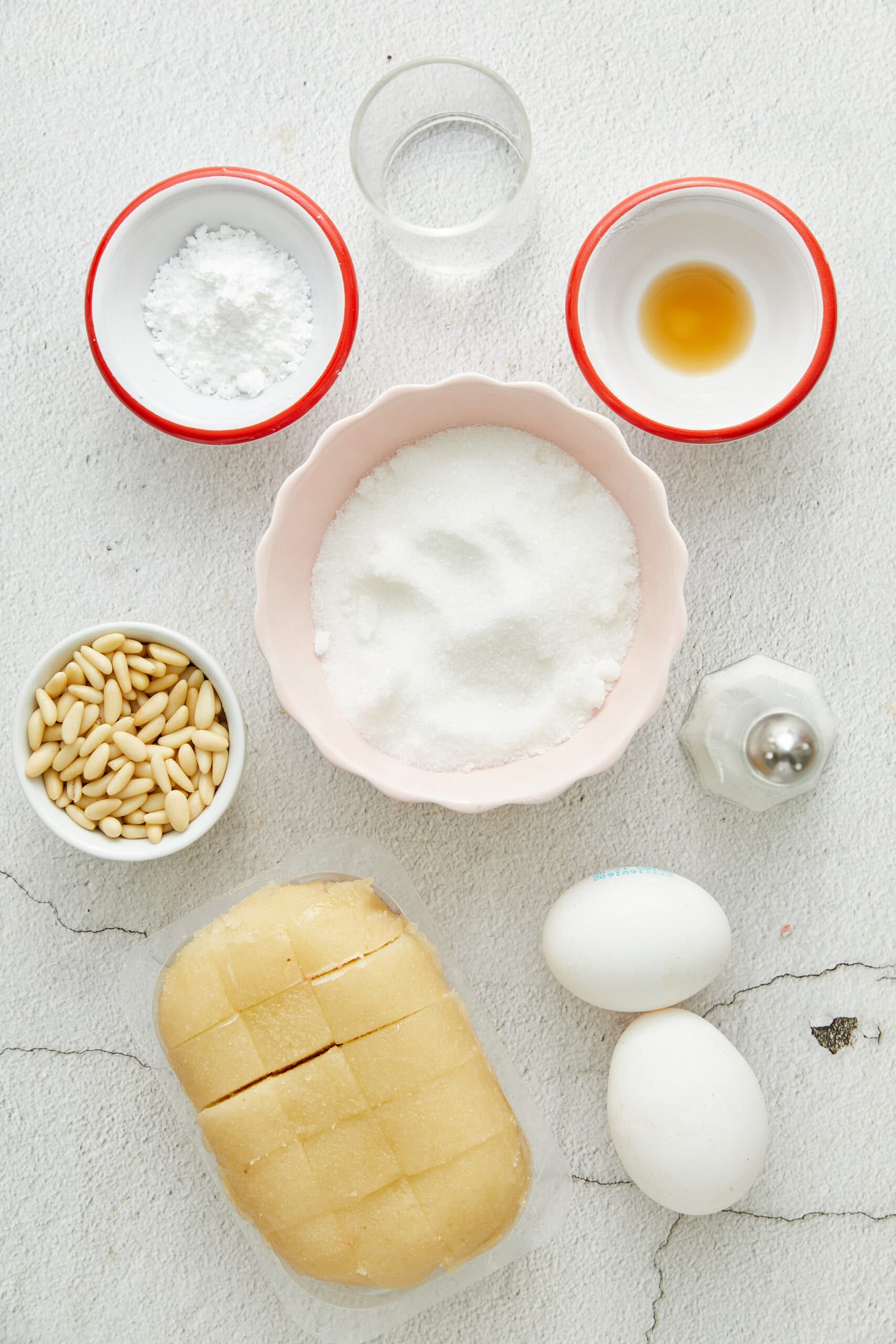
You’ll notice in our recipe instructions for pignoli cookies, it says almond paste, not marzipan: there’s a good reason for that! While both products are made primarily from almonds and sugar, the different proportions of each ingredient account for varying levels of sweetness and distinct textures, so much so that almond paste and marzipan are not interchangeable in recipes.
Almond paste, primarily used as a baking ingredient, is more almond-forward and less sweet with a coarse texture. Marzipan, on the other hand, contains more sugar, so it is much sweeter; it also has a smoother, more firm texture, which makes it perfect for molding into fondant-like decorations for cakes and incredibly beautiful candies.
How do I store leftovers?
You can store pignoli cookies in an airtight container at room temperature for up to 1 week. We do not recommend storing these cookies in the refrigerator, as they can dry out, but you can freeze them. Place the cooled cookies on a parchment-lined baking sheet and put them in the freezer for about 30 minutes or until the cookies are solid. Transfer them to a freezer-safe, airtight container, and they can be frozen for up to 3 months. Let them thaw on a plate at room temperature.
Serving suggestions
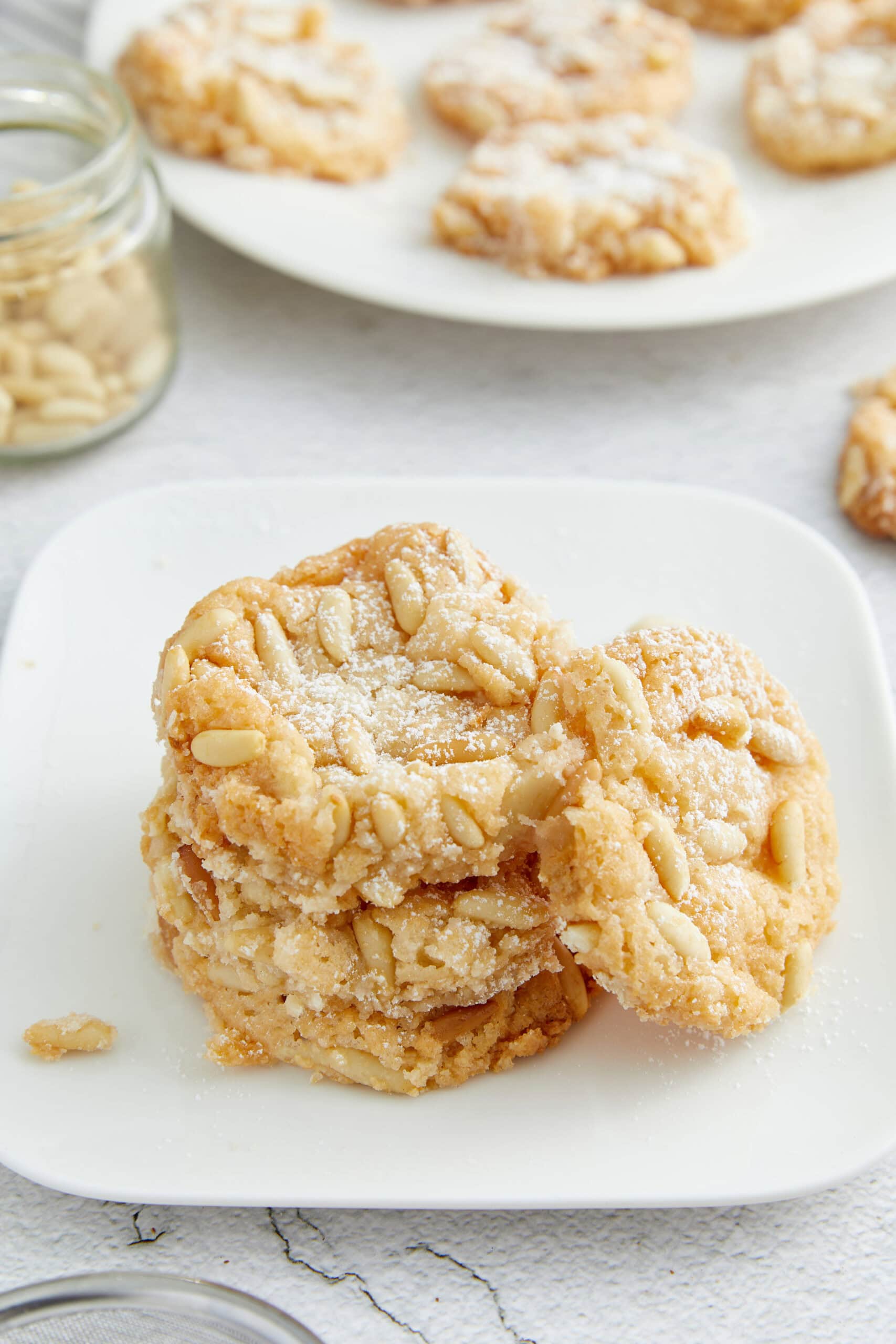
I love to serve pignoli cookies with other hand-held Italian confections, especially when we are entertaining guests. A platter filled with pignoli cookies, Biscotti, Cannoli, and Tiramisu Cupcakes gives everyone a choice (though, truth be told, usually everyone has one of everything!). Pignoli cookies are also a wonderful after-dinner treat during the week, especially if you pair these crispy, chewy cookies with something ultra-creamy like Almond Amaretto Panna Cotta or even just a scoop of Vanilla Ice Cream (maybe with a drizzle of Pistachio Cream).
Pignoli Cookies

Ingredients
- 16 ounces almond paste not marzipan, diced
- 1 cup granulated sugar
- 1 pinch kosher salt
- 1/2 teaspoon vanilla extract
- 1/2 teaspoon almond extract
- 2 large egg whites
- 1 3/4 cups pine nuts
- Powdered sugar for dusting optional
Instructions
- Preheat your oven to 350°F and line a baking sheet with parchment paper.
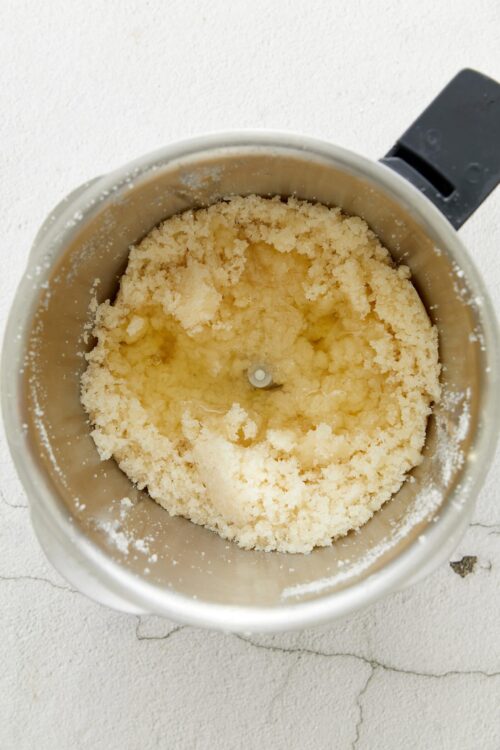
- In a food processor, combine the diced almond paste, granulated sugar, salt, vanilla extract, and almond extract until the mixture has a sandy texture.
- Gradually add the egg whites until a sticky dough forms. Let the dough rest for 1-2 minutes.
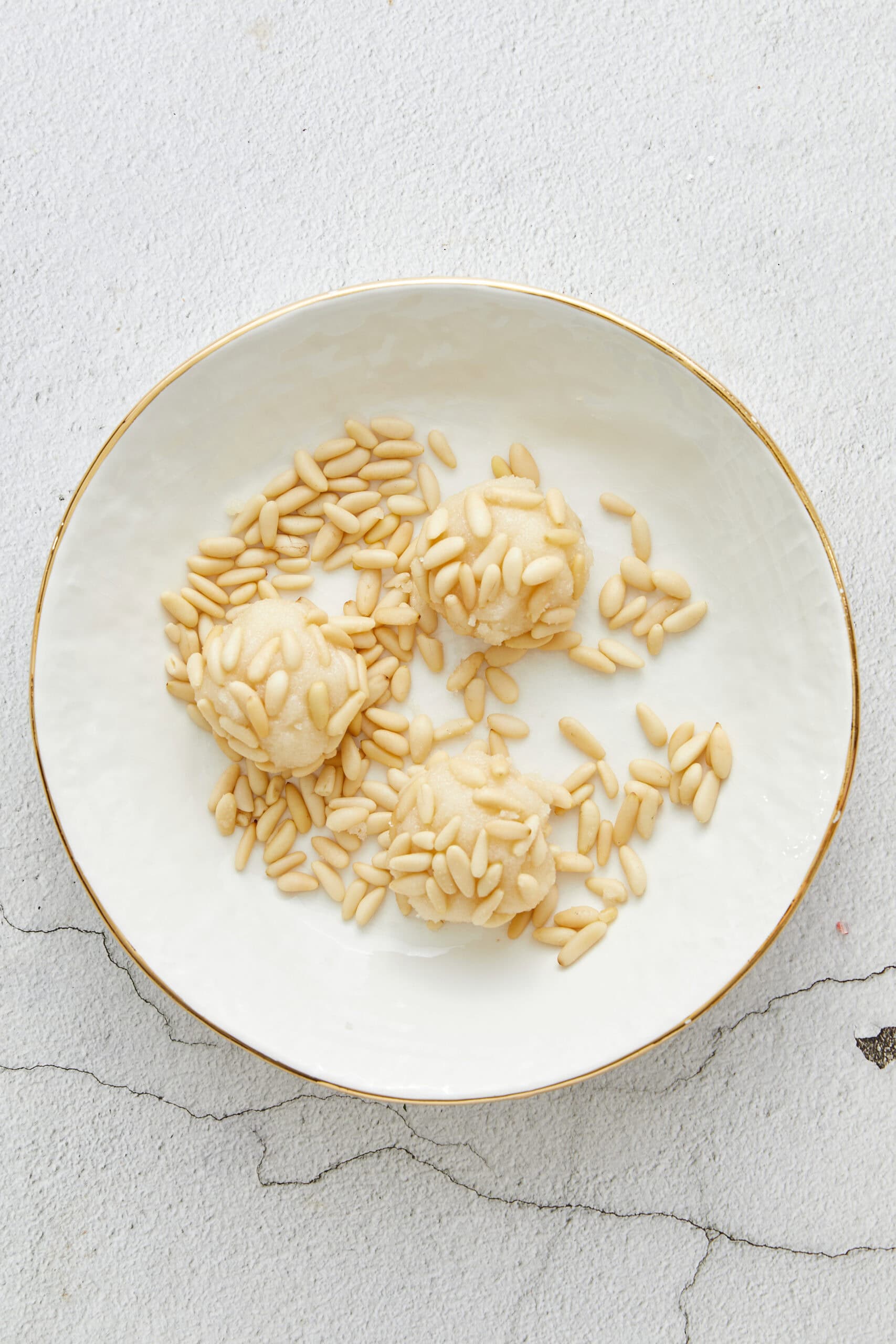
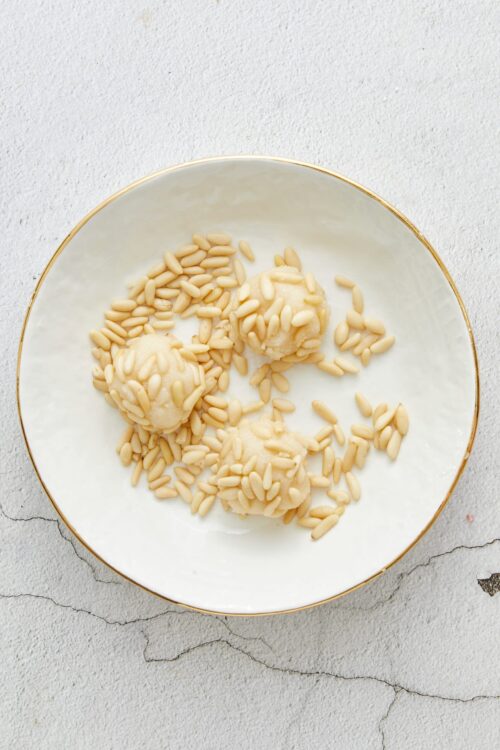
- Place the pine nuts in a shallow bowl. Scoop out a rounded tablespoon of dough and roll it in the pine nuts until fully coated. Place the dough ball on the prepared baking sheet, spacing the cookies about 2 inches apart.
- Bake for about 13-16 minutes, until the cookies are lightly golden on the edges. Let cool on the sheet for 5 minutes before transferring to a rack. Dust with powdered sugar if desired.

Leave a Comment