

The name alone evokes the style and elegance this Champagne Vinaigrette will bring to salads and more.
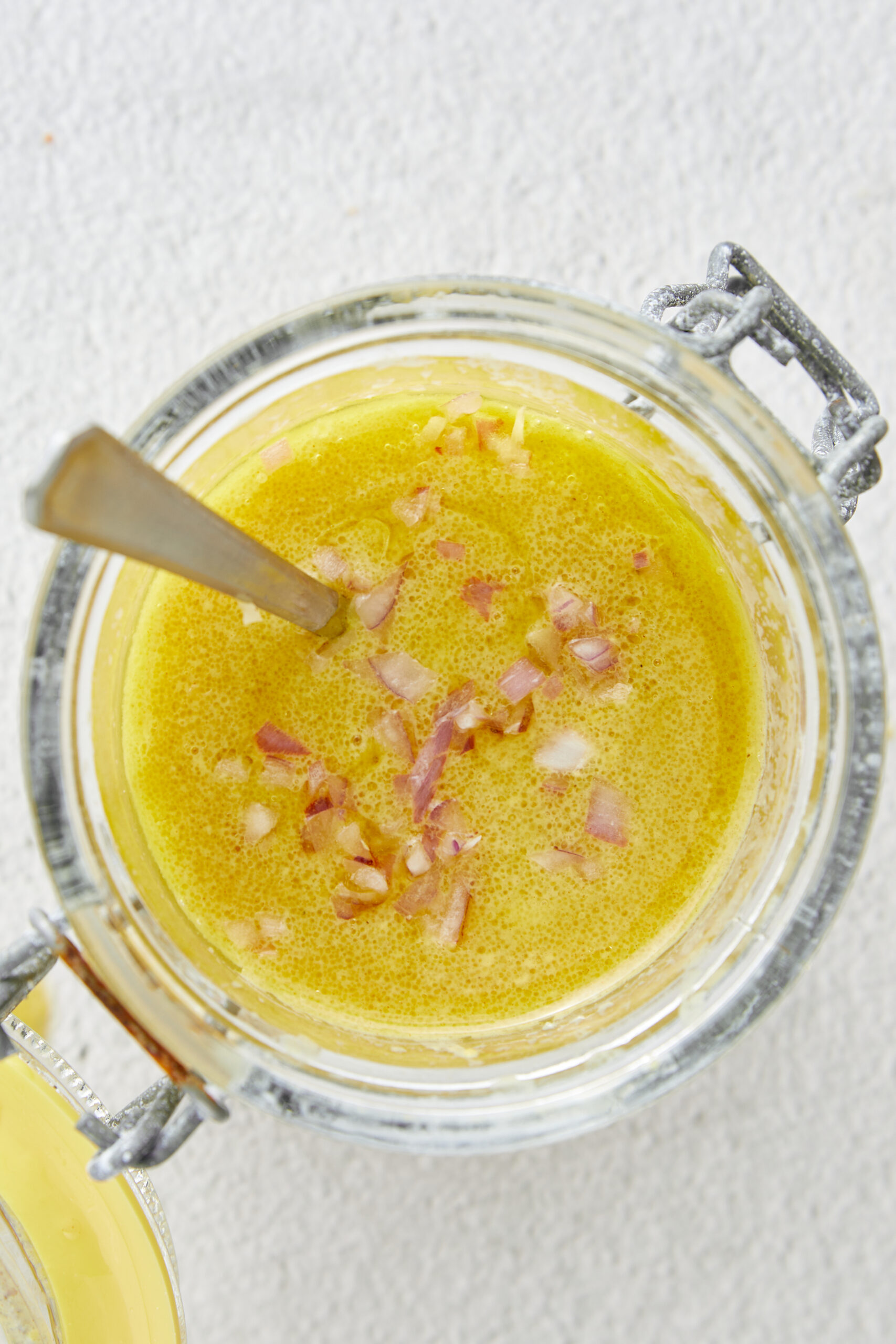
Cheers! That’s what we say when we clink glasses of bubbly, so why not say it when we’re about to make some champagne vinaigrette! Its very name conjures the idea of celebrating, and that’s just what you’ll do once you taste this lovely, lively dressing.
According to the food historians, vinaigrette—a mix of olive oil and vinegar—has been around since ancient Greece and Rome, but the word vinaigrette is a form of the French vinaigre, meaning “vinegar.” In 1699, one of the first English uses of the word vinaigrette appeared in John Evelyn’s book on salads called Acetaria. As this mix for tossing with greens or drizzling over vegetables evolved, recipes called for different kinds of vinegars (red wine, white wine, balsamic, and apple cider, to name a few), but it wasn’t until the 20th century that champagne vinaigrette made its debut.
In our easy-to-make recipe for champagne vinaigrette, we build on the mildly floral taste of the champagne vinegar with fresh garlic and shallots, the sharp tang of Dijon mustard, and the brightness of lemon juice. Then we balance all of these splendid flavors with a bit of honey. The final step is emulsifying all of the ingredients together with some very good quality extra-virgin olive oil. The result is a light yet complexly flavored vinaigrette that can transform salads, veggies, and even some proteins into something uniquely special. Cheers to that!
What is champagne vinegar?
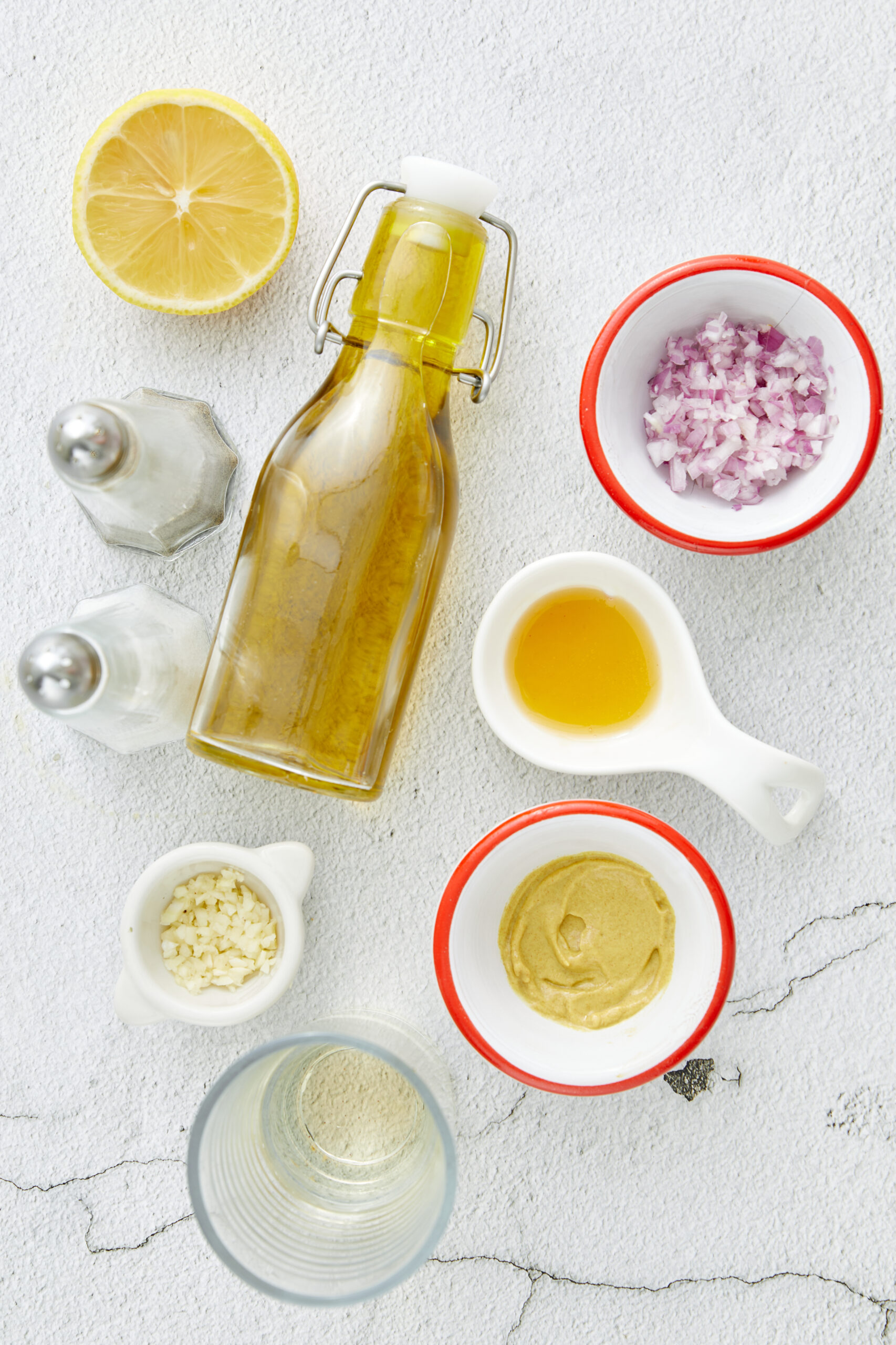
Often considered the mildest of all of the vinegars, champagne vinegar is light and delicate. It is usually a pale golden color with a consistency not unlike water. Champagne vinegar is made from champagne (or sparkling wine, which is what champagne is called when it is made outside of the Champagne region of France); generally, the grapes used are Pinot Noir, Pinot Meunier, and Chardonnay. Like wine, the grapes go through a fermenting process, leaving a trace of alcohol in the vinegar. But don’t worry: champagne vinegar is not considered an alcoholic product because the trace amounts are too small to have an intoxicating effect.
How do I store leftovers?
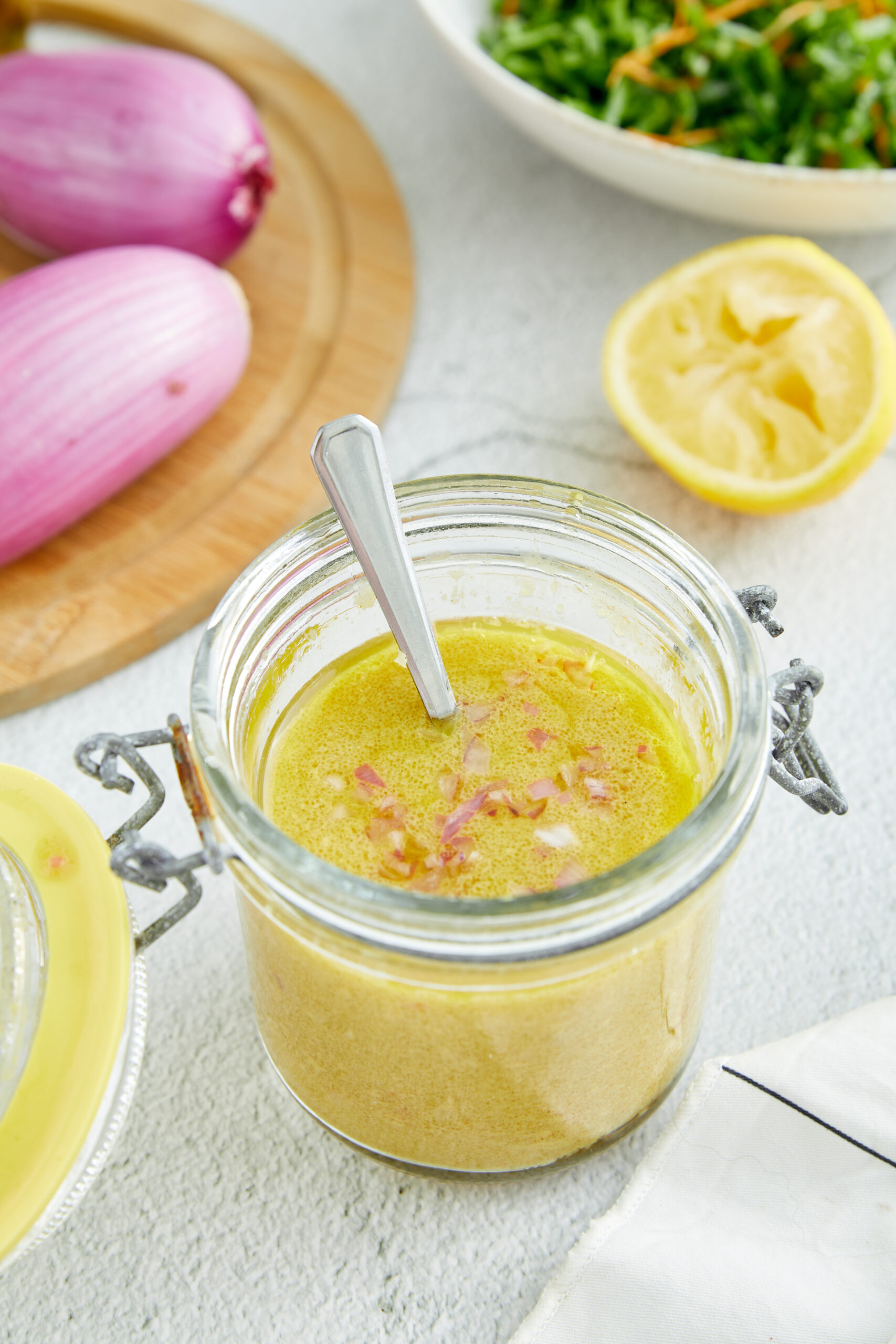
Champagne vinaigrette can be stored in an airtight container in the refrigerator for up to 5 days. Oil can separate and harden in the fridge; if this happens, leave the vinaigrette out at room temperature until the oil reliquifies and then shake or whisk the dressing before serving.
Serving suggestions
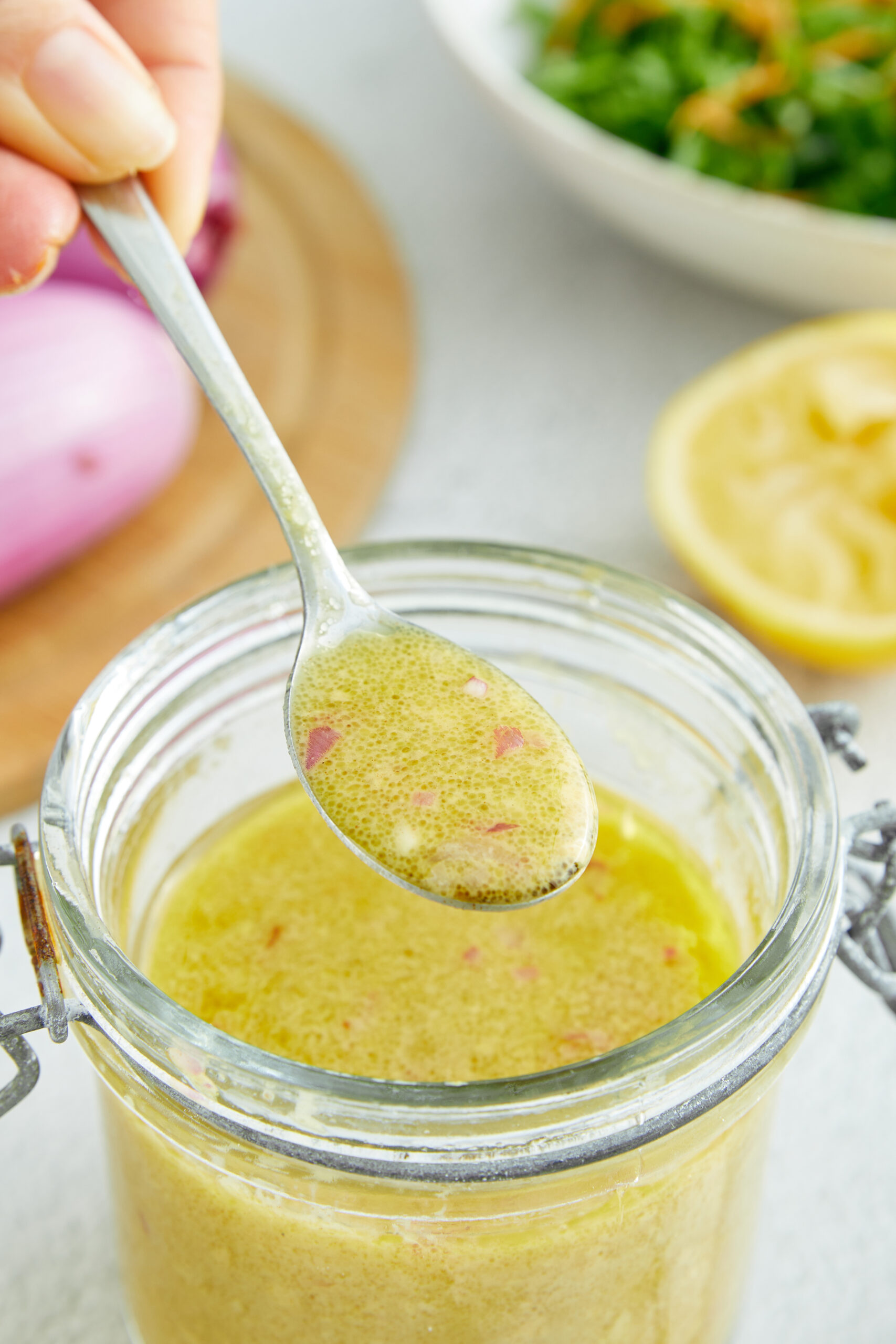
Naturally, champagne vinaigrette is simply lovely on a simple Green Salad, but it’s also perfect on a more complex one, like Spinach Salad (champagne vinaigrette is so good with this salad’s apples, walnuts, dried cranberries, and goat cheese). But there are many other creative ways beyond salads to use this wonderful vinaigrette. One of my favorite things to do is to drizzle champagne vinaigrette over warm vegetables, such as these Delicious Grilled Green Beans, Roasted Potatoes, or simple Steamed Asparagus. Champagne vinaigrette is also delightful with seafood: toss Boiled Shrimp in it, pour a thin stream over Dijon-Baked Salmon, or use it as a tangy dip for these yummy Fish Sticks.
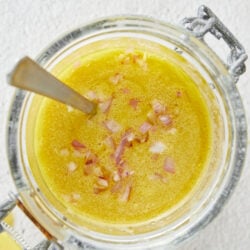
Champagne Vinaigrette

Ingredients
- 1 teaspoon minced garlic
- 1 tablespoon minced shallot
- 1/4 cup champagne vinegar
- 4 teaspoons Dijon mustard
- 1 1/2 tablespoons honey
- 1 teaspoon fresh lemon juice
- 1/2 teaspoon salt
- Freshly ground black pepper to taste
- 1/2 cup extra-virgin olive oil
Instructions
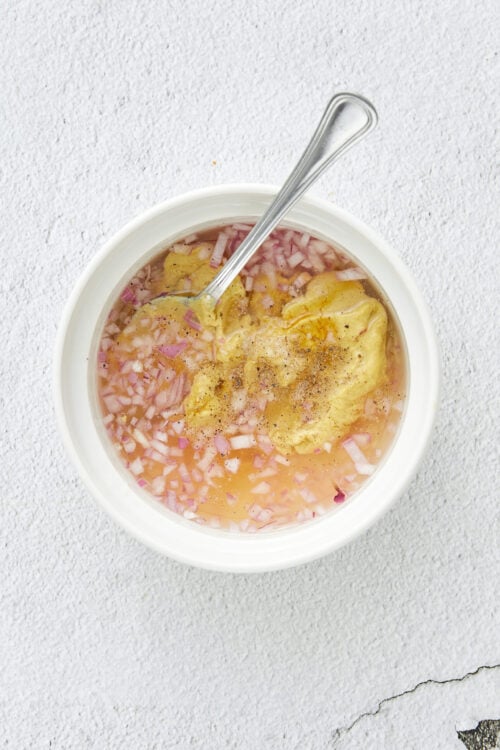
- Place the minced garlic and shallot in a small bowl. Add the champagne vinegar, Dijon mustard, honey, lemon juice, salt, and black pepper. Whisk well until the mixture is fully blended.
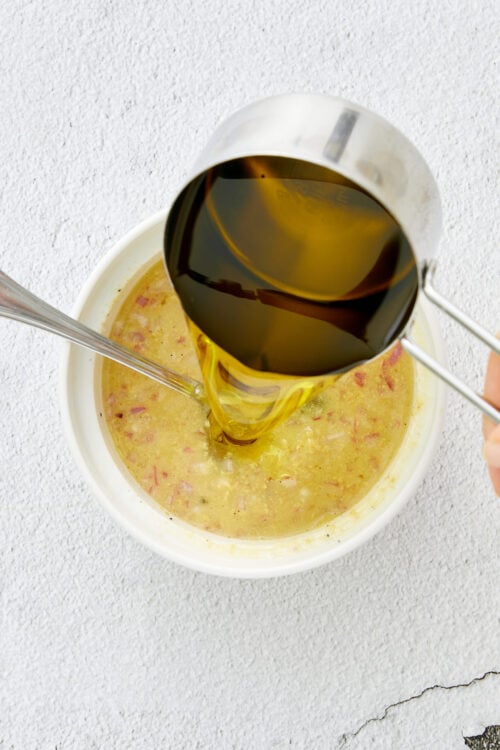
- Slowly drizzle in the extra-virgin olive oil while whisking continuously until the dressing is smooth and emulsified.
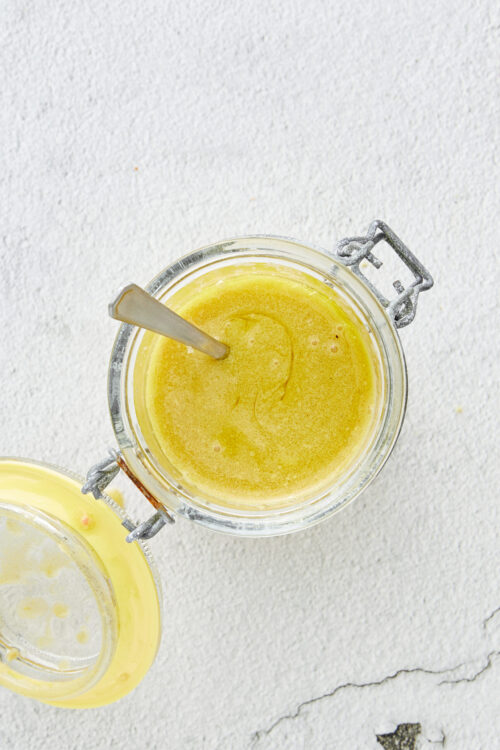
- Taste the vinaigrette and adjust seasonings if needed. Pour the dressing into a jar or serving bowl. Store any leftovers in a sealed container in the refrigerator and let it come to room temperature before using. Shake or stir well before serving.

Leave a Comment